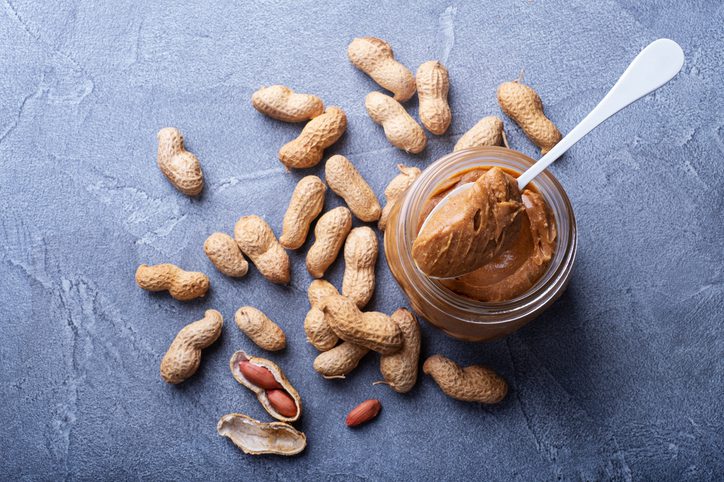
For people with severe food allergies, avoiding a trigger food like peanuts or tree nuts can mean constant vigilance. Approximately 8% of children and 10.8% of adults in the United States experience some type of food allergy. Even trace exposures can provoke reactions, and while oral immunotherapy can raise the threshold for some patients, the protection often depends on continued treatment and is associated with disease relapse in many patients. A new study suggests that another route to food tolerance may run through the gut microbiome.
In a small Phase I open-label trial (NCT02960074), researchers at Boston Children’s Hospital tested whether oral encapsulated fecal microbiome transplantation (FMT) could safely increase peanut tolerance in adults with peanut allergy. The work, published in Science Translational Medicine, also used mouse models to probe how donor gut microbes might help restore oral tolerance. The study is titled, “Fecal microbiome transplant in food allergy in humans and mice identifies a role for bile acid metabolites in oral tolerance.”
The trial enrolled 15 adults who reacted to 100 mg or less of peanut protein at baseline, less than half a peanut. Ten participants received a one-time dose of 36 frozen FMT capsules without antibiotic pretreatment; three of these participants showed an increased peanut reactivity threshold after treatment. A second cohort of five participants received antibiotics before FMT, and three of those participants also showed increased tolerance without safety issues, the authors wrote. Across the full study, six of 15 participants met the secondary efficacy endpoint, with responses persisting through the four-month clinical endpoint. No FMT-related allergic reactions or grade 3 or higher adverse events were reported.
“This landmark study was the first to demonstrate that a microbiome-based therapy may improve food allergy in people while also revealing how gut bacteria, their metabolites, and the immune system work together to influence treatment response,” said Rima Rachid, MD, director of the Food Allergy Program and the Allergen Immunotherapy Program at Boston Children’s Hospital.
The mechanistic findings pointed to a possible explanation. In participants who responded to FMT, the researchers observed an increase in tolerogenic RORγt-positive regulatory T cells and a decrease in type 2 helper T cells, immune shifts consistent with restored oral tolerance. When the team transferred post-FMT microbiomes from responders into allergy-prone mice, those mice were protected from the food allergy, whereas mice receiving microbiomes from nonresponders were not.
The responder-associated protection was linked to increased colonization with members of the gut Bacteroides genus and higher levels of bile acid metabolites in both humans and mice. The researchers further showed that deleting a bile salt hydrolase gene from a candidate protective Bacteroides strain weakened food allergy suppression in mice, suggesting that bacterial bile acid metabolism contributes to the tolerogenic effect.
“Food allergy reflects a failure of oral tolerance, the process by which the gut immune system learns to accept food, and what this study shows is that the right bacteria can help restore that process, working through bile acid metabolites to promote the immune cells that enforce tolerance,” said Talal Chatila, MD, director of translational immunology at Boston Children’s Hospital. “Knowing how the bacteria restore tolerance to food in allergic individuals allows us to optimize the therapy for more effective outcomes.”
The authors cautioned that the trial was small, open-label, and limited to adults, and that “of the six responders, five were males as opposed to two of the nine nonresponders, suggesting a potential male sex bias in response to therapy.”
“Larger studies of fecal and microbiota transplantation are now essential to confirm these findings, identify the patients most likely to benefit, and discover beneficial bacteria that could be developed into targeted probiotic therapies for food allergy,” added Rachid. Rachid is now leading follow-up studies testing a purified, concentrated microbial formulation in teenagers and in combination with peanut oral immunotherapy.