Twenty years ago, Sven Bocklandt, PhD, sought to create a hypoallergenic cat. He had the genetic engineering chops to do it, but the embryology was beyond his capabilities. At a small animal genetic engineering conference, known as TARC (Transgenic Animal Research Conference), held near Lake Tahoe, he met James Kehler, VMD, PhD, whose research at that time was to make transgenic and knockout cats as models of human disease.
The two men bonded, agreed the hypoallergenic cat idea was “crazy enough,” and decided to move forward with it. They worked together, completely unfunded, for years—FedEx’ing samples back and forth as Bocklandt was on the west coast and Kehler on the east coast—trying to make their “garage cat” while each one worked different day jobs.
Bocklandt, passionate about animal genome engineering, continued to develop different ideas for genome engineering in animals. Around the same time that he started sharing his ideas with scientists like George Church, PhD, a start-up focused on animal genome engineering was taking shape—Colossal Biosciences, co-founded by Church. Introductions were made, and Bocklandt joined in 2022 as species director to work on the dire wolf project. Kehler joined a short time later as VP. And everyone knows the rest of that story (there was no shortage of media coverage).
The pair eventually succeeded with the cat project: his name is Archie, and he is, Kehler noted, only partially hypoallergenic. But the generation of Archie and the dire wolves may not be the successes of this story. The real success may be what Bocklandt and Kehler learned along the way—and what they are going to do next.
Chickens as the next biologic factory
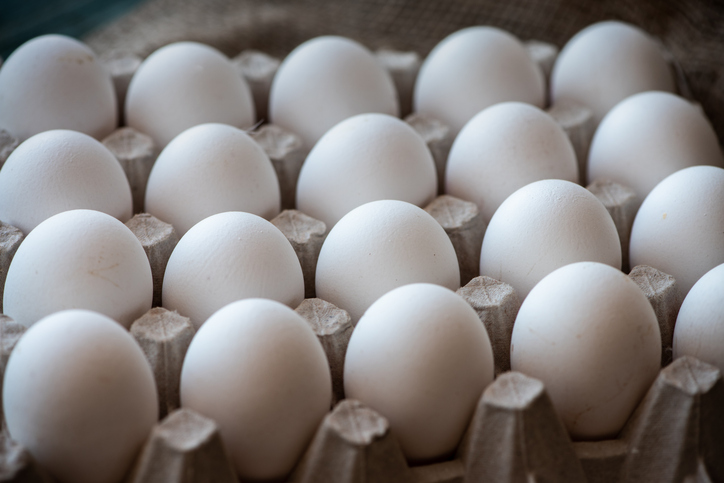
Neion Bio, co-founded by Dimi Kellari and Sam Levin, PhD, and located on the Rockefeller University campus on the east side of Manhattan, is aiming to re-engineer eggs to produce drugs in chickens. The team uses genetic engineering to integrate therapeutic proteins into native egg proteins, creating a new manufacturing platform for drugs that runs on grain and water.
Bocklandt joined the team at Neion Bio as CSO after leaving Colossal in 2024; Kehler joined more recently, as head of avian sciences.
When thinking about producing complex proteins, using the chicken “makes a lot of sense,” Bocklandt told GEN. Breeding and genetic engineering are all established in the chicken. And the vaccine industry has established an existing infrastructure to grow eggs under disease-free conditions. Purifying proteins out of an egg, Bocklandt added, is easier than purifying them out of a Chinese hamster ovary (CHO) culture (the traditional cell choice for drug production) because there are fewer host proteins.

It makes “far more sense” than what we’re doing right now, Bocklandt noted, which is using CHO cells. “Everyone is doing that because everyone has been doing it that way,” he asserted.
“The fact that we’re now seriously questioning whether CHO cells should remain the default manufacturing platform for biologics is long overdue,” noted Ola Wlodek, PhD, CEO of Constructive Bio. “Any credible new approach that breaks this decades-old lock-in is ultimately good for patients and for the field.”
For Kehler, who did his graduate work in the lab of stem cell pioneer Hans Schöler, PhD, the chicken is a clear choice because it is the only species, besides the mouse, where the primordial germ cells have been used to transmit genetically modified gametes to the next generation.
Mike McGrew, PhD, group leader at the Roslin Institute in the U.K., and an advisor to Neion Bio, demonstrated years ago that modifying chicken primordial germ cells is a reliable way of making gene-edited chickens. This background is comforting to Kehler, who noted that, “unlike at Colossal, where everything was bleeding edge, we are able to focus on a single species and capitalize on some pretty tried and true technology.”
Drugs in eggs meet biomanufacturing reality
The lab space on the Rockefeller University campus can support research and even house chickens. But it cannot support the production of a drug. When asked about turning their egg-borne proteins into drugs, the company leans on the existing infrastructure that supports vaccines in specific pathogen free (SPF) eggs. The idea is that the egg whites will be frozen in giant batches and then processed in a CDMO.
When asked about potential challenges, Bocklandt noted that, “technically, there’s not much to worry about. I have no concerns about Neion Bio being able to do what we want to do or what we need to do.”
But there may be hurdles ahead. Rahul Dhanda, co-founder, president, and CEO of Syntis Bio, told GEN that “at the beginning, everything can look like it has infinite potential—it’s when you actually build and operate the system that the real challenges show up.”
More specifically, Dhanda pointed out that biomanufacturing “ultimately comes down to reliable, consistent, and cost-efficient production.” Leveraging animal biology for drug manufacturing is exciting, he noted, “but scalability and cost are still open questions, especially at this early stage. Biological variability between animals and individual outputs, like eggs, introduces additional risk compared to more controlled cell-based systems,” Dhanda added.
Wlodek agreed: “because egg-based production is inherently a biological supply chain, it will face avian flu risks, batch-to-batch variability from seasonal and flock effects, animal-welfare/regulatory overhead, and practical limits on how fast you can expand output compared with stainless-steel or single-use fermenters.”
Microbial and yeast systems still “win decisively on GMP containment, land/water footprint,” she noted, and “the ability to go from a few liters to tens of thousands of liters in weeks rather than months.”
Dhanda agreed that “getting it to work in principle is far different from getting it to work at scale, and that seems far off.”
If these challenges can be addressed at scale, safely and humanely, Dhanda noted, the approach could deliver meaningful health benefits—”but there are still significant logistical and technical hurdles to work through.”
Engineering the chicken genome
Creating dire wolves at Colossal started with deriving wolf cells, editing them, and cloning them back into a live animal. But cloning doesn’t exist in birds. To genetically engineer chickens, the Neion Bio team edits the germline, starting the process with a fertilized egg.

The egg is incubated for 65 hours, at which point germ cells float in the blood because the ovaries and testes don’t exist yet. A microliter of the blood is removed, put into cell culture media, and the germ cells grow out. The transgene that codes for the therapeutic protein is inserted using CRISPR-Cas enzymes, in the coding region of a gene that codes for Ovalbumin—which makes up a bit over 50% of the egg white protein. This protein is made “on a massive scale” by the oviduct, the company noted.
The genome is screened for correct integration and potential off-target edits. Once the clone is approved, several thousand cells are injected back into another embryo (also at 65 hours old). After incubation, the egg hatches and becomes a chicken.
Kanuma set the precedent—but not the scale
In 2015, the U.S. Food and Drug Administration approved Kanuma (sebelipase alfa) to treat Lysosomal Acid Lipase (LAL) deficiency, also known as Wolman disease. The drug, an enzyme replacement therapy, was the first treatment for patients with the rare disease and the first drug to be made in chickens. Kanuma is produced by Alexion Pharmaceuticals, which was acquired by AstraZeneca in 2021.
This historical precedent may provide a proof of concept for Neion Bio. That said, “the scale required for Kanuma is very different from what would be needed for large biosimilars,” explained Wlodek.
An Odyssean journey
For both Bocklandt and Kehler, the move to Neion Bio feels like their careers are coming full circle. When Bocklandt first left Colossal, he was not sure how he would surpass that level of excitement. But the move came at an interesting time for him; the call to join Neion Bio came just weeks after he learned that his sister had been diagnosed with leukemia.
He thought, “Well, maybe this is not such a bad use of my skills.”
Earlier in his career, he didn’t think that he had anything special to add to a field like cancer research. But now Bocklandt sees it differently: throughout his career, he has pushed the state-of-the-art of genetic engineering. Now, he said, “I bring something to the field. And the fact that I can do my passion, animal genetic engineering, and apply that to make drugs better, cheaper, and more accessible, is really exciting.”
As for Kehler, Neion’s goal was his goal all along. He went to the University of Pennsylvania to make better animal models to test drugs for humans. “It never really dawned on me that we could use animals to make the drugs for humans. But taking everything I know about stem cell biology, germ cell biology, and gene editing, and bringing that to bear to make what should be a disruptive, transformational approach to making drugs—it feels like the culmination of my career.”
Neion (pronounced Neon) Bio is named after the birthplace of Odysseus; Mount Neion is a mountain mentioned in Homer’s The Odyssey as a landmark on Ithaca—Odysseus’ island home. As described by the company, the name is a testament to the shared qualities between the Greek hero and the company’s goals: relying on intelligence and resourcefulness over strength. And yes, Odysseus was successful in his return home to reclaim his throne. But it was a bittersweet success given the enormous cost and hardship.
Neion Bio’s name may mirror the resilience and ingenuity required to undertake the journey, but time will tell how long the similarities in the namesake are shared between the two.