Sponsored content brought to you by

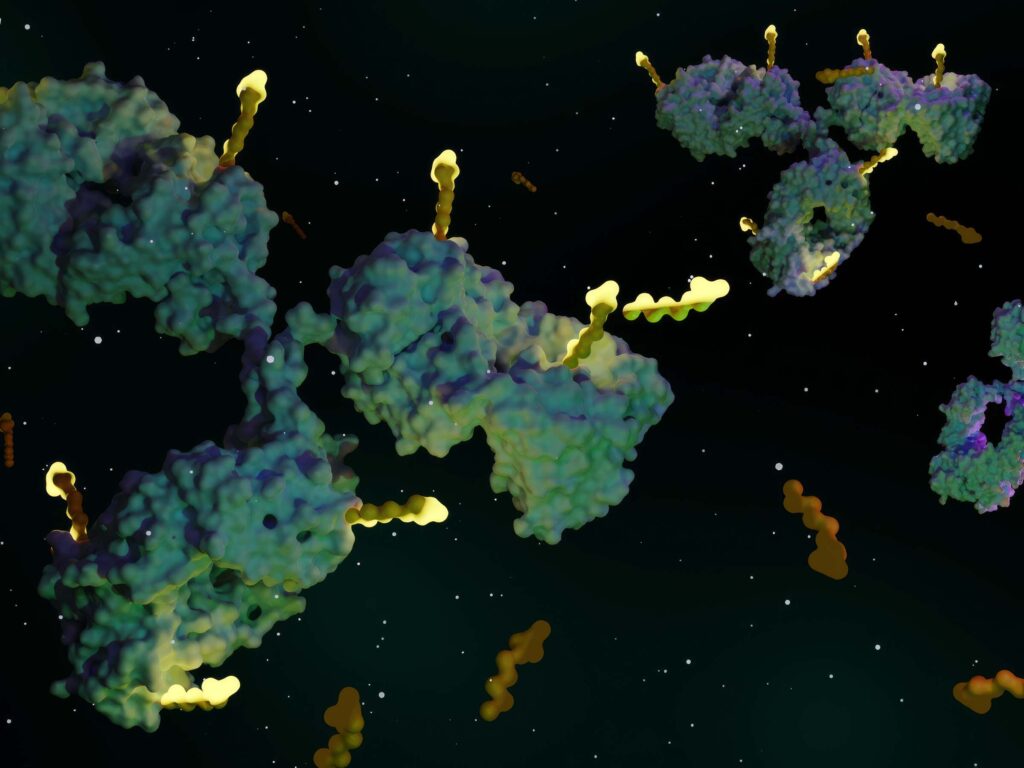
The world of biologics is moving far beyond traditional monoclonal antibodies, and companies across the biopharmaceutical landscape are racing to keep pace. From multispecific antibodies to antibody-drug conjugates (ADCs) and antibody–oligonucleotide conjugates, emerging modalities are reshaping how researchers think about therapeutic development. ProBio is at the center of that evolution.
As innovation accelerates, so do the challenges. New therapeutic formats demand not only scientific creativity, but also highly adaptable development strategies that can move quickly from concept to clinic. For ProBio, that means building flexible platforms capable of supporting the entire journey—from discovery to IND-enabling studies and CMC development.
“The emerging modalities in antibodies are being used across multiple therapeutic areas,” says Jingyuan Zhang, PhD, content marketing specialist at ProBio. “So, we are looking at this entire field and the challenges that people are likely to face.”
That broad perspective is becoming increasingly important as drug developers face growing pressure to optimize candidates earlier in the pipeline. According to Zhang, success with these next-generation therapies often depends on decisions made long before clinical development begins. “You need to consider early-stage design as much as possible,” she adds.
That philosophy—front-loading strategy to reduce downstream risk—is a major theme in ProBio’s work. Whether developing ADCs with complex linker chemistry or designing multispecific antibodies that require careful balancing of efficacy and safety, the company emphasizes early-stage planning as a critical differentiator.
This focus was also reflected in ProBio’s recent presentation at the American Association for Cancer Research (AACR) Annual Meeting, where the company highlighted its integrated approach to supporting emerging modalities. The presentation underscored how early molecular design, manufacturability considerations, and translational planning can dramatically improve timelines and outcomes for developers working in oncology and beyond.
AACR served as a fitting stage for that message. As one of the leading global forums for cancer research, the conference showcased the growing industry interest in novel antibody formats and precision-targeted therapies. For ProBio, it was an opportunity to demonstrate how service providers must evolve alongside the science itself.
“The science has moved on so much that it’s enabled companies to move to a modality-first approach,” says Tracy Humphries, head of U.S. & E.U. regional marketing at ProBio. “Twenty years ago, it was all about just antibodies. They delivered major successes. Then we saw a fundamental rise in next-generation technologies that have opened the door for companies to look at how they can address unmet clinical needs in ways that will be more efficient or more effective than what they’re using currently.”
That shift creates enormous opportunity, but it also requires service providers to move faster than ever before. Emerging modalities are not static categories; they are rapidly advancing fields where platform capabilities must be built almost in real time. As Zhang says, “When a new modality emerges, we need to rapidly establish capabilities spanning discovery through IND-enabling studies and CMC development so that companies can achieve proof of concept as quickly as possible.”
Rather than acting as a traditional contract development partner, ProBio sees itself as a strategic collaborator. “We aim to work with customers regardless of how their needs evolve, positioning ourselves as a collaborative partner,” Zhang explains. “This approach helps accelerate proof-of-concept generation.”
As the therapeutic frontier continues to expand, the companies best positioned for success will be those that can bridge innovation with execution. For ProBio, that means staying ahead of scientific trends while helping partners design smarter, faster, and with the future in mind. In the era of emerging modalities, antibodies may still be the foundation—but they are no longer the full story.