A genome-wide association study examining 169 diverse bread wheat genotypes has uncovered 57 marker-trait associations linked to cadmium accumulation and tolerance across 20 chromosomes. Researchers identified these genetic loci using 50 unique markers distributed across the A, B, and D subgenomes of bread wheat. The findings demonstrate that cadmium accumulation in bread wheat is governed by a complex genetic architecture, with distinct sets of associations emerging under different cadmium exposure levels.
Cadmium contamination of agricultural soils poses a persistent challenge to global food safety because the toxic heavy metal accumulates directly in edible grain tissues. Wheat supplies a substantial portion of global dietary energy, making cadmium accumulation a critical food safety concern worldwide. Previous genetic studies predominantly examined durum wheat, synthetic hexaploid lines, or non-Iranian germplasm, leaving the allelic diversity of Iranian bread wheat largely unexplored for cadmium accumulation and tolerance traits.
To address this gap, researchers evaluated 169 bread wheat genotypes comprising commercial cultivars, advanced breeding lines, and regional landraces under ambient environmental conditions. The experimental design tested three soil cadmium levels: 0, 5, and 10 milligrams per kilogram of soil. The research team recorded multiple phenotypic measurements, including grain and straw cadmium concentrations, accumulation factors, and translocation indices that quantify the movement of cadmium from vegetative tissues to grain.
Statistical analyses indicated that genotype, cadmium treatment, tissue type, and their interactions significantly influenced cadmium accumulation at a significance level of P less than 0.001. Across all experimental treatments, straw tissues consistently retained higher cadmium concentrations than grain tissues. Best linear unbiased predictions were estimated using mixed models, and high-density DArTseq-derived markers underwent strict quality filtering prior to multi-model association analysis that accounted for population structure.
Cadmium concentrations in grain varied widely among the tested genotypes under both elevated soil treatments. Grain cadmium ranged from 0.10 to 2.49 milligrams per kilogram under the 5 milligrams per kilogram treatment and from 0.70 to 4.10 milligrams per kilogram under the 10 milligrams per kilogram treatment. The genotypes Arina, EF-Federal, and TRI19174 maintained stable low accumulation, whereas genotypes KC9731 and Riband accumulated cadmium consistently across both stress levels.
Heritability estimates exceeded 0.50 for most measured traits, indicating substantial genetic control, while the translocation factor showed lower heritability below 0.25. The genome-wide association mapping revealed 57 marker-trait associations involving 50 unique markers, with chromosomes 5A and 5B harboring the greatest number of loci. Different sets of associations were detected under the two cadmium treatments, suggesting treatment-dependent association patterns that reflect distinct responses across stress levels.
Linkage disequilibrium-based positional mapping and functional annotation identified putative candidate genes underlying the significant associations. These candidates included metal transporters such as HMA, ZIP, and YSL7, alongside detoxification enzymes including glutathione S-transferase, cytochrome P450, and peroxidases. The identified genes also featured antioxidant components, chromatin-associated proteins, and regulatory transcription factors belonging to the bHLH, bZIP, and AP2/CBF families involved in stress responses.
These findings provide valuable insight into the genetic architecture of cadmium accumulation and tolerance across hexaploid bread wheat. By characterizing diverse Iranian germplasm, the study establishes an essential foundation for marker-assisted breeding programs aimed at developing low-cadmium wheat varieties adapted to Iranian conditions while contributing to a broader understanding of cadmium accumulation genetics in hexaploid wheat crops.
Subject of Research: Genetic architecture of cadmium accumulation and tolerance in bread wheat
Article Title: Genome-wide association mapping reveals the genetic architecture of cadmium accumulation and tolerance in a diverse Wheat (Triticum aestivum L.) germplasm
Article References: Abdolmalaki, Z., Soorni, A., Mehrabi, R., Talebi, R., Shirvani, M., & Majidi, M. M. (2026). Genome-wide association mapping reveals the genetic architecture of cadmium accumulation and tolerance in a diverse Wheat (Triticum aestivum L.) germplasm. BMC Plant Biology. https://doi.org/10.1186/s12870-026-10465-1
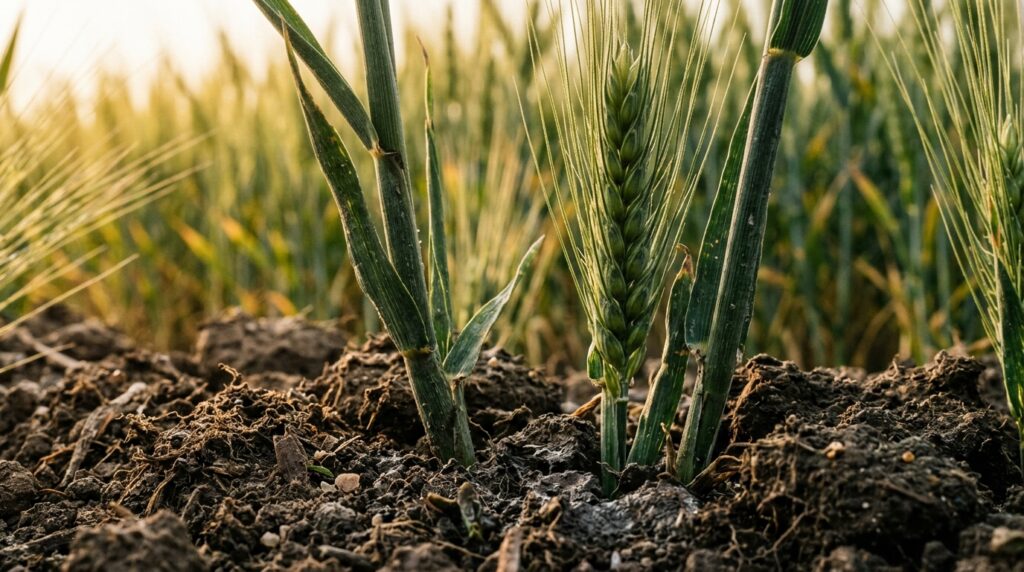
Image Credits: AI Generated
DOI: 10.1186/s12870-026-10465-1
Keywords: bread wheat, Triticum aestivum, cadmium accumulation, genome-wide association study, marker-trait associations, heavy metal tolerance, DArTseq markers, translocation factor, candidate genes, metal transporters, Iranian germplasm, food safety, soil contamination, heritability, chromosomes 5A and 5B, detoxification enzymes, transcription factors, marker-assisted breeding