

Stable glucagon-like peptide-1 receptor (GLP-1) agonists, like Exendin-4 and Ozempic, have become a mainstay for treatment of type 2 diabetes and the promotion of weight loss.
In a new study published in PNAS titled, “Med14 phosphorylation shapes genomic response to GLP-1 agonists,” researchers from the Salk Institute have uncovered the mechanistic details behind how GLP-1 drugs promote viability and stress resistance in pancreatic beta cells. Notably, the team unveiled that Med14, the scaffolding subunit of the conserved Mediator complex for transcription, enables GLP-1-dependent changes in gene expression that lead to pancreatic health benefits.
Pancreatic beta cells are equipped to convert metabolic cues of nutrient abundance to insulin secretion. Changes in glucose and lipid metabolism during meals are important in maintaining energy balance while chronic increases in these metabolites disrupt beta cell function and lead to type 2 diabetes.
GLP-1 drugs mimic the hormone, glucagon-like peptide-1, which regulates blood sugar by binding to the receptors of pancreatic beta cells to promote insulin secretion. Unlike human-made GLP-1 hormones that are quickly synthesized and removed during meal times, artificial GLP-1 receptor agonists can remain in the body for longer periods of time to provide a “wonder drug” effect. The mechanism behind this longer-term GLP-1 drug scale is poorly understood.
“The fact that these drugs based off our hormones are stable seems to be important to the longer-term effects we’re witnessing in pancreatic beta cells and other tissues,” said Sam Van de Velde, PhD, a staff scientist at Salk and first author of the study. “To understand how we are getting these longer-term effects, we need to study these drugs on a longer time scale.”
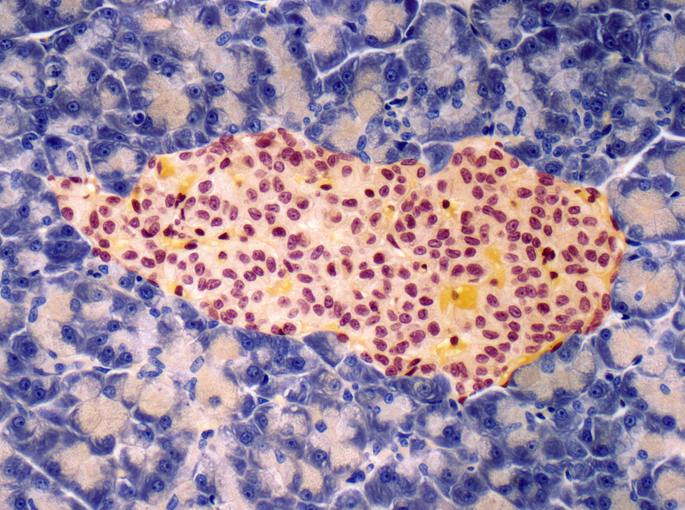
The authors found that exposure of pancreatic islet beta cells to GLP-1 receptor agonist promotes phosphorylation of Med14, while mutation of Med14 at this phosphorylation site blocks induction of GLP-1-responsive genes. The gene expression patterns associated with prolonged GLP-1 drug exposure disappeared in a Med14 mutant pancreatic beta cell line and in beta cells of a Med14 mutant mouse model.
Additionally, exposure to Exendin-4 and other GLP-1 receptor agonists stimulated sustained phosphorylation of Med14. Mutated Med14 blocked Exendin-4 effects on gene expression by interfering with CREB-mediated activation of beta cell-specific enhancers. The mechanism illustrates how a general coactivator can promote the selective induction of metabolic programs in response to circulating hormones.
“Our findings unexpectedly reveal that phosphorylation of just a small part of the Med14 protein plays a significant role in the response to GLP-1 drugs—and in the metabolic response to hormones more broadly,” said Reuben Shaw, PhD, director of the National Cancer Institute-Designated Salk Cancer Center and co-author on the study. “Now there are many new questions to answer, from validating our findings in human tissues to seeing whether Med14 has a similar role in other cells and organs.”

