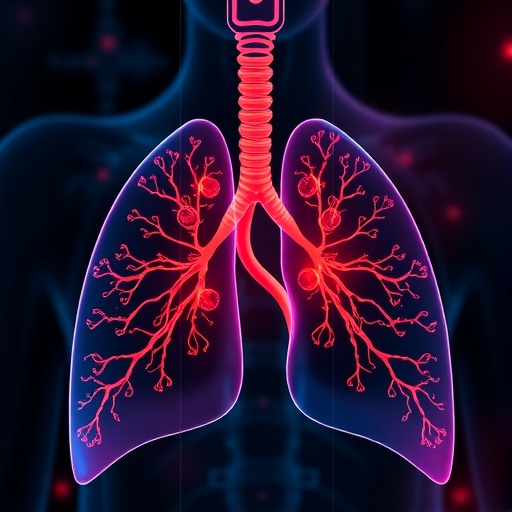
In a groundbreaking preclinical study published in the esteemed journal Targetome on February 9, 2026, researchers from Tianjin University of Traditional Chinese Medicine have shed new light on the therapeutic potential of Xuebijing injection (XBJ) in mitigating acute lung injury (ALI) induced by lipopolysaccharide (LPS). ALI, a rapidly progressing condition often precipitated by severe infection and characterized by inflammation, loss of alveolar barrier integrity, and respiratory failure, still lacks targeted pharmacological interventions. This latest research comprehensively elucidates how XBJ, a multi-herbal traditional Chinese medicine formulation, exerts its protective effects through a complex, multi-target mechanism involving suppression of inflammation, immune modulation, and ferroptosis inhibition.
ALI is distinguished by a cascade of cellular and molecular events that escalate tissue injury, fluid leakage into alveoli, and ultimately, respiratory compromise. Despite decades of investigation, clinically approved drugs that can effectively curb these pathological processes remain an unmet need. The innovative study led by Chengpeng Sun’s team leverages an LPS-induced murine model that faithfully recapitulates the hallmark features of ALI. Utilizing an array of sophisticated quantitative assays—ranging from cytokine profiling and enzymatic marker measurements to immunohistochemical and flow cytometric analyses—the researchers demonstrate that administration of XBJ dramatically attenuates lung inflammation and tissue damage.
Central to the study’s findings is XBJ’s ability to blunt the surge of pro-inflammatory cytokines such as interleukin-6 (IL-6) and tumor necrosis factor-alpha (TNF-α), which are pivotal drivers of ALI pathology. The therapeutic intervention not only lowers these detrimental inflammatory mediators but also preserves the integrity of the alveolar-capillary barrier, a feat confirmed by the restoration of tight junction proteins occludin and claudin-1. Preservation of these molecular gatekeepers is crucial to preventing the leakage of fluids and inflammatory cells into the lung parenchyma, thereby maintaining efficient gas exchange and preventing pulmonary edema.
Further mechanistic insight reveals that XBJ exerts profound effects on the immune microenvironment within the lung. The study delineates how XBJ facilitates a recalibration of T cell subsets by favoring regulatory T cell (Treg) dominance, as indicated by elevated Foxp3 transcription factor levels, while concurrently suppressing the pathogenic Th17 subset marked by reduced RORγt expression. This rebalancing aligns with decreased expression of inflammatory genes including IL-17A and IL-1α, collectively contributing to dampened immune overactivation and enhanced resolution of inflammation.
On the molecular signaling front, the research highlights XBJ’s inhibition of key inflammatory pathways, notably mitogen-activated protein kinase (MAPK) and nuclear factor kappa B (NF-κB). Immunofluorescence localization experiments showcase reduced nuclear translocation and activation of pathway components following XBJ treatment, underscoring its role in disrupting the feed-forward loop of inflammatory amplification. Moreover, protein markers such as cyclooxygenase-2 (COX-2) and IL-6 were markedly diminished within lung tissues, signifying potent downregulation of pro-inflammatory enzymatic pathways.
Beyond classical inflammation, the team explored the role of inflammasome activation and ferroptosis, a form of regulated cell death driven by iron-dependent lipid peroxidation, both increasingly recognized as critical in the pathogenesis of ALI. Here, XBJ markedly suppressed the NLRP3 inflammasome and its product IL-1β, alleviating inflammasome-mediated lung injury. Concurrently, XBJ modulated ferroptosis-associated proteins including glutathione peroxidase 4 (GPX4), transferrin receptor (TFRC), and solute carrier transporters (Slc7a11), restoring antioxidant defenses and iron homeostasis. These molecular corrections serve to curtail oxidative damage and preserve cellular vitality amid inflammatory stress.
Complementing in vivo findings, in vitro experiments with LPS-stimulated MH-S alveolar macrophages pinpointed non-cytotoxic doses of XBJ that effectively reduced nitric oxide (NO) production, pro-inflammatory cytokine secretion, and transcription of inflammatory genes. Importantly, these doses also inhibited lipid peroxidation and iron accumulation, hallmarks of ferroptosis, while normalizing the expression of protective and iron-regulatory proteins. These data affirm XBJ’s direct modulatory capacity on resident lung immune cells, pivotal players in ALI progression.
A highlight of the study is the chemical biology approach employed to identify intracellular targets of XBJ. Utilizing bead-conjugated affinity capture combined with cellular thermal shift assays and drug affinity responsive target stability analysis, the authors identified five direct molecular targets: enolase 1 (ENO1), PDZ binding kinase (PBK), eukaryotic initiation factor 3 subunit I (EIF3I), pyruvate kinase M2 isoform (PKM2), and Kelch-like ECH-associated protein 1 (Keap1). Mass spectrometry and molecular docking studies revealed that various XBJ constituents, including oleic acid, palmitic acid, sugiol, and ethyl 4-hydroxy-3-methoxycinnamate, actively bind these targets, collectively orchestrating the anti-inflammatory and antioxidative responses.
The integrative targeting strategy of XBJ suggests an effective therapeutic paradigm for complex diseases like ALI, wherein multiple interconnected biological pathways contribute to pathology. By simultaneously suppressing inflammatory cascades, stabilizing alveolar barrier proteins, rebalancing T cell subsets, and thwarting ferroptosis, XBJ appears to harness synergistic mechanisms inaccessible to single-target drugs. This multifaceted approach offers a promising avenue not only for ALI treatment but also for related syndromes characterized by dysregulated inflammation and oxidative damage.
Encapsulating the high translational value of their findings, the researchers propose that the identified targets—PKM2, ENO1, PBK, EIF3I, and Keap1—could serve as promising nodes for future drug development. Targeting these proteins may help disrupt the vicious cycle of inflammation and cell death that exacerbates lung injury, thus presenting novel therapeutic opportunities. This study lays vital groundwork for subsequent clinical investigations into XBJ and similar multi-component therapies, which may ultimately expand the arsenal against acute respiratory distress conditions.
The implications of this research reverberate beyond traditional Chinese medicine, showcasing the power of integrating cutting-edge molecular biology techniques with established herbal formulations. Such interdisciplinary approaches may accelerate the discovery of effective treatments for complex, multifactorial diseases where conventional drug development has struggled. By decoding the molecular underpinnings of XBJ’s efficacy, this work bridges ancient medicinal wisdom with modern biomedical science in a compelling narrative.
As LPS-induced ALI models continue to be pivotal for understanding acute inflammation and lung pathology, this study exemplifies how comprehensive in vivo and in vitro paradigms paired with state-of-the-art chemical biology can uncover nuanced therapeutic mechanisms. The detailed biochemical and immunological profiling performed sets a new standard in preclinical evaluation of multi-herbal interventions, emphasizing the importance of systems-level assessments in drug discovery.
In conclusion, this landmark study from Tianjin University elevates Xuebijing injection as a potent multi-target agent capable of orchestrating molecular and cellular pathways critical for mitigating ALI. Given the global burden of respiratory diseases and the urgent need for effective therapies, these findings potentially herald a new era in the management of acute lung injury, marrying tradition with innovation to save lives.
Article Title: Xuebijing injection ameliorates LPS-mediated acute lung injury via multi-target synergy by alleviating inflammation and ferroptosis
News Publication Date: 9-Feb-2026
References:
DOI: 10.48130/targetome-0026-0005
Keywords:
Acute lung injury, Xuebijing injection, inflammation, ferroptosis, alveolar barrier, immune modulation, LPS, multi-target therapy, NLRP3 inflammasome, MAPK pathway, NF-κB pathway, traditional Chinese medicine
Tags: alveolar barrier protection in lung injurycytokine profiling in lung inflammationferroptosis inhibition in respiratory diseasesherbal medicine for respiratory failureimmune modulation in acute lung injuryimmunohistochemical analysis in lung injury studieslipopolysaccharide-induced lung injury modelmulti-target anti-inflammatory mechanismsmurine models for respiratory researchpharmacological interventions for ALItraditional Chinese medicine in ALI treatmentXuebijing injection for acute lung injury