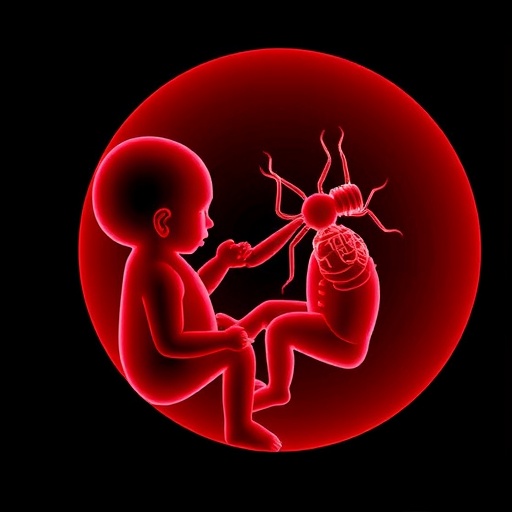
In a groundbreaking population-based study recently published in Nature Communications, researchers have unveiled vital insights into the impact of in-utero exposure to the chikungunya virus (CHIKV) on child morbimortality. This comprehensive research, led by Kushibuchi, Carroll, Cerqueira-Silva, and colleagues, employs a robust methodology integrating linked routine healthcare data to evaluate the long-term health outcomes of infants exposed to the virus during gestation. The findings present critical implications for global public health strategies, particularly in regions with endemic CHIKV transmission.
Chikungunya virus, an alphavirus transmitted primarily by Aedes mosquitoes, has emerged as a significant arboviral threat over the past decades. While adult infection typically manifests with acute febrile illness, joint pain, and rash, the consequences of vertical transmission during pregnancy have remained underexplored. This study addresses a crucial knowledge gap by delineating the direct effects of prenatal CHIKV exposure on child health morbidity and mortality, extending the understanding beyond immediate neonatal outcomes to encompass the extended early childhood period.
The researchers harnessed a population-wide epidemiological dataset, linking maternal and child health records with virological surveillance data. By cross-referencing laboratory-confirmed maternal CHIKV infections with birth registries and pediatric health records, the team created an unprecedentedly detailed cohort for longitudinal analysis. This dataset allows for the precise identification of infants at risk of exposure in utero and the monitoring of their developmental trajectories and health complications up to several years of age.
Their findings underscore a pronounced increase in morbidity among children exposed to chikungunya in utero, compared to unexposed counterparts. The spectrum of health outcomes involved a higher incidence of neurological and developmental disorders, alongside an elevated risk of respiratory infections and hospitalizations during early childhood. The study articulates these associations with rigorous statistical models adjusting for confounding variables including socioeconomic status, maternal health comorbidities, and environmental factors.
Notably, the data reveal a delicate gestational window during which viral exposure exerts the most profound detrimental effects. First and second-trimester infections were correlated with the highest risk profiles for adverse child health outcomes, suggesting critical interference with embryonic and fetal organogenesis. These insights offer essential guidance for prenatal care protocols in regions experiencing CHIKV outbreaks, advocating for intensified surveillance and possible targeted interventions during these vulnerable gestational phases.
From a virological perspective, the study contributes to the understanding of the pathophysiological mechanisms underlying vertical transmission and fetal injury. The authors highlight the potential for CHIKV to cross the placental barrier, eliciting localized inflammatory responses and disrupting neurodevelopmental signaling pathways. Such mechanisms may underlie the observed rise in neurodevelopmental anomalies and susceptibility to infections, emphasizing the virus’s capacity for insidious, long-lasting maternal-fetal impact.
The methodology’s strength lies in its use of linked routine data, which mitigates the typical challenges of recall bias and incomplete clinical follow-up. By leveraging existing healthcare databases, the analysis achieves a sample size and temporal duration rarely feasible in traditional cohort studies. Furthermore, the integration of virological confirmation ensures specificity in attributing outcomes to CHIKV exposure rather than co-circulating arboviruses or unrelated pathogens.
Beyond immediate clinical relevance, this research presents pathways for future investigation into the immunological and molecular sequelae of congenital chikungunya exposure. The elucidation of biomarkers predictive of adverse child health outcomes may stimulate the development of diagnostic platforms and therapeutic targets. Additionally, these findings propel the imperative for vaccine development tailored to pregnant populations, a domain currently underrepresented in arboviral vaccine research.
The public health ramifications are profound given the increasing geographic spread of Aedes vectors and the expansion of CHIKV into new territories facilitated by climate change and urbanization. The recognition that gestational chikungunya infection compromises early childhood survival and health necessitates the inclusion of maternal infection status in neonatal risk stratification frameworks. This approach could facilitate enhanced pediatric monitoring and early intervention services, potentially mitigating the lifelong burden of virus-induced developmental impairments.
The study’s findings resonate with parallel concerns regarding other congenital viral infections such as Zika virus and cytomegalovirus, contributing to a growing paradigm of perinatal infectious disease as a determinant of childhood morbidity. However, unlike Zika, chikungunya’s vertical transmission and fetal impact have remained less characterized until now, highlighting the novelty and importance of this research.
In conclusion, the population-based study by Kushibuchi and colleagues is pivotal in reshaping our comprehension of congenital chikungunya infection. By employing epidemiological rigor combined with virological verification, it establishes a clear link between maternal infection and increased child morbimortality, urging reconsideration of public health priorities. The work bridges the gap between virology, obstetrics, and pediatrics, fostering integrated approaches to mitigate the consequences of maternal CHIKV infections.
As the global health community continues to confront emerging infectious diseases, the knowledge generated here emphasizes the need for heightened surveillance during pregnancy, tailored maternal care, and dedicated research efforts. The integration of routine data in infectious disease epidemiology exemplified by this study sets a precedent for future investigations seeking to unravel complex perinatal health challenges associated with viral exposure.
By delineating the subtle yet significant impacts of prenatal chikungunya exposure, this research advocates for enhanced awareness and resource allocation to protect vulnerable maternal and child populations. This is especially urgent in resource-limited settings where arboviral infections are endemic, and healthcare systems struggle to provide comprehensive maternal-child health services.
Ultimately, this work not only enriches the scientific dialogue surrounding chikungunya virus but also harmonizes with global initiatives aimed at reducing child mortality and improving neurodevelopmental outcomes worldwide. The convergent use of large-scale data analytics and clinical virology represents a powerful tool to address pressing infectious disease threats in the 21st century.
Subject of Research: Effects of in-utero exposure to chikungunya virus on child morbimortality and long-term health outcomes.
Article Title: In-utero exposure to chikungunya and child morbimortality: a population-based study using linked routine data.
Article References:
Kushibuchi, M., Carroll, O., Cerqueira-Silva, T. et al. In-utero exposure to chikungunya and child morbimortality: a population-based study using linked routine data. Nat Commun (2026). https://doi.org/10.1038/s41467-026-70786-5
Image Credits: AI Generated
Tags: alphavirus impact on fetal developmentchikungunya virus endemic regionschild morbimortality from chikungunyaepidemiological study on chikungunyaglobal public health chikungunya strategiesin-utero chikungunya virus exposurelinked healthcare data analysis chikungunyalong-term child health outcomes chikungunyamaternal chikungunya infection pregnancyprenatal CHIKV infection effectsvertical transmission of chikungunya virusvirological surveillance maternal infection