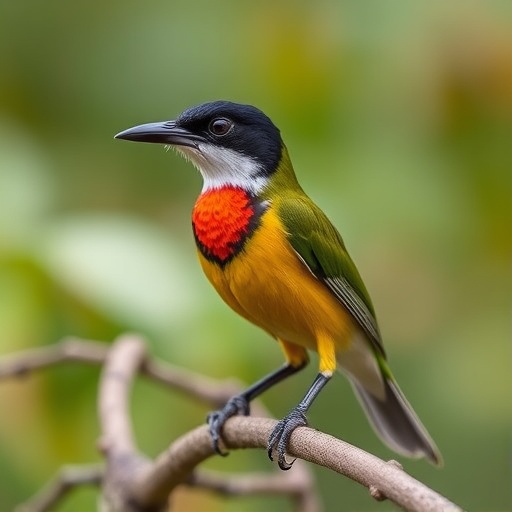
In a groundbreaking discovery emerging from the remote island ecosystem of the Seychelles, researchers at the University of East Anglia have uncovered a profound and intricate relationship between immune system genetics and gut microbiome composition. The study uses the Seychelles warbler, a small, insectivorous songbird confined to the isolated Cousin Island, as a living model. Through painstaking longitudinal fieldwork and advanced genomic analyses, scientists have shown that host immune gene variations significantly influence both the diversity and functional dynamics of gut microbial communities, revealing evolutionary insights with implications that extend well beyond avian biology.
The central focus of the research is the major histocompatibility complex (MHC), a cluster of genes pivotal to the vertebrate adaptive immune response. MHC molecules are responsible for antigen presentation, a critical step in immune recognition and pathogen defense. Variability in these genes can modulate immune responsiveness, affecting disease susceptibility and survival. By genetically profiling individual warblers alongside their gut microbiomes from fecal samples collected over several years, the team demonstrated a strong correlation between specific MHC alleles and the presence of distinct microbial taxa.
This pioneering work moves past typical microbiome surveys that catalog bacterial species by incorporating metagenomic functional profiling. It became clear that MHC genetic diversity doesn’t just influence which microbes inhabit the gut but also shapes their metabolic and immunomodulatory functions. For instance, microbes associated with carbohydrate metabolism or antiviral peptide synthesis showed differential abundance linked to particular MHC genotypes, suggesting a bidirectional evolutionary dialogue where host immune pressures select for microbial traits that, in turn, modulate immune function and overall health.
The Seychelles warbler population on Cousin Island offers a natural ecological ‘laboratory’ unparalleled in its granularity. Individual birds are fitted with unique colored leg rings, allowing comprehensive behavioral, ecological, and genetic tracking throughout their lifespans. This longitudinal data richness enables researchers to integrate microbial ecology with host genetics and fitness outcomes under natural conditions, a realm often inaccessible in laboratory models. The island’s geographic isolation and small warbler population reduce confounding environmental factors, providing a robust system to disentangle host-microbe genetic interactions.
Lead scientist Professor David Richardson elaborated on the significance of this natural experiment: “In this intact, isolated system, we can follow individuals from hatching to old age, observing how their immune genotype shapes microbial communities in vivo. This offers unprecedented insights into how immune systems and gut microbiota co-evolve, revealing selective pressures acting in wild populations.” Such insights bear relevance across vertebrates, including humans, where gut microbiomes play vital roles in health and disease modulation, but the complexity of environmental variables often obscures genetic contributions.
Dr. Chuen Zhang Lee, who spearheaded the microbiome analysis as part of his doctoral research, emphasized the functional dimensions of their findings. “We examined not only microbial community composition but also microbial gene functions, uncovering how immune genotypes influence metabolic pathways and antiviral defenses mediated by gut bacteria. This functional angle is crucial to understanding microbiome contributions to host fitness beyond mere microbial presence.” This methodological advance moves microbiome research into a new frontier of integrating host genetics with microbial ecology and systems biology.
The researchers utilized high-throughput sequencing technologies coupled with sophisticated statistical and ecological modeling to discern correlations between MHC alleles and gut microbiome profiles. The approach encompassed metagenomic sequencing of fecal samples, bioinformatic reconstruction of microbial functional potential, and immunogenetic assays to characterize MHC haplotypes. This integrated platform has unveiled evolutionary trade-offs, where immune genes potentially balance the benefits of hosting protective microbes against the costs of harboring potentially pathogenic or metabolically demanding taxa.
Their findings challenge the simplistic view that immune systems merely defend against microbes, highlighting a nuanced role as ecological sculptors of the gut microbiome landscape. The reciprocal relationship implies that gut bacteria provide critical immune stimulation and metabolic support, effectively ‘training’ and modulating host immunity. The evolutionary ramifications suggest a co-adaptive process where host and microbiome fitness are intertwined, with genetic selection pressures acting on both partners over generations.
While this work focuses on a wild vertebrate bird species, its implications transcend taxonomic boundaries. The conserved nature of the MHC and fundamental immune mechanisms suggest similar genetic-microbiome interactions are prevalent across vertebrates, including mammals and humans. Understanding these dynamics could inspire novel therapeutic approaches targeting immune-microbiome crosstalk to treat or prevent immune-mediated diseases and metabolic disorders.
The study represents a hallmark in ecological immunogenetics and microbiome science, bridging fields traditionally studied separately. By combining wild animal ecology, genomics, and microbial systems biology, it opens new avenues for exploring how complex host-microbe interactions evolve and maintain health in natural environments. Future research motivated by these findings may incorporate experimental manipulations and functional assays to deepen mechanistic understanding.
Funding for this multidisciplinary research was generously provided by prominent institutions including the UK Biotechnology and Biological Sciences Research Council (BBSRC), the Natural Environment Research Council (NERC), the Leverhulme Trust, the European Research Council, and the Dutch Research Council. Collaborative contributions came from the Centre for Microbial Interactions, the Quadram Institute, the Earlham Institute, the University of Groningen, and Nature Seychelles.
Publication of these findings in the journal Microbiome highlights the cutting-edge nature of this study within the fields of microbiology and immunology. It advances our comprehension of the genetic underpinnings of gut microbiome assembly and function in ecological contexts, offering a blueprint for future investigations into host-microbe co-evolutionary dynamics across diverse vertebrate systems.
Subject of Research: Animals
Article Title: ‘Host immunogenetic variation and gut microbiome functionality in a wild vertebrate population’
News Publication Date: 12-Mar-2026
Image Credits: Claire Lok Sze Tsui, University of East Anglia
Keywords: Gut microbiota, Microbiota, Human gut microbiota, Microbiology, Immunology, Immune response, Immune system, Immunogenetics, Birds, Vertebrates, Animals, Organismal biology, Wildlife
Tags: adaptive immunity genetics in wildlifeavian gut microbiome diversityevolutionary immunology in songbirdshost-microbiome genetic interactionsimmune gene variation and microbiome compositionimmune system genetics and gut microbiomelongitudinal fieldwork in island birdsmajor histocompatibility complex rolemetagenomic functional profiling in birdspathogen defense and gut bacteriaSeychelles island bird ecologySeychelles warbler immune research