
In the rapidly advancing fields of electric vehicles and energy storage systems, the quest for next-generation battery technologies that surpass the limitations of current lithium-ion batteries has become paramount. Among the promising candidates, lithium-air batteries stand out due to their potential to deliver energy densities exceeding those of lithium-ion batteries by over an order of magnitude. This breakthrough technology could revolutionize electric vehicle ranges and energy storage capabilities, but commercialization has been hindered by fundamental material and catalytic challenges. Central to these challenges is the restriction of active catalytic sites necessary for oxygen reactions during charging and discharging, which limits reaction rates and drastically shortens battery lifespans.
Addressing this critical obstacle, a notable joint research effort spearheaded by Dr. Sohee Jeong at the Korea Institute of Science and Technology (KIST) and Dr. Gwang-Hee Lee at the Institute for Advanced Engineering (IAE) has unveiled a novel catalyst technology. This innovation focuses on fully activating the surface area of tungsten diselenide (WSe₂), a two-dimensional nanomaterial, which until now exhibited minimal chemical reactivity beyond its edge sites. By transforming the typically inert basal planes of WSe₂ into catalytically active sites, the team has succeeded in significantly enhancing both the catalytic performance and the durability of lithium-air batteries.
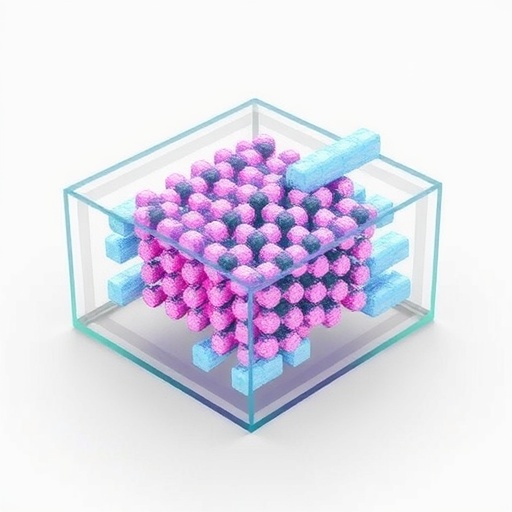
The researchers’ groundbreaking approach involves atomic-scale engineering through platinum (Pt) atom substitution within the layered WSe₂ structure and the creation of deliberate selenium (Se) vacancies at the atomic level. These engineered vacancies serve as potent catalytic hotspots that strongly adsorb oxygen molecules, facilitating both the oxygen reduction reaction (ORR) during discharge and the oxygen evolution reaction (OER) during charge. This dual enhancement of ORR and OER kinetics simultaneously boosts battery efficiency and longevity. Crucially, this activation does not compromise the intrinsic electrical conductivity of the metallic WSe₂, maintaining rapid electron transport essential for high-performance energy devices.
Implementing this defect-engineered catalyst in lithium-air battery prototypes demonstrated exceptional practical benefits. The batteries achieved a stable operational lifespan exceeding 550 charge-discharge cycles at a fast rate of 1 C, a substantial improvement over previous benchmarks. Additionally, the catalyst outperformed established commercial alternatives such as Pt/C and ruthenium oxide (RuO₂), maintaining superior durability and stability across a wide spectrum of charge-discharge rates from 0.1 C up to 3 C. This resilience under dynamic operational conditions speaks to the catalyst’s potential for enabling next-generation batteries capable of withstanding the rigors of rapid charging and discharging without significant performance degradation.
This research not only advances lithium-air battery technology but also signals a paradigm shift in material design strategies for two-dimensional (2D) nanomaterials. Typically, the basal planes of 2D materials like WSe₂ are chemically inert, limiting their catalytic utility to edge sites only. By turning the entire basal plane into catalytically active regions through precise vacancy engineering, the team has dramatically expanded the functional surface area without losing electrical performance. This conceptual and technical innovation can be adapted to a wide range of catalytic processes, heralding new applications in water splitting, fuel cells, and other energy conversion technologies that demand high-performance catalysts.
The success of this atomic-level control strategy underscores the importance of combining structural integrity with high catalytic activity—two attributes often at odds in catalytic material design. Maintaining the layer structure of WSe₂ ensures excellent electronic pathways, while the carefully introduced point defects enhance chemical reactivity. Together, these modifications synergistically improve overall electrochemical performance. Such advancements exemplify the evolving frontier of nanomaterials research, where precision controls at the atomic scale unlock previously inaccessible functional properties.
Moreover, this collaborative research included contributions from the Lawrence Livermore National Laboratory (LLNL) in the United States, enhancing the global scientific credibility and competitiveness of the work. The team’s efforts pave the way for robust technology transfer and commercialization pathways, emphasizing the strategic importance of domestic innovation in competing global battery technology markets. By harnessing advanced materials engineering at the atomic scale, this work accelerates the timeline towards viable lithium-air battery commercialization for automotive and stationary energy storage applications.
From a practical perspective, deploying such catalysts in lithium-air batteries could significantly reduce costs compared to the reliance on expensive platinum group metals. The approach of utilizing defect engineering to activate previously inert planes offers a scalable and economically viable method to maximize material utility. This aligns well with demands for sustainable and cost-effective energy solutions that do not compromise performance. Industry stakeholders and research communities alike are likely to focus attention on further development and optimization of this promising technology.
Dr. Sohee Jeong commented on the significance of this advancement, emphasizing that the research represents a major leap forward by unlocking basal plane reactivity while preserving the structural advantages of 2D materials. Dr. Gwang-Hee Lee also highlighted the catalyst’s exceptional capacity to support rapid charge and discharge cycles, a key requirement for high-power mobility systems such as electric vehicles. Together, their insights reflect the broader implications for catalysis and energy storage technologies that rely on both chemical and electronic optimization at the nanoscale.
The scientific community now has a compelling example of how converging atomic-level manufacturing techniques and material science can overcome long-standing barriers in battery technology. Looking ahead, future research aims to further explore the mechanistic details of oxygen intermediate interactions with defect sites, enhance scalability of synthesis methods, and integrate these catalysts into commercial battery formats. Continued interdisciplinary efforts combining materials science, electrochemistry, and engineering will be vital in translating these laboratory breakthroughs into real-world energy solutions.
Published in the prestigious journal Materials Science and Engineering R: Reports, this research not only pushes the frontier of catalyst design but also lays the groundwork for transformative applications across energy storage and conversion domains. As the demand for high-efficiency, durable, and cost-effective batteries grows exponentially with electrification trends worldwide, innovations like this atomic-scale vacancy engineering approach could be pivotal. Implementing such technologies heralds a future where electric vehicles have significantly extended range and energy systems achieve unprecedented robustness and efficiency.
In conclusion, the defect-engineered tungsten diselenide catalyst represents a quantum leap in the development of lithium-air batteries. By unlocking the full catalytic potential of two-dimensional basal planes, this work addresses core challenges of activity and stability that have constrained prior designs. The stable, rapid charge-discharge performance demonstrated signals a new era for high-performance, durable battery systems. This scientific milestone opens exciting avenues for fundamental research and practical energy applications, underpinning the sustainability ambitions of the coming decades.
Subject of Research: Lithium-air battery catalyst development via atomic-level defect engineering in two-dimensional tungsten diselenide (WSe₂).
Article Title: Atomic-scale vacancy engineering unlocks basal-plane catalytic activity in metallic WSe2 for reversible oxygen electrocatalysis.
News Publication Date: 19-Jan-2026.
Web References:
DOI: 10.1016/j.mser.2026.101190
Image Credits: Korea Institute of Science and Technology (KIST).
Keywords
Lithium-air battery, tungsten diselenide, WSe₂, two-dimensional materials, atomic vacancy engineering, platinum substitution, oxygen reduction reaction, oxygen evolution reaction, electrocatalysis, energy storage, rapid charge-discharge, catalyst durability, nanomaterials, electrochemistry.
Tags: advanced energy storage materialscatalyst durability in lithium-air batterieselectric vehicle battery innovationenergy density improvement lithium-airenhanced catalytic activity in batteriesKIST and IAE battery researchlithium-air battery technologynext-generation electric vehicle batteriesovercoming lithium-ion battery limitsoxygen reaction catalysis in batteriessurface activation of WSe2two-dimensional tungsten diselenide catalyst
