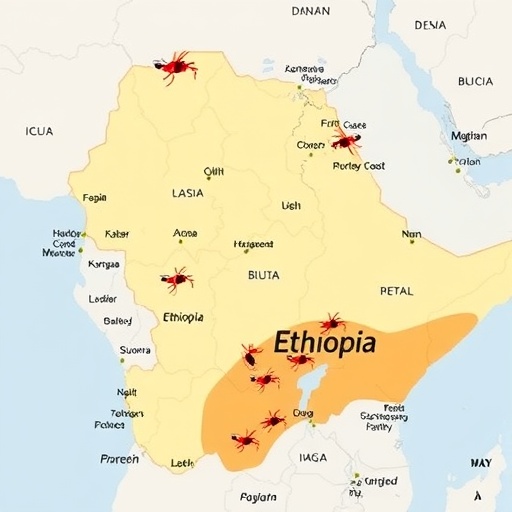
Ethiopia’s malaria resurgence is being investigated through a new study examining whether changes in the malaria parasite and in the tools used to detect and treat it are helping the disease return in areas where control had previously made substantial progress. The study, published in JAMA, focuses on emerging variants associated with drug resistance and diagnostic resistance, two biological developments that can undermine malaria programs even when prevention campaigns, clinical services, and surveillance systems remain in place. The research is led by Ashenafi Assefa Bahita, PhD, of the Ethiopian Public Health Institute, and Jonathan B. Parr, MD, MPH, of the University of North Carolina at Chapel Hill. The study’s stated aim is to determine whether these evolving variants are contributing to Ethiopia’s renewed malaria burden.
Malaria is caused by parasites of the genus Plasmodium and transmitted primarily through the bites of infected Anopheles mosquitoes. In Ethiopia, transmission is shaped by altitude, rainfall, temperature, population movement, and the distribution of mosquito vectors. Unlike many infectious diseases, malaria can expand or contract rapidly when environmental conditions change, making a resurgence difficult to attribute to a single cause. A rise in cases may reflect increased mosquito activity, gaps in insecticide-treated net use, disruptions in diagnosis or treatment, population displacement, or changes in parasite biology. The study addresses one particularly important possibility: that parasites carrying genetic variants which allow them to evade antimalarial medicines or escape routine diagnostic tests are spreading through affected communities.
Drug resistance develops when parasites with mutations or other genetic changes survive exposure to an antimalarial treatment that would normally eliminate them. Those surviving parasites can multiply and pass resistance-associated variants to subsequent generations. If resistant parasites become common, treatment may clear infections more slowly, fail entirely, or leave low-level infections capable of continuing transmission. Modern malaria treatment frequently relies on combinations of medicines so that parasites must overcome more than one pharmacological attack at the same time. This strategy can delay resistance, but it does not make the problem impossible. Resistance to components of artemisinin-based therapies has emerged in several parts of the world, while reduced susceptibility to partner drugs can further weaken treatment effectiveness. Determining which variants are present in Ethiopia is therefore essential for interpreting recurring infections and assessing whether current therapies remain reliable.
Diagnostic resistance presents a different but closely related threat. Many malaria control programs use rapid diagnostic tests that identify parasite proteins in a small blood sample. These tests are valuable because they can be used in clinics and communities without sophisticated laboratory equipment. However, parasites may acquire deletions or mutations affecting the genes that encode the target proteins detected by particular test formats. When that occurs, an infected person may receive a negative result despite carrying malaria parasites. Such infections can remain untreated and continue transmitting the disease, while health officials may underestimate the true number of cases. In areas where a diagnostic test is widely used, the spread of parasites lacking its target can create a systematic blind spot in surveillance. Genetic monitoring can reveal this problem by identifying parasites with missing or altered diagnostic markers.
The Ethiopian investigation is significant because treatment failure and diagnostic failure can reinforce one another. A patient with an infection that is invisible to a rapid test may not receive antimalarial therapy at all. A patient whose infection is detected but contains drug-resistant parasites may receive treatment that does not fully clear the infection. Both outcomes can allow parasites to persist in people who may later be bitten by mosquitoes, increasing the opportunity for transmission. At the population level, this interaction can make a resurgence appear to be caused only by changing weather or declining prevention coverage, when parasite evolution is also playing a role. The study’s focus on both drug and diagnostic resistance reflects the need to examine malaria as an evolving biological system rather than as a disease controlled solely through distributing medicines and mosquito nets.
To investigate these questions, researchers typically combine clinical, epidemiological, laboratory, and genomic evidence. Parasite samples can be tested to determine whether they carry known resistance markers, while laboratory assays may assess how those genetic changes relate to susceptibility to antimalarial compounds. Researchers can also examine the genes targeted by rapid diagnostic tests to identify deletions or sequence changes that could produce false-negative results. Linking laboratory findings with patient treatment histories, diagnostic outcomes, geographic location, and local transmission patterns can help distinguish isolated mutations from variants that are spreading. Genetic data may also reveal whether resistant parasites have emerged independently in multiple locations or descended from a common lineage. The information provided about the JAMA study does not include its detailed methods or findings, so the extent and geographic distribution of any variants identified cannot be determined from the study announcement alone.
The research arrives as malaria programs face a shifting landscape in which established interventions may lose effectiveness unevenly across regions. A diagnostic test can perform well in one setting but become less dependable in another if the parasite population changes. Similarly, a medicine can remain highly effective in one area while showing reduced performance elsewhere because resistance-associated variants are distributed differently. This geographic variation makes local surveillance indispensable. National malaria programs may need to update testing strategies, introduce alternative diagnostic platforms, revise treatment guidelines, or expand molecular monitoring when evidence indicates that existing tools are failing. Such decisions require careful interpretation because the presence of a resistance marker does not always mean that every infection will fail treatment, and the absence of a marker does not guarantee clinical success.
Ethiopia’s experience also illustrates why malaria control depends on continuous adaptation. Public health authorities must track not only the number of reported cases but also the quality of diagnosis, the clinical response to treatment, and the genetic characteristics of circulating parasites. Health workers may need access to confirmatory testing when rapid diagnostic results do not match symptoms or local transmission patterns. Laboratories require the capacity to preserve and analyze parasite samples, while surveillance systems must connect information from hospitals, clinics, research institutions, and communities. If the study finds that emerging resistance variants are contributing to the resurgence, the evidence could guide more targeted interventions. If it finds limited evidence for that explanation, attention may shift toward environmental, behavioral, vector-related, or health-system factors. Either outcome would help refine the response.
The study’s findings will be especially important for understanding whether Ethiopia’s malaria resurgence represents a temporary increase in transmission or a deeper change in the country’s malaria epidemiology. Resistance does not develop in isolation: medication access, treatment adherence, parasite movement, mosquito ecology, and the use of diagnostic tests all influence how rapidly a resistant lineage can spread. The ability to detect these changes early may determine whether public health authorities can contain them before they become widespread. By placing drug resistance and diagnostic resistance in the same investigation, the researchers are addressing two points at which malaria control can fail—recognition of infection and elimination of the parasite after diagnosis. The study is identified by the digital object identifier 10.1001/jama.2026.14688. Further details, including the full author list, methods, results, funding, and disclosures, are to be found in the published article.
Subject of Research: Emerging drug and diagnostic resistance variants contributing to the resurgence of malaria in Ethiopia.
Web References: https://doi.org/10.1001/jama.2026.14688
References: Bahita AA, Parr JB, et al. Study published in JAMA. DOI: 10.1001/jama.2026.14688.
Keywords: Malaria, Ethiopia, Plasmodium, antimalarial drug resistance, diagnostic resistance, rapid diagnostic tests, parasite genetics, malaria resurgence, infectious diseases, public health surveillance.
Tags: diagnostic resistance in malariadrug-resistant malaria strainsenvironmental factors in malaria transmissionfactors influencing malaria re-emergenceimpact of climate on malaria spreadmalaria parasite drug resistancemalaria prevention and control challengesmalaria resurgence Ethiopiamosquito vector distribution EthiopiaPlasmodium parasite variantspublic health response to malaria resurgencesurveillance and diagnostic tools in malaria