Microwave ablation, one of the most widely used locoregional treatments for liver cancer, may do far more than simply destroy tumor tissue. A new study published in Cancer Immunology, Immunotherapy suggests that when the heat-based therapy is paired with an emerging class of immune checkpoint blockers targeting LAG-3, it can supercharge the immune system’s ability to fight hepatocellular carcinoma, the most common form of primary liver cancer. The findings, demonstrated in mouse models of the disease, point to a chemokine-driven mechanism centered on the recruitment and activation of cytotoxic CD8+ T cells, and they offer a rationale for clinical strategies that combine physical tumor destruction with immunotherapy.
The research team, led by Zhilan Zhang and Ping Zhou of Xiangya Hospital of Central South University together with colleagues at Central South University Xiangya School of Medicine Affiliated Haikou Hospital, began by examining human hepatocellular carcinoma samples. They found that several immune-related molecules were prominently expressed in tumor tissue: LAG-3, an inhibitory receptor expressed on exhausted T cells; CXCL10, a chemokine secreted in response to inflammatory signals; CXCR3, the receptor on T cells that binds CXCL10; and CD8, the defining marker of cytotoxic T lymphocytes. This molecular signature hinted that the CXCL10/CXCR3 axis, a well-known trafficking pathway that guides activated T cells into inflamed tissue, was active in the liver tumor microenvironment, and that LAG-3-mediated suppression might be restraining the very T cells the pathway was drawing in.
To test the functional significance of these observations, the investigators turned to hepatocellular carcinoma-bearing mice. When the animals received microwave ablation, a technique that uses electromagnetic energy to generate lethal heat within tumor tissue, the researchers observed a striking change in the tumor-infiltrating lymphocyte population: LAG-3 expression rose on subsets of the infiltrating T cells. In other words, ablation did not merely shrink the tumor; it reshaped the immune landscape, drawing lymphocytes into the remaining tumor while simultaneously increasing the prevalence of the inhibitory checkpoint that can render those lymphocytes dysfunctional. This observation provided a mechanistic explanation for why local ablation alone often fails to prevent recurrence and why pairing it with checkpoint blockade could be advantageous.
LAG-3, or lymphocyte-activation gene 3, has attracted intense interest in oncology because it regulates T cell exhaustion through pathways that are distinct from those of the better-known checkpoint molecules PD-1 and CTLA-4. By binding its ligands and transmitting inhibitory signals, LAG-3 dampens the proliferative and cytotoxic capacity of T cells. Blocking LAG-3 with antibodies releases this brake, and several anti-LAG-3 agents are already in clinical development for solid tumors and hematologic malignancies. The new study asked a specific and clinically important question: does LAG-3 blockade complement microwave ablation in hepatocellular carcinoma, and if so, through what molecular circuitry?
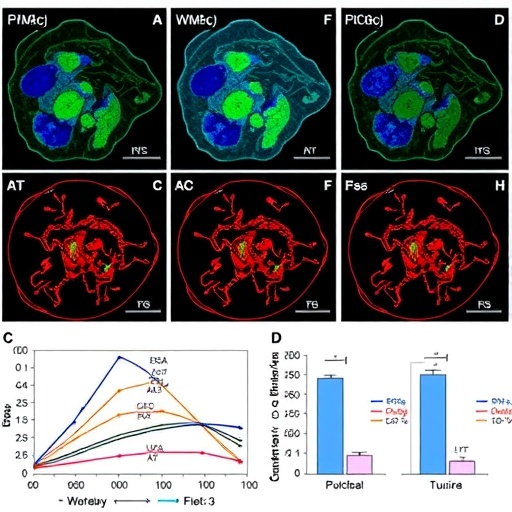
The answer, according to the mouse experiments, is a clear yes. Compared with either microwave ablation or anti-LAG-3 therapy alone, the combined treatment produced a synergistic anti-tumor effect. Mice receiving both interventions survived significantly longer and showed markedly inhibited tumor growth. Beyond the gross measures of tumor burden, the combination also remodeled the tumor immune microenvironment in ways that favored immune attack: tumor-infiltrating lymphocytes increased in number, serum levels of CXCL10 rose, the population of CXCR3-positive CD8+ T cells expanded, and the cytotoxic activity of CD8+ T cells was enhanced. The convergence of increased chemokine production with greater numbers of chemokine-receptor-bearing killer cells suggested that the CXCL10/CXCR3 axis was the engine driving the therapeutic synergy.
To confirm that the chemokine axis was genuinely required rather than merely correlated, the researchers performed two decisive loss-of-function experiments. First, they blocked CXCL10 in mice receiving the combined therapy. Neutralizing the chemokine weakened CD8+ T cell function, demonstrating that the chemokine signal is necessary for the enhanced cytotoxic response. Second, they depleted or blocked CD8+ T cells themselves under the combined regimen. This maneuver promoted tumor growth and impaired the anti-tumor benefit, establishing CD8+ T cells as the essential cellular mediators of the combination effect. Together, the two experiments trace the causal chain: microwave ablation and LAG-3 blockade act together to elevate CXCL10, CXCL10 engages CXCR3 on CD8+ T cells to recruit and activate them, and activated CD8+ T cells execute the tumor killing.
The mechanistic picture is biologically plausible and fits with established immunology. Thermal injury from ablation is known to release tumor antigens and danger signals that provoke local inflammation, and inflammatory cytokines such as interferon-gamma induce CXCL10 production in stromal and immune cells. At the same time, the influx of newly activated T cells into this inflammatory environment creates a larger pool of cells vulnerable to LAG-3-mediated inhibition, which likely explains why LAG-3 expression climbed on tumor-infiltrating lymphocytes after ablation in the study. Removing that constraint with an anti-LAG-3 antibody allows the newly recruited CD8+ T cells to proliferate, produce cytotoxic molecules such as granzyme B, and sustain their attack on residual tumor cells, including microscopic deposits that ablation cannot physically reach.
Hepatocellular carcinoma remains one of the most lethal and rapidly increasing cancers worldwide, frequently diagnosed at an advanced stage when curative resection or transplantation is no longer feasible. Immune checkpoint inhibitors have transformed the treatment landscape in recent years, but only a fraction of patients respond durably, and resistance remains a central clinical problem. Locoregional therapies such as microwave ablation are standard of care for early-stage disease, yet recurrence is common. A regimen that combines the antigen-releasing and inflammation-generating effects of ablation with checkpoint blockade that preserves T cell function could address both limitations simultaneously, converting an otherwise localized treatment into an in situ cancer vaccine while ensuring the recruited immune cells retain full killing capacity.
The authors emphasize that the therapeutic potential of combining microwave ablation with LAG-3 blockade had already been demonstrated in various cancers, but its specific efficacy and molecular mechanisms in hepatocellular carcinoma had remained unclear. By identifying the CXCL10/CXCR3 pathway as the mechanistic bridge, the study fills that gap and provides biomarkers that could be used to monitor or stratify patients. Serum CXCL10 levels, the frequency of CXCR3-positive CD8+ T cells, and LAG-3 expression on tumor-infiltrating lymphocytes are all measurable in clinical settings and could serve as pharmacodynamic indicators of whether the combination is engaging its intended immune circuitry in human trials.
The study was supported by the Natural Science Foundation of Hainan Province, and all animal procedures were approved by the Animal Care and Ethical Standards Committee of Central South University Xiangya School of Medicine Affiliated Haikou Hospital. The authors declared no competing financial interests. As with any preclinical finding, important caveats apply before the results can inform patient care. Mouse models of hepatocellular carcinoma do not fully recapitulate the immunosuppressed, cirrhotic, hepatitis- or metabolically driven liver environment in which human tumors arise, and the dosing, timing, and sequencing of ablation relative to checkpoint blockade will require careful optimization in clinical studies. Nevertheless, the identification of a defined chemokine-dependent mechanism gives the field a concrete target around which to design combination trials, and it reinforces a growing consensus in immuno-oncology: the most effective treatments will be those that simultaneously generate the raw materials of an immune response and remove the brakes that prevent that response from succeeding.
Subject of Research: Combination of microwave ablation and anti-LAG-3 immunotherapy in hepatocellular carcinoma, acting through CXCL10/CXCR3-mediated activation of CD8+ T cells
Subject of Research: Cancer
Article Title: Microwave ablation combined with anti-LAG-3 therapy enhances anti-tumor immunity in hepatocellular carcinoma mice by regulating CXCL10/CXCR3-mediated CD8+ T cell activation
Article References: Zhang, Z., Zhang, J., Wei, S., Fu, Y., Li, Z., Zhang, W., Xin, M., & Zhou, P. (2026). Microwave ablation combined with anti-LAG-3 therapy enhances anti-tumor immunity in hepatocellular carcinoma mice by regulating CXCL10/CXCR3-mediated CD8+ T cell activation. Cancer Immunology, Immunotherapy. https://doi.org/10.1007/s00262-026-04523-8
Image Credits: AI Generated
DOI: 10.1007/s00262-026-04523-8
Keywords: Hepatocellular carcinoma, Microwave ablation, LAG-3, CXCL10/CXCR3, CD8+ T cells, immune checkpoint inhibitors, tumor-infiltrating lymphocytes, anti-tumor immunity
Cite Scienmag News
APA
MLA
Chicago
Nathaniel Bowman. (September 8, 2026). Microwave ablation plus anti-LAG-3 boosts CD8+ T cell antitumor immunity. Scienmag. https://scienmag.com/microwave-ablation-plus-anti-lag-3-boosts-cd8-t-cell-antitumor-immunity/
Copy citation
Download RIS
Tags: cancer immunotherapyCD8 T cell activationchemokine-driven immune responsecombination cancer therapy strategiescombination of ablation and immunotherapyCXCL10/CXCR3 axis in cancerCXCL10/CXCR3 signaling pathwayenhancing antitumor immunityhepatocellular carcinoma treatmentimmune cell recruitment in tumor destructionimmune checkpoint inhibitors for liver cancerimmune checkpoint inhibitors in liver cancerimmune system enhancement in cancerLAG-3 immune checkpoint blockademicrowave ablation in liver cancertumor destruction and immune activationtumor microenvironment modulation