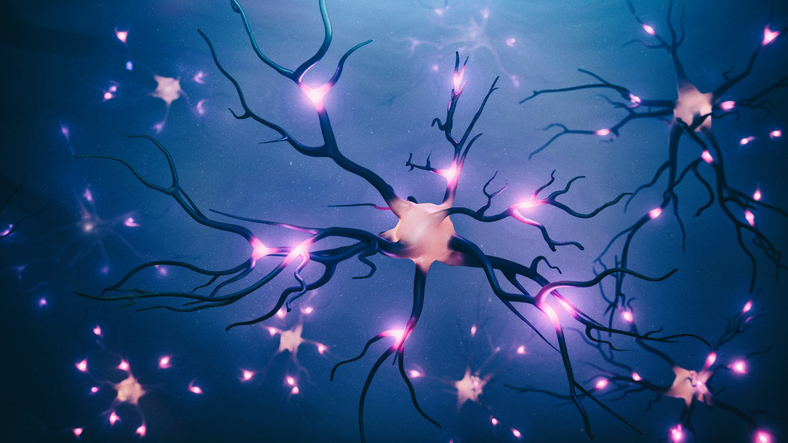

Animal behavior reflects a complex interplay between an animal’s brain and its sensory surroundings. In a new study published in Nature Neuroscience titled, “Neural sequences underlying directed turning in Caenorhabditis elegans,” researchers from Massachusetts Institute of Technology (MIT) have shown how neuron circuits within C. elegans nematode worms respond to odors and generate movement as they pursue favorable versus unfavorable smells. The results inform understanding of the basic principles of the sensory nervous system for therapeutic applications.
“Across the animal kingdom, there are just so many remarkable behaviors,” said Steven Flavell, PhD, associate professor at the Picower Institute at MIT, Howard Hughes Medical Institute (HHMI) investigator, and corresponding author of the study. “With modern neuroscience tools, we are finally gaining the ability to map their mechanistic underpinnings.”
Whether moving toward a food source or away from a predator, animals must integrate sensory stimuli to navigate to favorable locations. The neural circuits for navigation are tasked with generating directed movement while simultaneously integrating sensory input to update behavior. Understanding how neural circuits select, execute and adapt sensory-guided navigation behaviors uncovers basic principles of how nervous systems are organized to integrate sensory information and control behavior.
In C. elegans, the authors identified error-correcting turns during navigation and used whole-brain calcium imaging and cell-specific perturbations to determine their neural underpinnings. Defined neurons activated in a stereotyped order during each turn. Distinct neurons in this sequence respond to the spatial distribution of attractive and aversive olfactory cues, anticipate upcoming turn directions and drive movement, linking key features of this sensorimotor behavior across time.
“One thing that really excited us about this study is that we were able to see what a sensorimotor arc looks like at the scale of a whole nervous system: all the bits and pieces, from responses to the sensory cue until the behavioral response is implemented,” Flavell said.
The electrical activity of more than 100 neurons was tracked during sensory movement. Notably, C. elegans only have 302 neurons total. Instead of random movements, the worms executed turns with advantageous timing and at well-chosen angles.
The activity of SAA neurons was crucial for integrating odor detection with planned movement and predicted the direction of upcoming turns. Several neurons showed different activity patterns depending on the location of odors were and whether the worm was moving forward or in reverse.
Additionally, the neuromodulator, tyramine, was essential for turning and shifting gears. When the worms moved in reverse, tyramine from the neuron RIM enabled other neurons in the sequence to change their activity appropriately to execute the turns. In several experiments, the scientists knocked out RIM tyramine, which disrupted the navigation behaviors and the sequence of neural activity.