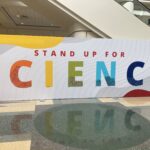
San Diego – More than 24,000 machine learning experts gathered for the largest Neural Information Processing Systems (NeurIPS) conference to date, hosted against the sunny December backdrop of the San Diego Convention Center. NeurIPS 2025 featured over 5,000 papers accepted from a whopping pool of more than 21,000 submissions.
Among the crowd was a growing life sciences community that attests biology is reaching a transformer moment, mirroring the 2017 publication of “Attention is All You Need,” which paved the way for modern AI architectures, including today’s large language models.
Evan Feinberg, PhD, CEO of Genesis Therapeutics, has watched NeurIPS evolve over recent years with a growing number of attendees filling workshops specifically for AI in sciences.
“The intersection is no longer niche, but rather a major burgeoning field and its own pillar of AI just as much as vision or language has become,” Feinberg told GEN.
Genesis, spun out from the Stanford University lab of Vijay Pande, PhD, formerly partner of a16z Bio + Health and currently co-founder and managing partner of a new venture firm, VZVC. The company’s AI platform integrates diffusion models, language models and physical ML simulations for molecular generation and therapeutic property prediction.
Recently, Genesis unveiled Pearl, a foundation model for protein-ligand cofolding reported to surpass AlphaFold3 in atomic accuracy. The company has also expanded its ML team in recent months, including the appointment of Aleksandra Faust, PhD as chief AI officer and Sergey Edunov as SVP of foundation models.
Therapeutic round-up
In small molecule drug discovery, Alex Zhavoronkov, PhD, founder and CEO of Insilico Medicine, points to accelerated timelines for candidates to enter clinical trials as an indicator of AI’s impact on biology. Insilico touts over a dozen IND-enabled drug candidates with a handful reaching Phase I trials. Earlier this year, the company published Phase IIa results for a novel TNIK inhibitor in Nature Medicine.
“When we first started as a software company, we were met with a lot of skepticism regarding what the software can actually do. Building out our own pipeline in a matter of five years has been a demonstration of the platform,” said Petrina Kamya, PhD, global head of AI platforms at Insilico.
In biologics, Joshua Meier, co-founder of Chai Discovery, says the field of antibody design has seen significant jumps within just two years, particularly on hard targets, such as GPCRs, that require atomic level precision. Chai recently unveiled Chai-2, a multimodal generative model that achieved a 16% hit rate on de novo antibody designs, a significant improvement over traditional methods whose success rates landed at less than one percent.
“If you asked people earlier this year, ‘at what point would you see de novo antibody design working?’ Many thought we were five years out,” said Meier in an interview with GEN. “We published our results two weeks after we had some of those conversations and went back to those folks to say this is actually working today.”
Chai-2 enters a growing de novo antibody model ecosystem, which includes RFantibody from the lab of Nobel laureate, David Baker, PhD, at the University of Washington, and JAM-2 from Nabla Bio, an AI-based protein design start-up spun out of the lab of George Church, PhD, renowned geneticist and professor at Harvard Medical School.
At NeurIPS, virtual cell developers were in anticipation for the long-awaited results of Arc Institute’s inaugural Virtual Cell Challenge. In a surprise twist, the public competition, sponsored by NVIDIA, 10x Genomics, and Ultima Genomics, declared not one, but two grand prizes, worth $100,000 each, to the machine learning models that “best” predicted how cells responded to genetic perturbations.
A newly established Generalist Prize was awarded to Altos Labs, the for-profit biotech company launched in January 2022 with $3 billion funding with the mission of restoring cell health and resilience through cell rejuvenation. The additional award highlighted the challenge of defining robust benchmarks for complex biology.
Concurrently, Altos presented scGeneScope, led by Altos senior machine learning scientists, Joel Dapello, PhD, and Marcel Nassar, PhD, in collaboration with Microsoft Research. The work explored how retraining and testing models on Altos’ unique paired single‑cell RNA‑seq and Cell Painting image dataset could identify perturbations and mechanisms of action under lab variability. The team also presented PerturBench, a standardized benchmarking platform for predicting cellular responses to genetic or chemical perturbations.
In clinical translation, Ron Alfa, MD, PhD, co-founder and CEO of Noetik, says the goal of the company is to build foundation models of cancer biology to support patient-level decision making. He emphasizes that the overarching goal of AI-powered biology is to transition from traditional hypothesis driven research to simulating experiments in silico. Aligned with this mission, Noetik houses an in vivo mouse platform that conducts perturbation experiments at scale. The team is currently building a mapping between simulated human data and mouse experiments to assist translation efforts.
In genomics, 23andMe presented PRSformer, a new deep learning architecture for genome-wide disease risk prediction at population scale that demonstrates how non-linear effects become detectable only beyond a certain data scale. The work was led by Aly Khan, PhD, senior director of AI at Biohub and assistant professor at University of Chicago.
As NeurIPS 2025 draws to a close, the field continues to watch a new pillar of AI-driven biology take root.