Traditionally, antibiotic discovery has involved the isolation of natural products from fungi and bacteria—largely actinomycetes. However, the perception that antibiotic-producing actinomycetes have yielded all they can, with little left to give, has motivated a recent shift toward novel antibiotic discovery processes.
However, a new study from researchers at McMaster University presents the isolation of a novel antibiotic from Streptomyces rimosus that showed efficacy against multiple bacteria, including multidrug-resistant Enterobacteriaceae. In addition, the compound—known as manikomycin—is the first antibacterial agent known to target the E-site in the large ribosomal subunit, opening the door to an entirely new class of treatments.
“Not a single antibiotic prescribed in clinics today does what manikomycin does,” says Gerry Wright, PhD, professor in the department of biochemistry and biomedical sciences at McMaster University in Ontario, Canada. “Not azithromycin, not tetracycline—none of them. So, we’ve not only found a brand-new drug candidate, but we’ve also established a brand-new target in bacteria that could potentially be exploited with other new drugs.”
This work, published in Nature in the paper, “A natural depsipeptide antibiotic binds the E-site of the bacterial ribosome.”
This discovery marks the fourth new antibiotic candidate from the Wright lab in just over a year, underscoring a promising new approach to drug discovery at a time when antibiotic resistance is a growing global threat.
Given that many antibiotics used today target the ribosome, bacteria have evolved broad defense strategies against them. However, a drug targeting a different part of the ribosome will not face the same resistance mechanisms.
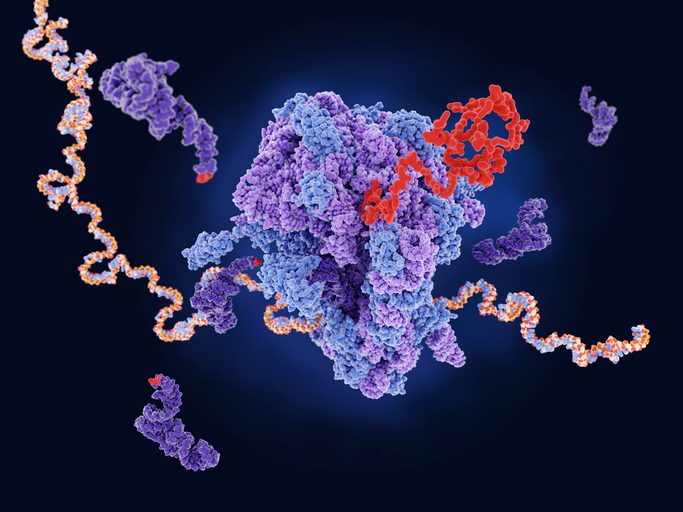
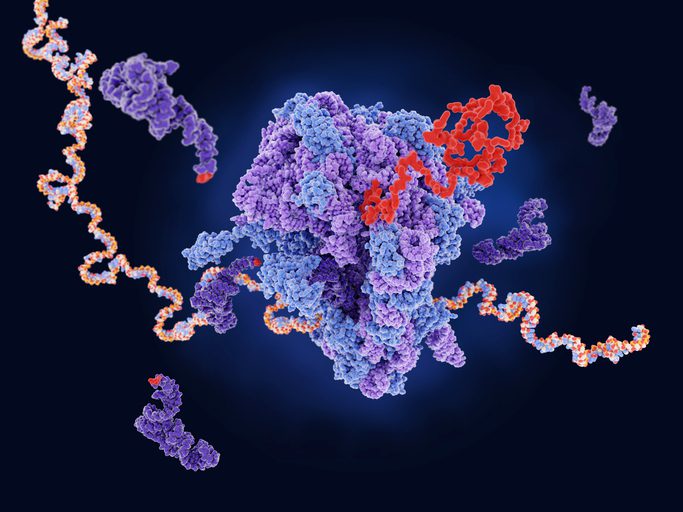
Manikomycin binds in the E-site of the large subunit of the bacterial ribosome, the authors write, “preventing entry of the 3′ end of the tRNA into the E-site and effectively hindering the translocation step of protein synthesis in a sequence-context-specific manner.”
“Even newly discovered drugs that attack those same old targets may quickly face resistance,” says Wright. “But, over the history of medicine, we’ve put absolutely no selective pressure on this particular target, so bacteria have no existing resistance mechanisms for manikomycin.”
The discovery of manikomycin builds on work that began more than 75 years ago, when scientists first discovered that the soil bacterium Streptomyces rimosus produced oxytetracycline, a powerful new drug that would help usher medicine into the antibiotic age.
While the breakthrough was one of several like discoveries made in the mid-1900s, S. rimosus and related bacteria have long since been abandoned as a potential source of new antibiotics.
“There is an overwhelming perception in science that these bacteria have been mined completely dry—that we’ve found all there is to find,” Wright says. “Our lab has found that this is not at all the case.”
Wright’s group, working with collaborators at the University of Illinois Chicago and the University of Hamburg in Germany, used an advanced fractionation method to uncover the new antibiotic. By filtering out oxytetracycline and other abundant compounds from the chemical mixtures produced by S. rimosus, the researchers were able to isolate scarcer molecules that had gone unnoticed over the years.
“There is likely so much still to be discovered through fractionation,” says Manpreet Kaur, PhD, a postdoctoral fellow in Wright’s lab. “Revisiting the extracts of even-well studied bacteria like Streptomyces may lead to similar discoveries in the future.”
Wright’s team is now advancing manikomycin toward clinical development. They have already shown that the new antibiotic is not toxic to human cells, and that it works well in a lab-controlled model of infection—key milestones on the early development pathway.
The team is now working on optimizing the drug’s “residency time”—or how long it stays active in the body—and have produced 60 different derivatives with plans to push the best one forward.
“We’re excited about this molecule’s potential,” Wright says. “There’s a clear path forward, and we may even be able to expand its spectrum so that it eventually affects even more bacteria, too.”