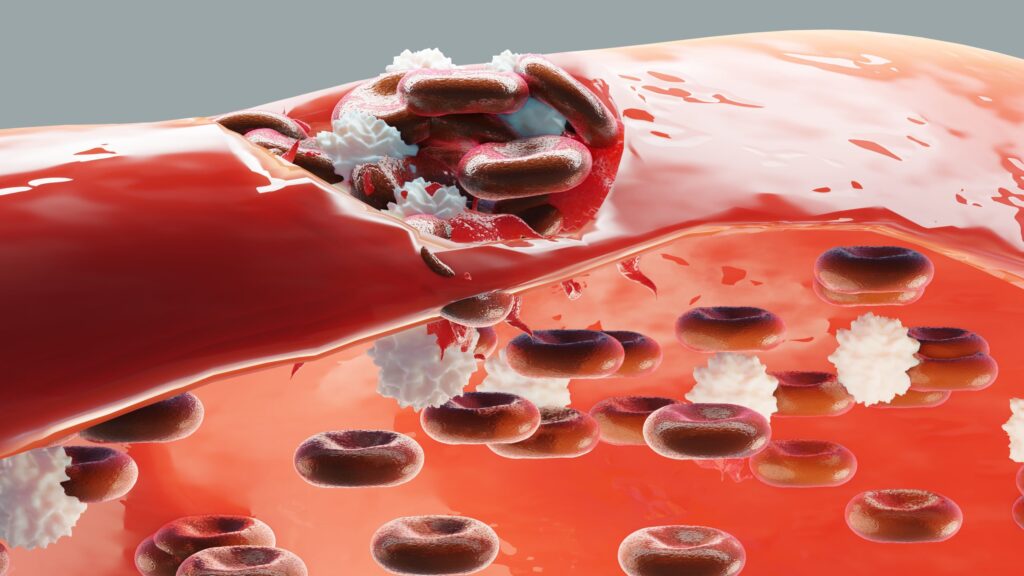
Primary immune thrombocytopenia (ITP) is an autoimmune condition where the body’s immune cells mistakenly attack platelets, the blood cells responsible for clotting, which can lead to life-threatening bleeding. Associated with abnormal bleeding from skin and mucous membranes, this condition affects around 50,000 people in the United States, can be diagnosed at any age, and contributes to other symptoms like easy bruising and fatigue.
In a Phase III clinical trial, over half of patients who received a limited course of an experimental monoclonal antibody known as ianalumab were able to sustain safe platelet counts for at least one year without any serious bleeding episodes. The research, titled “Ianalumab plus Eltrombopag versus Placebo plus Eltrombopag in Immune Thrombocytopenia,” was published in the New England Journal of Medicine. Researchers from the Perelman School of Medicine at the University of Pennsylvania and collaborators presented the research at the 67th American Society of Hematology (ASH) Annual Meeting and Exposition in Orlando, FL.
“As a hematologist, I’m glad that we have effective therapies for ITP, but they’re not necessarily ideal for chronic disease management or long-term quality of life,” said lead author Adam Cuker, MD, section chief for hematology and clinical director of the Penn Blood Disorders Center. While treatment is not always necessary for some patients with ITP, patients with low platelet count or repeated or severe bleeding may require initial steroid treatment and ongoing care. Three FDA-approved second-line therapies are available for ITP, but these generally require ongoing treatment for life. Cuker added, “This study shows that prolonged, durable responses to ITP treatment, without the need for ongoing therapy, are possible—and that’s a huge advantage for patients.”
The VAYHIT2 study was a double-blind, multicenter clinical trial that randomized 152 adult patients with ITP to three arms: a higher dose of ianalumab (50 patients), a lower dose of ianalumab (51 patients), or a placebo (51 patients). Ianalumab targets the B-cell-activating factor (BAFF) receptor, and this depletes autoreactive B cells responsible for the anti-platelet antibodies that cause ITP. Given intravenously once monthly across four months, Ianalumab was given alongside eltrombopag, which is an approved second-line treatment for ITP.
Time to Treatment Failure (TTF) was assessed, defined as a low platelet count, the need for additional ITP therapy, inability to taper or discontinue eltrombopag, or death. At 12 months, the estimated probability of avoiding treatment failure was 54.2% in the high-dose group and 50.5% in the low-dose group, compared with only 30% of patients in the placebo group. In addition, when platelet counts were evaluated at six months (two months after the final dose of ianalumab), 62% of patients in the high-dose treatment group maintained stable platelet counts, versus only 39.2% of patients in the placebo group.
While additional clinical trials continue for ianalumab, including other studies for additional autoimmune conditions, the researchers will continue monitoring the patients from this study to understand treatment response long-term.
“We’re looking forward to seeing if the treatment-free responses in this study extend out even further,” Cuker said. “Improving the long-term reality of living with ITP is not something we’ve been able to think about before. The goal has always been to improve platelet counts or reduce the risk of bleeding, but this research is ushering in a new era of hope for patients with ITP.”