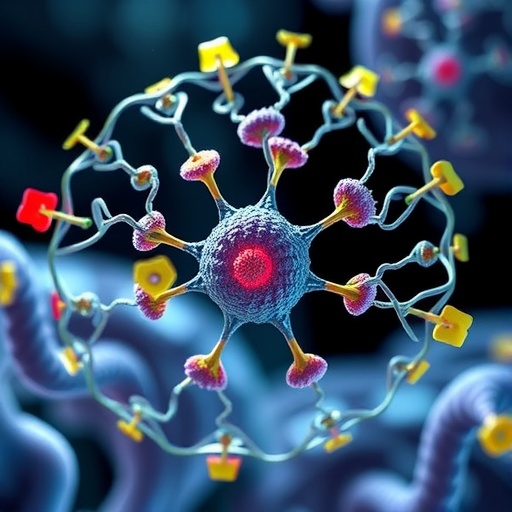
A groundbreaking study led by researchers at the Universitat Autònoma de Barcelona (UAB) has unveiled unprecedented insights into the three-dimensional (3D) organization of the genome during spermatogenesis in vertebrates. The research, recently published in the prestigious journal Nature Communications, provides a comprehensive exploration of how the spatial folding of DNA within the cell nucleus adapts and evolves during the formation of male germ cells. This investigation spans an evolutionary timeline exceeding 350 million years, capturing a profound biological phenomenon that reveals the dynamic architecture of genomes across diverse species, including vertebrates, marsupials, and reptiles.
The study was spearheaded by Aurora Ruiz-Herrera, a distinguished professor and ICREA Acadèmia researcher from the Department of Cellular Biology, Physiology, and Immunology at UAB. By employing advanced 3D genome analysis techniques alongside evolutionary genomics, the team has demonstrated that genome architecture during spermatogenesis is far from static. Instead, it undergoes substantial reorganization, a process integral to ensuring proper reproductive function and genetic transmission. This work fundamentally challenges previous conceptions of nuclear DNA folding, providing clarity on genomic plasticity during critical stages of germ cell development.
State-of-the-art visualization methods, including chromatin conformation capture technologies, enabled the researchers to map genome interactions within the cell nucleus with exceptional resolution. By comparing divergent species that share a distant common ancestor, the team uncovered shared structural principles driving DNA folding, alongside lineage-specific adaptations. These findings highlight the profound influence of core biological factors such as genome size and chromosomal architecture, both of which determine the spatial organization of genetic material within germ cell nuclei. This reveals generalizable rules governing genome folding across vertebrate taxa.
The study’s evolutionary genomics approach provided a dual framework: not only did it reveal conserved 3D genome structures inherited from ancient ancestors, but it also identified novelties that emerged within individual lineages. This nuanced perspective sheds light on how the 3D architecture of the genome has adapted over hundreds of millions of years to accommodate species-specific reproductive strategies and developmental requirements. The ability to dissect such long-term evolutionary trends at the chromosomal level marks a significant leap forward in both genomics and evolutionary biology.
Importantly, the research introduces a newly curated catalog of genome interactions within male germ cells throughout evolutionary history. This repository serves as a critical resource for reconstructing ancestral genome organization, offering insights into how structural genome changes have contributed to phenotypic diversity and speciation events. By linking spatial genome folding with functional outcomes, this catalog bridges a critical gap between molecular genetics and evolutionary developmental biology, paving the way for future investigations into genotype-phenotype relationships.
The implications of these findings extend deeply into understanding biological diversity. The three-dimensional folding of DNA is a central determinant of gene regulation, affecting which genes are expressed and to what degree. As germ cells develop and differentiate, dynamic remodeling of the genome’s architecture orchestrates complex transcriptional programs. This intimate interplay between 3D genome structure and gene expression elucidates fundamental processes driving reproductive biology and genetic variability, highlighting mechanisms that sustain biodiversity across vertebrate species.
At the cellular and molecular level, this study provides a paradigm shift in comprehending the mechanistic foundations underpinning reproduction. It underscores the crucial role of genome dynamism during gametogenesis as a prerequisite for faithful genetic inheritance. The meticulous organization of chromatin domains, chromosome territories, and nuclear compartments observed reveals how genome topology ensures the stability and functionality of genetic information passed between generations, while simultaneously introducing controlled variability critical for evolution.
Aurora Ruiz-Herrera emphasizes the broader significance of the team’s research, stating that understanding the topology of genome folding is not just pivotal for reproductive health but is also instrumental in deciphering the genetic basis of biodiversity itself. The intertwining of genome organization and species evolution constitutes an essential frontier in modern biology, and this study marks a foundational contribution to that discourse.
Laia Marín-Gual, the study’s lead author, points out that these advances provide a substantial foundation for future research. She highlights how the integration of spatial genomics with evolutionary timelines opens new pathways to investigate genome function, structure, and evolutionary dynamics. The comprehensive approach adopted could inspire innovative research into diseases linked to chromatin misfolding and reproductive system malfunctions, thereby extending the impact of these findings beyond basic biology to medical science.
The success of this sophisticated study is the result of an extensive international collaboration coordinated by UAB, which drew together the expertise of multidisciplinary teams from Australia and the United States, including UNSW Sydney, the University of Melbourne, the University of Canberra, and the University of Connecticut. Despite challenges posed by global circumstances, this collaboration has effectively integrated complementary datasets and technical expertise, enabling a holistic examination of intricate evolutionary and reproductive questions at scale.
Ultimately, this research redefines our understanding of genomic architecture within germ cells, highlighting its evolutionary plasticity and functional relevance. By uncovering general architectural principles and lineage-specific genome arrangements, it illuminates how fundamental cellular processes have been conserved and adapted to meet diverse reproductive and evolutionary demands. This work constitutes a milestone in the fields of chromatin biology, genomics, and evolutionary science, promising to inspire future research into the spatial dimension of genome biology.
Subject of Research: Cells
Article Title: Divergent 3D genome architecture of male germ cells across vertebrates
News Publication Date: 20-Jun-2026
Web References: 10.1038/s41467-026-74695-5
Image Credits: IBB-UAB
Keywords: Genomics, Genomic analysis, Chromatin, Genetic material, DNA, Spermatogenesis, Vertebrates, Chromosomes, Evolutionary developmental biology
Tags: 3D genome mapping techniques3D genome organization in spermatogenesischromatin architecture during germ cell developmentchromatin conformation capture in reproductive cellscomparative genomics of vertebrate spermatogenesisevolutionary conservation of genome structureevolutionary genomics of germ cell formationgenome folding dynamics in vertebratesgenome plasticity during male germ cell formationnuclear DNA spatial organizationreproductive genetics and genome structurespermatogenesis across evolutionary timeline