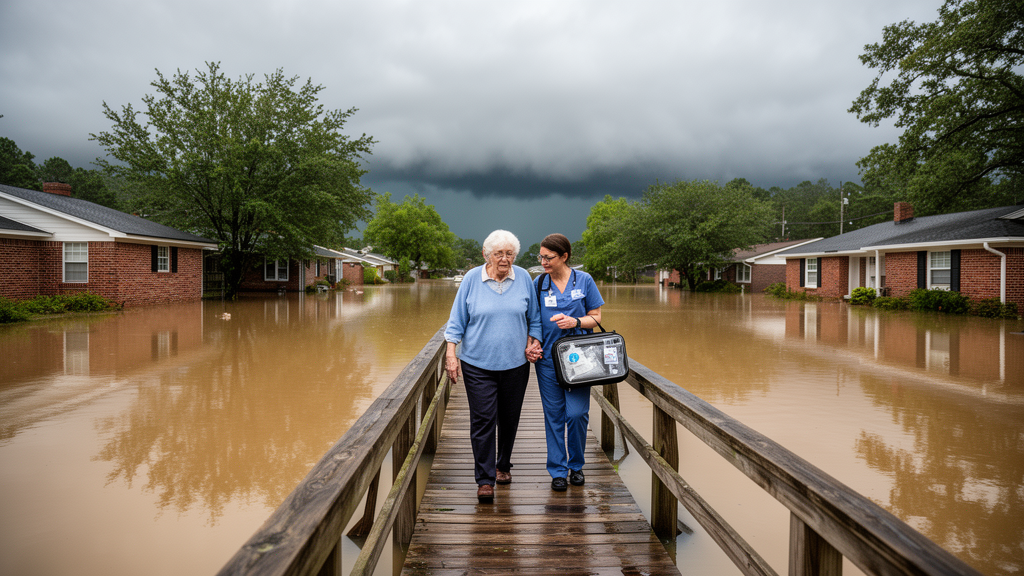
Older adults in North Carolina who use electricity-dependent medical equipment experienced increased hospitalizations and deaths during the year after Hurricane Matthew, according to a peer-reviewed analysis published in the Journal of the American Geriatrics Society. Investigators found no statistically significant immediate changes following either Hurricane Matthew or Hurricane Florence when hurricane exposure was measured with county-level presidential disaster declarations. More detailed analyses using mapped flood extent showed stronger and more consistent associations between hurricane exposure and adverse outcomes, while Black beneficiaries experienced worse short- and long-term results as flooding severity increased.
The study evaluated the immediate and sustained effects of Hurricanes Matthew in 2016 and Florence in 2018 among Medicare beneficiaries in North Carolina aged 65 years or older who were using electricity-dependent medical equipment. The equipment included ventilators, respirators, and dialysis machines. Investigators used county-level Federal Emergency Management Agency presidential disaster declarations to identify hurricane exposure and also examined flooding through the higher-resolution North Carolina Flood Extent Archive. These two approaches provided different levels of geographic detail for evaluating associations between the disasters, hospitalizations, and deaths among older adults with medically dependent equipment.
Under the county-declaration measure, researchers observed no significant immediate changes after either hurricane. In contrast, they identified sustained increases in hospitalizations and deaths over the following year after Hurricane Matthew. The flood-extent analyses produced stronger and more consistent relationships between hurricane exposure and the two outcomes. Results also differed by race: the release reports that Black individuals experienced worse short- and long-term outcomes as flooding severity increased. The study therefore linked greater hurricane and flood exposure with increased hospital use and mortality in the population examined, but the reported findings establish associations rather than directly demonstrating that the hurricanes caused the changes.
Jennifer L. Lund, senior author of the study and a member of the UNC Gillings School of Global Public Health, said the team had combined hurricane-hazard and health-care-utilization data in North Carolina while working with affected communities. The researchers described the findings as a foundation for studying how hurricanes and floods affect medically vulnerable populations more broadly. They also said the work could support partnerships with community organizations and local and state agencies to strengthen disaster preparedness and planning. The study focused specifically on North Carolina Medicare beneficiaries aged 65 or older who used electricity-dependent medical devices and assessed the period surrounding two hurricanes; the release does not report direct comparisons with younger populations, older adults who did not use such devices, or communities outside North Carolina.
Subject of Research: Hurricane and flood exposure among older adults using electricity-dependent medical devices
Article Title: Do hurricanes affect hospitalizations and deaths among older adults using electricity-dependent medical devices?
Article References: Do hurricanes affect hospitalizations and deaths among older adults using electricity-dependent medical devices?. Original publication (Bibliographic details unavailable.)
Image Credits: AI Generated
DOI: Not provided
Keywords: hurricanes, older adults, health disparities, flooding, hospitalization, mortality, Medicare, medical devices, North Carolina, affect, hospitalizations, deaths