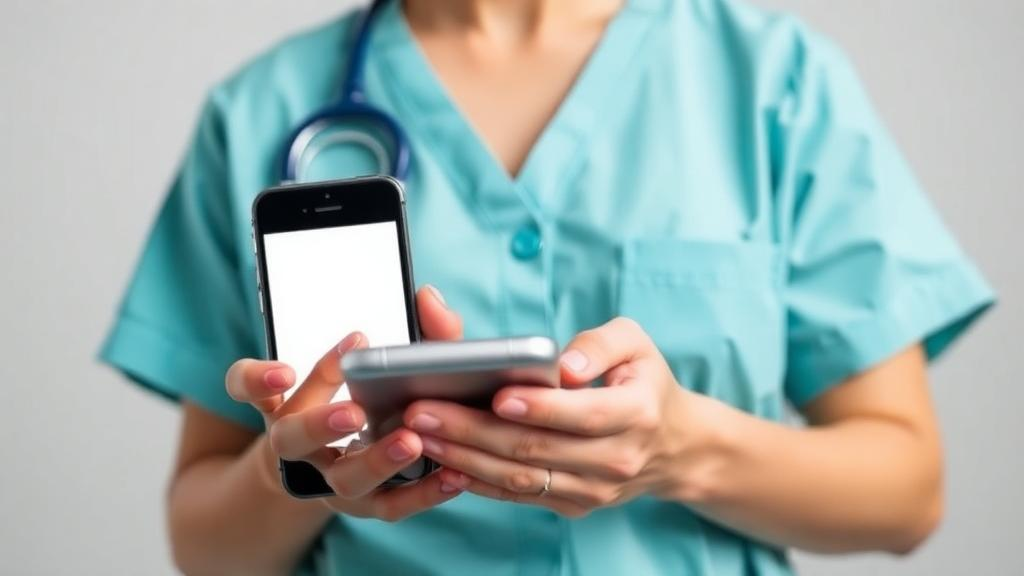
Upper gastrointestinal bleeding is one of the most alarming emergencies in medicine. Blood surging from ulcers, inflamed esophageal vessels, or irritated stomach lining can rapidly drop blood pressure, and even patients who survive the acute episode often face a long, uncertain recovery once they leave the hospital. A new randomized controlled trial published in BMC Nursing suggests that the weeks immediately after discharge, a period when patients are largely left on their own, can be transformed by something as simple as structured nursing support delivered over the phone, through a mobile application, and via a WhatsApp group.
The study, conducted by researchers at Mashhad University of Medical Sciences in Iran, enrolled 96 patients recovering from upper gastrointestinal bleeding and randomly assigned half to a telenursing intervention and half to routine care. The trial was prospectively registered in the Iranian Registry of Clinical Trials under number IRCT20201231049897N1, and it received ethics approval from the university’s ethics committee along with funding from the university’s Deputy of Research. The central question was whether a carefully choreographed month of remote nursing contact could measurably improve patients’ quality of life and their satisfaction with care, compared with the standard discharge experience.
The intervention itself combined three channels of communication. Patients received a self-care mobile application designed to guide them through the practical realities of recovery, including medication adherence, diet, warning signs of rebleeding, and activity pacing. They also took part in weekly telephone counseling sessions with nurses, providing an opportunity to ask questions, report symptoms, and receive individualized advice. Finally, a WhatsApp group connected participants with peers going through the same experience, adding a social dimension to the educational program. The control group received routine discharge care plus brief weekly telephone calls, but these calls were deliberately limited to controlling for the attention patients received from research staff, with no structured education, counseling, or digital content provided and no outcome data collected from them.
The primary outcome was health-related quality of life, measured with the Gastrointestinal Quality of Life Index, a validated instrument that captures symptoms, emotional status, physical function, and social aspects of digestive health. One month after discharge, the intervention group scored 116.02 on average, with a standard deviation of 15.05, while the control group averaged 95.10 with a standard deviation of 13.57. That gap of roughly 21 points was highly statistically significant, with a p-value below 0.001. Because patients inevitably start out with different baseline quality of life, the researchers also ran an analysis of covariance adjusting for initial scores, and the intervention effect remained robust, with F equal to 13.38 and a p-value of 0.001.
Satisfaction told a similar story. Using the Telenursing Interaction and Satisfaction Questionnaire, the team found that intervention patients rated their experience far more positively than controls, with mean scores of 77.39 versus 47.04, again a difference that was highly significant. Interestingly, the control group’s satisfaction scores reflect their contact with the study’s brief follow-up calls, which underscores how much the structured program, rather than mere telephone contact, drove the difference. Patients in the intervention arm also evaluated the mobile application itself using the Mobile Application Rating Scale, awarding it a mean score of 98.24 out of a possible maximum, with a standard deviation of 6.54, indicating that the digital tool was perceived as high quality across engagement, functionality, aesthetics, and information content.
Why would a month of phone calls and an app make such a large difference in how patients feel? The answer likely lies in the nature of recovery from upper gastrointestinal bleeding. Patients are typically discharged with strict instructions about avoiding nonsteroidal anti-inflammatory drugs, managing acid suppression therapy, and watching for signs of recurrent bleeding such as black stools or vomiting blood. Without reinforcement, these instructions are easy to forget or misunderstand, and anxiety about rebleeding can dominate daily life. Structured telenursing gives patients a reliable channel for clarifying doubts, and the peer group normalizes the worries and setbacks that accompany recovery, both of which plausibly translate into better perceived health and greater confidence in self-management.
The trial’s design deserves attention for how it handled the placebo problem inherent in behavioral interventions. Any extra contact with healthcare staff can make patients feel cared for, so a control group that receives nothing at all can exaggerate the apparent benefit of an intervention. By giving controls brief weekly calls purely to equalize the amount of attention between groups, the researchers isolated the effect of the structured educational content itself. The fact that a large difference in quality of life and satisfaction persisted despite this attention control strengthens the conclusion that the self-care education, not simply human contact, produced the gains.
The authors are careful about the limits of what their data show. Because the trial did not assess objective clinical outcomes such as recurrent bleeding, hospital readmission, or mortality, the results should be read as evidence of improved patient-reported recovery rather than proof of a better clinical prognosis. Quality of life and satisfaction are meaningful endpoints in their own right, and they are strongly associated with adherence and engagement with follow-up care, but a larger and longer trial would be needed to determine whether telenursing also reduces the risk of dangerous rebleeding episodes or keeps patients out of the emergency department.
Even with those caveats, the findings arrive at a moment when health systems worldwide are searching for scalable ways to support patients beyond hospital walls. Telenursing requires no exotic technology, only a phone line, a well-designed application, and nurses with time and training. The near-perfect app rating in this study suggests that when digital tools are built around genuine patient needs and paired with live human support, patients embrace them enthusiastically. For a condition like upper gastrointestinal bleeding, where the first month after discharge is a vulnerable window, that combination of automated guidance and personal counseling appears to fill a real gap in care.
The study also highlights the broader potential of nursing-led telehealth programs across chronic and acute gastrointestinal disease. If structured remote education can lift quality-of-life scores by more than 20 points in a month for bleeding patients, the same model could plausibly benefit people managing peptic ulcer disease, inflammatory bowel conditions, or recovery from other acute events. The trial’s open-access publication means that its intervention structure, outcome instruments, and statistical approach are available to any clinical team willing to replicate or adapt them. For now, the message for patients leaving the hospital after a gastrointestinal bleed is encouraging: a month of structured, nurse-guided self-care support, delivered largely through devices most people already own, can make the road back to normal life measurably smoother.
Subject of Research: Telenursing-based self-care education for patients recovering from upper gastrointestinal bleeding
Article Title: Telenursing-based self-care education improves quality of life and patient satisfaction in upper gastrointestinal bleeding: a randomized controlled trial
Article References: Lajevardi, R., Aghebati, N., Ghavami, V., & Rajabpour, M. (2026). Telenursing-based self-care education improves quality of life and patient satisfaction in upper gastrointestinal bleeding: a randomized controlled trial. BMC Nursing. https://doi.org/10.1186/s12912-026-05055-3
Image Credits: AI Generated
DOI: 10.1186/s12912-026-05055-3
Keywords: telenursing, telehealth, upper gastrointestinal bleeding, self-care education, quality of life, patient satisfaction, randomized controlled trial, mobile application, nursing, digital health, patient recovery, GIQLI