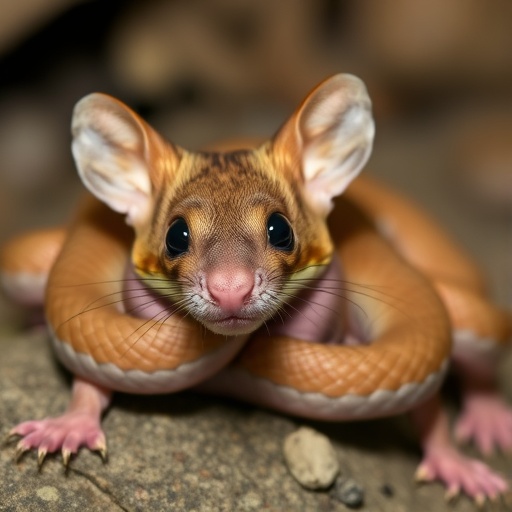
Conservation efforts for endangered species often rely on raising young animals in captivity until they are old enough to be released into the wild. This strategy markedly reduces early life mortality by shielding juveniles from predation and resource scarcity, two critical threats in natural habitats. However, this protective environment comes at a cost: captive-bred animals frequently miss out on essential behavioral cues that predators instill. Without early exposure to threats, these animals may lack the skills necessary to identify and evade predators once released, undercutting reintroduction success.
Traditional antipredator training methods aim to bridge this gap by directly exposing captive juveniles to simulated or real predators paired with negative stimuli, thus teaching them to associate danger with these cues. Although effective in some cases, this approach is laborious, reliant on the realism of the threat simulations, and constrained by the sensitive learning period of juvenile animals. A novel study now suggests an alternative, potentially more efficient method: training pregnant females to transmit predator awareness to their offspring.
This groundbreaking research, led by Dr. Debra Shier of the San Diego Zoo Wildlife Alliance, explores the impact of maternal predator training on the Pacific pocket mouse (Perognathus longimembris pacificus), a critically endangered mammal species endemic to coastal southern California. The mouse is listed on the IUCN Red List and benefits from stringent protections under the US Endangered Species Act due to its precarious population status.
The study employed a carefully controlled experimental design involving 22 pregnant female mice during the latter half of gestation. The females were randomly assigned to one of two groups: a predator-exposed treatment or a control group. In the predator group, females were introduced to a live kingsnake, a natural predator species, safely separated by a mesh barrier, in an arena with accessible food. To reinforce avoidance behavior, the mice were gently sprayed with water if they approached too close to the snake, thus associating predator presence with an aversive stimulus. Control females experienced the same environment but with a non-threatening rope substitute instead of the snake and were not subjected to spraying.
Post-birth, the offspring—totaling 87 pups—were evaluated for their behavioral responses to the kingsnake using the same testing parameters when they reached 30 days old. The behaviors assessed included vigilance indicators like scanning the environment, freezing when threatened, and rearing up on hind legs to better observe surroundings. Notably, the study revealed that daughters of predator-trained mothers exhibited significantly elevated vigilance compared to daughters of control mothers, suggesting that maternal experiences can profoundly influence offspring risk assessment behaviors even before direct exposure to predators. In contrast, male offspring did not display this heightened response, implicating sex-specific behavioral modulation.
A subset of 44 juvenile mice was subsequently released into suitable natural habitats where their survival was monitored through trapping efforts later in the summer activity season. Although female offspring from trained mothers manifested greater antipredator vigilance, the research found no conclusive evidence that this translated into improved survival rates post-release. The authors urge caution interpreting this finding, acknowledging the limited sample size and the fact that all subjects had brief pre-release predator exposures, which may have confounded outcomes.
The biological mechanisms enabling the prenatal transmission of predator awareness remain speculative. Dr. Shier and co-author Dr. Catherine T.Y. Nguyen propose multiple explanations, with prenatal programming being a leading hypothesis. In this scenario, stress-induced maternal hormones activated by predator encounters during gestation might cross the placental barrier, subtly shaping neural development and behavioral predispositions in the emerging offspring. Alternately, maternal behavior after birth—potentially altered by prior predator exposure—could influence pups through learning or environmental cues. Another theory posits that pups may detect residual olfactory signals linked to maternal antipredator training, thus gaining indirect information about potential threats.
The observed sex differences in behavioral adaptation align with broader ecological and physiological findings of differential stress responses between males and females across various species. Hormonal milieu, neurodevelopmental trajectories, and survival strategies often diverge by sex, which could explain why maternal predator training selectively enhanced daughters’ vigilance. This insight opens new avenues for tailoring conservation protocols that consider sex-specific behavioral ecology.
Implications for conservation biology and captive breeding programs are profound. By focusing antipredator training efforts on pregnant females rather than juveniles, resource-intensive procedures could be streamlined while still fostering meaningful behavioral adaptations in offspring. Such innovations may improve the fitness and resilience of reintroduced populations, critical for the recovery of critically endangered mammals like the Pacific pocket mouse.
Further research is needed to elucidate the precise biochemical and behavioral pathways mediating maternal effects on offspring antipredator responses and to determine whether these lab findings translate into long-term survival benefits in the wild. Expanding sample sizes, incorporating longitudinal studies, and exploring similar dynamics in other endangered species will be vital for refining conservation breeding techniques and enhancing ecological restoration success.
This study marks a pioneering step in conservation science, demonstrating for the first time that maternal predator exposure during gestation can shape offspring behavior in endangered mammals. It challenges prevailing paradigms and encourages innovative strategies that leverage maternal influences to combat the challenges posed by predator naivety in captive-reared wildlife.
Subject of Research: Animals
Article Title: Sex-specific Effects of Maternal Predator Exposure on Offspring Antipredator Behavior in an Endangered Mammal
News Publication Date: 4-Jun-2026
Web References: http://dx.doi.org/10.3389/fcosc.2026.1783876
References: Frontiers in Ecology and Evolution, 2026
Image Credits: San Diego Zoo Wildlife Alliance
Keywords: Conservation biology, antipredator training, maternal effects, Pacific pocket mouse, endangered species, predator-naivety, captive breeding, predator avoidance, sex-specific behavior
Tags: antipredator behavior transmissionbehavioral cues in wildlifecaptive breeding challengesconservation biology methodscritically endangered rodentsendangered species reintroductionmaternal predator trainingoffspring inherit learned fearPacific pocket mouse conservationpredator avoidance in mammalspredator awareness inheritancewildlife reintroduction strategies