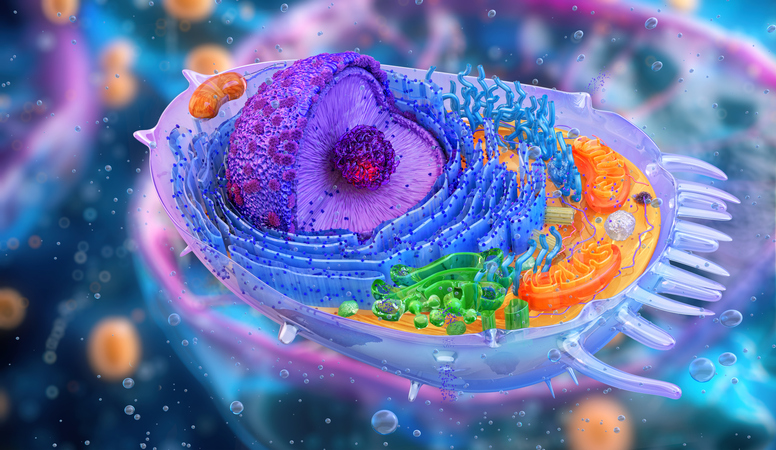

A new study in Science Signaling identifies a previously overlooked control point in receptor tyrosine kinase (RTK) signaling, one that operates not at the plasma membrane, but at the Golgi. The research, published as “Oncogenic receptor tyrosine kinase signaling is driven by the Golgi protein GOLPH3 and its interaction with MYO18A,” reveals that the Golgi‑localized proteins GOLPH3 and MYO18A act together to route RTKs to the cell surface, thereby setting the strength of growth‑factor signaling across multiple pathways.
The work was led by Kyle Starost and colleagues at Case Western Reserve University School of Medicine and the University of California, San Diego. Their findings help explain why GOLPH3 is frequently amplified in human cancers and why its overexpression correlates with poor prognosis across tumor types.
RTKs such as EGFR, insulin receptor, and PDGFR are central drivers of proliferation and survival in many cancers. Although RTK inhibitors are widely used clinically, resistance often emerges, underscoring the need for alternative strategies that modulate signaling upstream of the receptor. The new study identifies one such upstream node: the delivery of RTKs from the Golgi to the plasma membrane.
Using an unbiased signaling analysis, the team found that siRNA knockdown of GOLPH3 or MYO18A impaired phosphorylation of EGFR at Tyr1068 and Tyr1086, as well as downstream AKT and ERK signaling. These defects persisted even when PI3K/AKT/mTOR signaling was pharmacologically blocked, demonstrating that GOLPH3 acts directly at the receptor level rather than through mTOR modulation.
To pinpoint the mechanism, the researchers turned to trafficking assays. Imaging of endogenous EGFR showed that loss of GOLPH3 or MYO18A caused the receptor to accumulate in intracellular puncta rather than at the plasma membrane. A quantitative PDGFR‑GFP surface‑delivery assay confirmed that both proteins are required for Golgi‑to‑surface transport. Treatment with brefeldin A or golgicide A, which disrupt Golgi structure, produced similar reductions in surface receptor levels, reinforcing the conclusion that the GOLPH3–MYO18A complex is essential for RTK delivery.
Overexpression experiments completed the mechanistic picture. Increasing GOLPH3 or MYO18A levels enhanced EGF‑stimulated phosphorylation of EGFR and AKT, while a GOLPH3 mutant unable to bind PI4P failed to do so. These results position the GOLPH3–MYO18A complex as a central determinant of RTK availability at the cell surface.
The authors wrote, “The GOLPH3-MYO18A complex at the Golgi apparatus was required and rate-limiting for RTK signaling across the cell types and receptors assessed.” The findings suggest that targeting Golgi‑based trafficking machinery could offer a new therapeutic angle for tumors that rely on hyperactive RTK signaling or have developed resistance to RTK inhibitors.