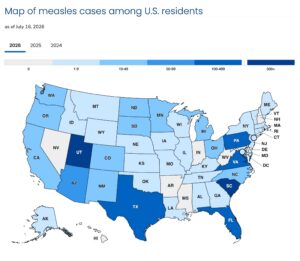
This year, the United States has recorded the highest number of measles cases since 2000, the year that the disease was declared eliminated from the country. As of mid-July, 2,260 measles cases were reported—just 29 cases less than the entire year of 2025. And outbreaks are widespread, with 34 new outbreaks reported in 2026.
The reason for this surge in cases is waning vaccination rates across the country. Given that, the production of new antivirals is an urgent matter.
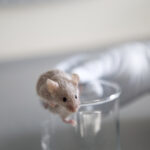
Now, the new oral antiviral drug candidate GHP-88310 has shown promising results in a ferret model of infection. When administered before or after direct contact or airborne exposure to canine distemper virus (which causes measles-like disease in ferrets) GHP-88310 blocked transmission of the virus and reduced clinical symptoms in ferrets.
“We were very excited to see that GHP-88310 given by mouth completely prevented airborne transmission in our ferret model of measles,” said Carolin Lieber, PhD, a postdoctoral fellow in the Plemper lab at Georgia State University. “This finding is unprecedented for a viral polymerase inhibitor and demonstrates the extraordinary antiviral potency of this drug.”
This research is published in Nature Microbiology in the paper, “Antiviral GHP-88310 blocks contact-mediated and airborne transmission in a ferret model of measles-like disease.”
“Silencing measles outbreaks quickly is essential to reestablish control over the virus,” said Richard Plemper, PhD, professor and director of the Center for Translational Antiviral Research (CTAR) at Georgia State University. “This study follows our recent development of the drug candidate GHP-88310. It demonstrates that the drug is suitable to augment traditional ring vaccination against measles.”
GHP-88310 (described earlier this year in Science Advances) is known to be an orally efficacious broad-spectrum orthoparamyxovirus polymerase inhibitor. But its effect on viral transmission has remained unclear. This study explored whether prophylactic administration of GHP-88310 prevents virus transmission through close contact or through the air. The results demonstrate that GHP-88310 efficiently blocks both forms of viral spread. In addition, the study showed that treatment of infected animals shortened the time period in which infected animals could transmit the virus.
To explore relevant conditions of viral transmission, the researchers established both direct-contact and airborne canine distemper virus transmission models to examine pharmacological suppression of virus spread. The transmission systems allowed them to pair infected and uninfected animals in direct physical contact or shared airspace, each under controlled environmental parameters.
“We designed the study to recapitulate viral spread between people with direct contact, for instance in a household, and between more distant social contacts, for example in classrooms or other indoor settings that bring people into proximity without direct interaction,” said Plemper.
The results showed that pre- and post-exposure prophylactic GHP-88310, given twice daily to air contacts, prevented transmission. The authors note that once-daily prophylactic administration mediated complete survival with all air contacts undergoing seroconversion. In addition, they note that therapeutic treatment of air contacts mitigated clinical signs, and animals survived, whereas all vehicle-treated air contacts succumbed. In addition, therapeutic treatment of infected source animals shortened the contagious phase by five days.
“In addition to this prophylactic benefit, GHP-88310 used therapeutically shortened the duration of disease in our model,” noted Plemper. “If equally applicable to human hosts, it may shorten the severe social and economic burden of prolonged quarantine of patients and further aid outbreak management.” The investigators are now readying GHP-88310 for formal clinical testing.