Patchwork workshops can foster meaningful reflection and reinforce professional teacher identity among health professions educators, according to a qualitative inquiry published in BMC Medical Education. The study explored the use of collaborative patchwork sessions to support meaning-making, offering an innovative arts-based faculty development approach designed to address the personal and collective dimensions of health professions teaching roles.
Teacher identity is widely regarded as a valued but increasingly eroded aspect of health professions educators’ professional lives. Although conventional faculty development initiatives commonly focus on instructional skills acquisition, there is growing recognition across medical education that sustaining teacher identity also requires dedicated opportunities for interpersonal connection, collaborative reflection, and deeper personal meaning-making.
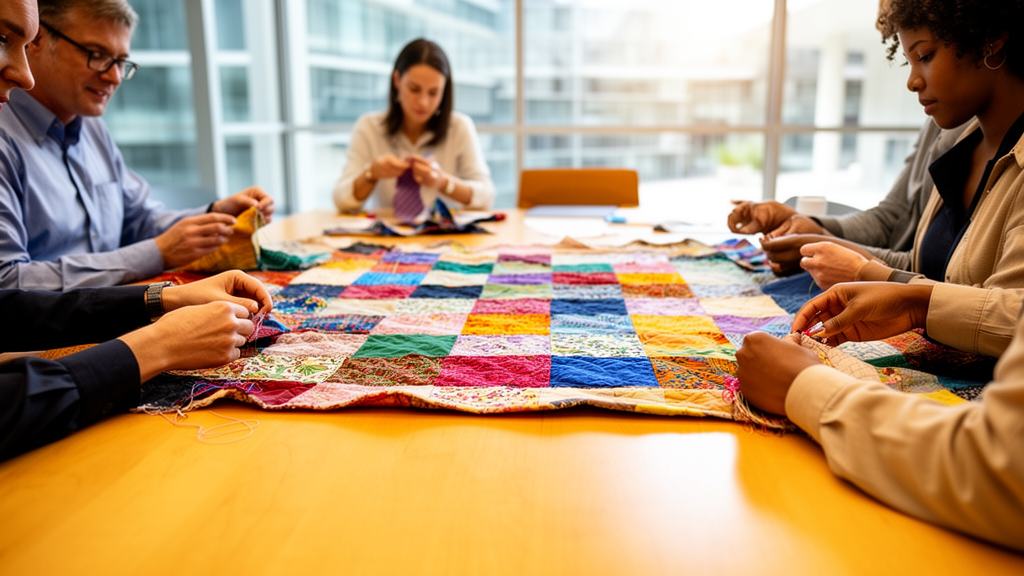
While arts-based approaches offer considerable promise for professional development, they have remained notably under-examined in health professions educator identity work. To investigate their potential utility, researchers designed and implemented an arts-based qualitative inquiry that utilized hands-on patchwork workshops as a structured faculty development intervention delivered across diverse academic settings.
The intervention was delivered across seven distinct workshops held at two medical education conferences and within two formal institutional faculty development programs located in Canada and the United States. A total of 142 participants attended the seven workshops, with practicing physicians representing the vast majority of the enrolled health professions educators.
The researchers gathered comprehensive data from multiple empirical sources to evaluate the intervention. These sources included direct workshop artifacts consisting of written reflections and photographs, formal post-session evaluation forms completed by 107 participants to achieve a 75 percent response rate, and in-depth qualitative follow-up interviews conducted with eight participants.
To evaluate these diverse materials, the analytic approach integrated thematic analysis of all textual data with arts-informed visual analysis of the assembled patchwork pieces. Participants reflected vividly on meaningful teaching experiences throughout the sessions and placed high value on having a dedicated, supportive opportunity for personal and creative expression.
The collective assembly of individual patchwork pieces fostered shared meaning-making and reinforced educator identity across three central qualitative themes identified by the research team: a moment comes to life through embodied and affective meaning-making, granting permission to be creative, and taking a collective breath during demanding educational work.
Ultimately, the researchers concluded that patchwork supported educator identity work by establishing playful, generative conditions for connection and reflection. Collaborative, arts-based practices offer theoretically grounded, creative, and pedagogically rich approaches for supporting teacher identity, fostering connection, and enhancing ongoing meaning-making across health professions education.
Subject of Research: Arts-based patchwork workshops supporting teacher identity in health professions education
Article Title: Patchwork as a faculty development approach to support teacher identity in health professions education
Article References: Kelly, M. A., Nixon, M., Buckley, H., Buck, E., & Szauter, K. (2026). Patchwork as a faculty development approach to support teacher identity in health professions education. BMC Medical Education. https://doi.org/10.1186/s12909-026-10828-0
Image Credits: AI Generated
DOI: 10.1186/s12909-026-10828-0
Keywords: teacher identity, health professions education, faculty development, patchwork workshops, arts-based inquiry, medical education, meaning-making, qualitative inquiry, creative expression, physician educators, visual analysis, thematic analysis, embodied reflection, affective learning, collaborative reflection, educational artifacts, educator connection