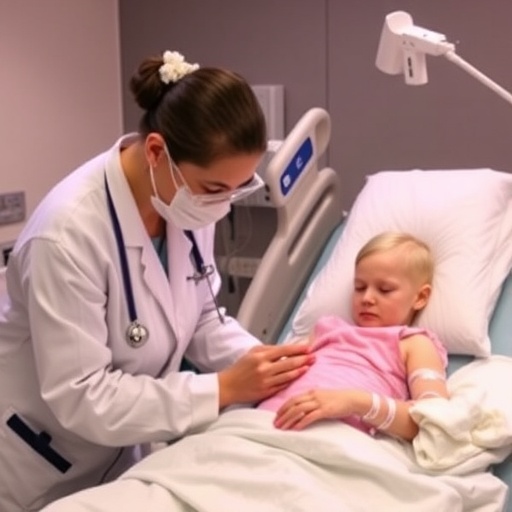
An ICU patient suffering from a complicated polymicrobial lung infection has received a tailored bacteriophage treatment, offering a striking glimpse into how “precision” viral therapy could be delivered at the bedside. In a single-arm clinical report published in Nature Communications, researchers describe a case in which phages were selected and administered to match the patient’s specific bacterial threats, rather than relying on conventional, one-size-fits-all antibiotics.
The patient presented with a pulmonary infection involving multiple bacterial species, a scenario that is notoriously difficult to treat because pathogens can shift rapidly and can jointly contribute to inflammation, biofilm formation, and treatment failure. Standard antimicrobial regimens often struggle when resistance, co-infection dynamics, and heterogeneous bacterial loads converge.
Central to the strategy was personalization: phages were identified and chosen based on their ability to target the relevant bacterial isolates recovered from the patient. The approach reflects a broader viral medicine concept—using naturally occurring viruses as precision tools to locate and eliminate otherwise hard-to-eradicate bacteria. Unlike antibiotics that act broadly on cellular processes, phages infect specific bacterial hosts, which can reduce collateral disruption of the microbiome.
In addition to host specificity, the report highlights the practical constraints of deploying phage therapy in a critical-care timeline. Rapid matching and preparation are required so that treatment can begin while bacterial populations remain active and clinically meaningful. The team’s workflow underscores how phage readiness and iterative testing may determine whether therapy can be effectively synchronized with ICU management.
The clinical course suggests that personalized phage therapy can be deployed alongside intensive supportive care and antimicrobial decision-making. As treatment proceeded, changes consistent with improved control of infection were observed, supporting the feasibility of tailored viral dosing in real-world hospital conditions.
Mechanistically, the case aligns with the expected phage life cycle: once bound and injected into susceptible bacteria, phages replicate and lyse infected cells, potentially releasing new viral particles that can propagate through remaining bacterial niches. In polymicrobial settings, this could mean targeted knockdown of key pathogens that would otherwise sustain the infection.
While this is a single-patient report, it provides evidence-of-concept for individualized phage selection in ICU-grade infections and adds to growing viral science news focused on moving phage therapy from experimental frameworks toward clinical practice.
Subject of Research: Personalized bacteriophage therapy for polymicrobial pulmonary infection in an ICU patient.
Article Title: Personalized Phage Therapy in an ICU Patient with Polymicrobial Pulmonary Infections: a case from a single-arm trial.
Article References: Shi, Y., Li, J., Yang, Q. et al. Personalized Phage Therapy in an ICU Patient with Polymicrobial Pulmonary Infections: a case from a single-arm trial. Nat Commun 17, 7411 (2026). https://doi.org/10.1038/s41467-026-75735-w
DOI: https://doi.org/10.1038/s41467-026-75735-w
Image Credits: AI Generated
Tags: Antimicrobial Resistancebacteriophage targetingbiofilm disruptionICU patient treatmentmicrobiome preservationPersonalized phage therapypolymicrobial lung infectionspolymicrobial pneumoniaprecision viral therapyrapid phage matchingtailored bacterial infection managementviral-bacterial infection therapy