Wild Pistachio Leaf Extract Kills Giardia Cysts as Effectively as a Frontline Drug in the Lab
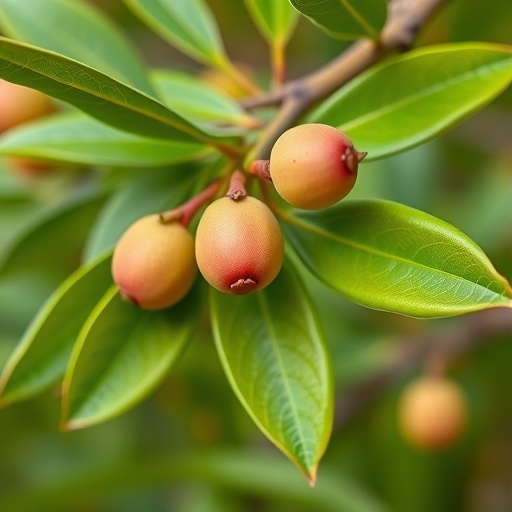
In a laboratory in western Iran, a parasite that has shadowed humanity since antiquity has just met a tree that has grown beside human settlements for just as long. Researchers at Ilam University of Medical Sciences report that a hydroalcoholic extract prepared from the leaves of Pistacia atlantica subsp. kurdica — the wild pistachio, a gnarled relative of the commercial nut tree that dots the Zagros Mountains — killed up to 80 percent of Giardia lamblia cysts in culture, performing on par with metronidazole, the nitroimidazole drug that has anchored giardiasis treatment for decades. The fruit extract of the same tree, by contrast, showed no cyst-killing activity whatsoever, at any dose or time point tested. Writing in the journal Acta Parasitologica, the team describes a concentration- and time-dependent killing pattern for the leaf extract that was statistically indistinguishable from the frontline pharmaceutical. The finding adds a new candidate to the growing roster of plant-derived therapies being screened as alternatives to a drug increasingly strained by side effects and resistance — while also illustrating how much distance still separates a promising petri dish from a medicine a patient can swallow.
Giardiasis, caused by the flagellated protozoan Giardia lamblia — known also as Giardia duodenalis or Giardia intestinalis — ranks among the most common protozoal infections of the human digestive tract and remains a substantial public-health burden worldwide. The parasite lives a double life. The trophozoite is the active, teardrop-shaped form that colonizes the small intestine, attaches to the intestinal wall and drives symptoms; the cyst is its hardened counterpart, an elliptical survival stage shed in feces that can persist for weeks or even months in cool, moist soil and water. Infection begins when cysts are swallowed in contaminated water or food, or transferred by unwashed hands, and it announces itself with diarrhea, nausea, abdominal cramps, bloating and weight loss. Children growing up in settings with limited sanitation bear a disproportionate share of the disease, and evidence of zoonotic transmission, including from rodents, complicates control efforts further. The consequences do not always end when the parasite is cleared: follow-up studies have linked giardia infection to longer-term complaints such as irritable bowel syndrome and chronic fatigue. Because cysts are precisely the stage that moves the parasite from one host to the next, any agent capable of destroying them is doubly attractive, offering a way to treat disease while also severing the chain of transmission.
Standard therapy leans heavily on nitroimidazoles, metronidazole above all, and those drugs have served reliably for decades. But the clinical picture is fraying at the edges. Metronidazole carries unpleasant adverse effects, including nausea and a characteristic metallic taste, and its use in pregnancy requires caution. More troubling, treatment failures and genuinely refractory giardiasis are an increasingly recognized clinical problem, linked to parasites with diminished drug susceptibility, and clinicians managing nitroimidazole-refractory infections have precious few sanctioned alternatives. That combination — a drug that works but is steadily compromised, and a parasite that is easy to catch and hard to evict — has pushed research groups worldwide toward medicinal plants, a repository of chemically diverse molecules that evolution has already pressure-tested for biological activity. The Iranian team, based in a region where giardiasis is routinely diagnosed in local laboratories and where herbal medicine remains a living tradition, posed a deliberately focused question: can extracts of an abundant native tree kill the very stage of the parasite responsible for keeping it in circulation?
Pistacia atlantica is no pharmacological stranger. Known regionally as baneh and sometimes called the Persian turpentine tree, the species has a long history in traditional medicine across the Middle East, where its resin, fruit, leaves and oil have been applied to complaints ranging from digestive troubles to wounds. A review of the species has catalogued its traditional uses alongside a growing body of phytochemical and pharmacological research, and previous laboratory studies have probed its chemistry against other parasites: extracts have been tested against the protoscoleces of hydatid cysts, the larval stage of the tapeworm responsible for echinococcosis, and against Trichomonas vaginalis, another flagellated protozoan of medical importance. The plant is chemically rich, producing an arsenal of phenolic compounds, tannins, flavonoids and terpenoids whose individual and combined effects remain only partially mapped. Notably, the same Ilam group had earlier examined Capparis spinosa, the caper bush, against Giardia cysts in vitro, so the pistachio experiment fits a coherent screening strategy: take plants with ethnomedicinal credibility and local availability, and test them, simply and rigorously, against a medically relevant parasite stage.
The experimental design was intentionally straightforward. The team prepared hydroalcoholic extracts from the fruits and leaves — an approach that uses a water–alcohol mixture to pull a broad spectrum of the plant’s soluble chemistry into solution, from highly polar phenolics to more moderately lipophilic constituents. Giardia lamblia cysts at a standardized density of 1 × 10⁴ cysts per milliliter — ten thousand cysts in every milliliter — were exposed to five concentrations of each extract, spanning 0.25 to 4 milligrams per milliliter, and incubated at 37 degrees Celsius, approximating human body temperature, for 12, 24 and 48 hours. Two controls bracketed the experiment. A saline buffer served as the negative control, confirming that cysts remain viable under the culture conditions when left alone, while metronidazole, at concentrations of 0.25 to 4 micrograms per milliliter, set the positive benchmark that any candidate would have to approach. After each incubation window, cyst viability was assessed using 0.1 percent eosin staining, and every assay was performed in triplicate to guard against statistical noise.
The results split cleanly along organ lines. The leaf extract displayed significant cysticidal activity at every time point examined, rising in a concentration- and time-dependent manner — the twin signature researchers look for when distinguishing a genuine biological effect from experimental artifact. At the two highest concentrations, 2 and 4 milligrams per milliliter, the leaf extract killed roughly 70 to 80 percent of cysts after 48 hours of exposure. Only the weakest concentration, 0.25 milligrams per milliliter, failed to reach statistical significance, and only at the earliest, 12-hour time point. The fruit extract, despite the prominence of pistachio fruit in folk remedies, did nothing: at no concentration and at no time point did it significantly reduce cyst viability. Metronidazole, meanwhile, was potently cysticidal across all concentrations and all time points, with results significant at P 0.0001. Most striking of all, when the researchers compared the leaf extract against the drug, the difference in efficacy was not statistically significant. In plain terms, a crude plant extract performed, statistically, like a frontline pharmaceutical.
The eosin exclusion assay at the heart of the measurement is elegantly blunt. Eosin is a dye that cannot cross an intact cell membrane: a living cyst, its membranes functioning, excludes the stain and stays bright under the microscope, while a dead or dying cyst, its membranes breached, admits the dye and stains visibly. By counting stained and unstained cysts across replicated samples, the researchers converted a microscopic observation into a mortality percentage. What the assay cannot do is explain the result. The stark divergence between leaf and fruit extracts — from the same tree, processed the same way and tested side by side — is a strong hint that the cyst-killing chemistry resides preferentially in the foliage, or at least in a form or abundance there that the fruit lacks. Whether the responsible agent is a single dominant molecule or a synergistic blend of tannins, flavonoids and terpenoids remains unknown. The study did not include phytochemical characterization, and identifying the active compound or compounds is among the next steps the authors themselves call for.
Several important qualifiers temper the enthusiasm. The work was conducted entirely in vitro, and against cysts alone; the intestinal trophozoite stage, arguably the more relevant target for curing an established infection, was not tested. And although the statistical comparison between leaf extract and metronidazole is eye-catching, the concentration scales differ by three orders of magnitude: the extract was active in the milligram-per-milliliter range, the drug in the microgram-per-milliliter range, meaning metronidazole remains vastly more potent by weight. A crude extract is also a chemical crowd rather than a single agent, and without knowing which constituents drive the activity, questions of safety, standardization and dosage stay open. Cytotoxicity against human cells has not yet been assessed, and the extract has not been challenged in animal models of infection. Laboratory conditions, moreover, are mercifully simple compared with the biochemical turbulence of the human gut, where proteins, bile acids and resident microbes can transform a compound’s behavior. The authors are explicit on this point: further studies on trophozoite stages, phytochemical characterization, cytotoxicity and animal models are needed before any therapeutic conclusions can be drawn.
Even with those caveats, the study lands at an interesting moment. Screenings of medicinal plants against protozoan parasites — from Yucca baccata and Artemisia annua to caper leaf extracts — have been accumulating for years, and reviews of the field argue that plants remain one of the most underexploited reservoirs of antiparasitic chemistry. Recent work has explored everything from Indonesian medicinal plants tested against Giardia intestinalis in culture to green-synthesized silver nanoparticles active against the parasite in mice. Most candidates will not survive the full gauntlet of purification, mechanism-of-action studies, toxicity profiling, formulation, animal testing and clinical trials, which together claim the overwhelming majority of early hits. But the arithmetic of the problem argues for casting a wide net. Parasite drug resistance rarely negotiates, and the history of pharmacology — from artemisinin to metronidazole’s own predecessors — is in large part the story of molecules borrowed from the plant kingdom. For now, the message of the Ilam study is modest and precise: the leaves of a tree that mountain communities have used medicinally for generations can kill the infectious stage of Giardia lamblia in a dish about as effectively as the drug doctors prescribe. Whether that observation can be distilled into a safe, standardized therapy is a question only years of further work can answer.
Subject of Research: In vitro cysticidal activity of Pistacia atlantica subsp. kurdica leaf and fruit hydroalcoholic extracts against Giardia lamblia cysts
Subject of Research: Biology
Article Title: Anti-Giardia Activity of Pistacia atlantica Hydroalcoholic Extract Against Giardia lamblia Cysts
Article References: Tam, S., Rezaee, D., Abdi, J., Abbasi, N., Maspi, N., Mirzaei, A., Naserifar, R., Karimi, E., Raiesi, O., Seidkhani, H., & Feizi, J. (2026). Anti-Giardia Activity of Pistacia atlantica Hydroalcoholic Extract Against Giardia lamblia Cysts. Acta Parasitologica, 71(4), Article 147. https://doi.org/10.1007/s11686-026-01311-3
Image Credits: AI Generated
DOI: 10.1007/s11686-026-01311-3
Keywords: Giardia lamblia, giardiasis, Pistacia atlantica, medicinal plants, hydroalcoholic extract, cysticidal activity, metronidazole, eosin exclusion, protozoan parasites, natural products
Cite Scienmag News
APA MLA Chicago
Lydia K. (August 29, 2026). Pistacia atlantica Extract Shows Potent Activity Against Giardia lamblia Cysts. Scienmag. https://scienmag.com/pistacia-atlantica-extract-shows-potent-activity-against-giardia-lamblia-cysts/
Copy citation Download RIS
Tags: alternative anti-giardiasis drugsalternative parasitic infection therapiesGiardia lamblia cystsGiardia resistance to drugsherbal cysticidal activityherbal treatment for parasitic infectionshydroalcoholic plant extractsmedicinal plants for protozoal infectionsnatural antiparasitic agentsnatural remedies for giardiasisparasite resistance to pharmaceuticalsphytochemicals against Giardiaphytochemicals against parasitesPistacia atlantica extractPistacia atlantica leaf extractplant-based giardiasis treatmentplant-derived therapies for giardiasisresistance to metronidazoletraditional medicinal plants in Iranwild pistachio leaf extractZagros Mountains medicinal plants