A new automated process for engineering tumor-targeting T cells could help accelerate personalized cancer treatments—while easing the physical toll on patients. Richard C. Koya, MD, PhD, who directs cGMP vector development and production at the University of Chicago Comprehensive Cancer Center, and his colleagues developed a streamlined system that drastically reduces the labor, time, and massive quantities of cells normally required to produce T-cell receptor-engineered T cells (TCR-T), a highly promising form of immunotherapy.
“Automating the activation, transduction, and expansion of TCR-T cells is a game-changer,” says Koya. The system he and his colleagues developed uses a closed “plug-and-play” hollow-fiber bioreactor, obtained from Terumo BCT, that can complete all three critical steps—stimulating T cells, genetically reprogramming them to recognize cancer, and expanding them into billions of potent tumor killers—within a single sterile device.
TCR-T therapies are customized for each patient, requiring clinicians to extract immune cells and then re-engineer them so they can identify cancer-specific targets. But current manufacturing protocols are cumbersome and resource-intensive. “Adequate activation, transduction, and expansion are notoriously difficult and laborious,” Koya explains. These methods also require “high amounts of T cells from patients, who are subjected to a procedure called apheresis at the hospital, which may take several hours,” he says.
The burden doesn’t end there. Multiple highly trained specialists must process the cells in clean-room environments, performing step after manual step to maintain a viable, functional product. Even then, the cells sometimes lack the long-lasting cancer-fighting characteristics clinicians desire.
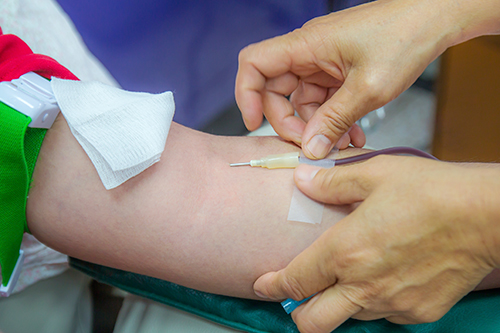
The new approach aims to change that equation. The hollow-fiber system allows scientists to start with a small blood draw collected “from an arm vein through a syringe within a few seconds,” Koya says, eliminating the need for harsher cell-collection procedures. From that modest starting material, his team routinely generates 6-12 billion engineered T cells in under 10 days—enough for a therapeutic infusion.
Just as crucial, these cells appear more fit for battle. The automated process favors what Koya describes as a T central memory phenotype, a cell state associated with longevity inside the body and stronger anti-tumor activity. “We successfully obtained TCR-T cells with beneficial characteristics correlated with better long-term T cell persistency for anti-tumor effects and higher functionality to kill cancer cells,” he says.

Yet, simplification might be the system’s most significant impact. “Everything was done by only one person,” Koya notes, pointing to the dramatic reduction in hands-on time, operating complexity, and risk of contamination.
While clinical adoption will require further testing, the implications are clear. By shrinking the manufacturing footprint and patient burden, automated 3-in-1 TCR-T production could help scale personalized immunotherapies beyond elite research centers.
“This approach could accelerate access to advanced cancer treatments,” Koya says, and help more people benefit from the promise of engineered immune cells.