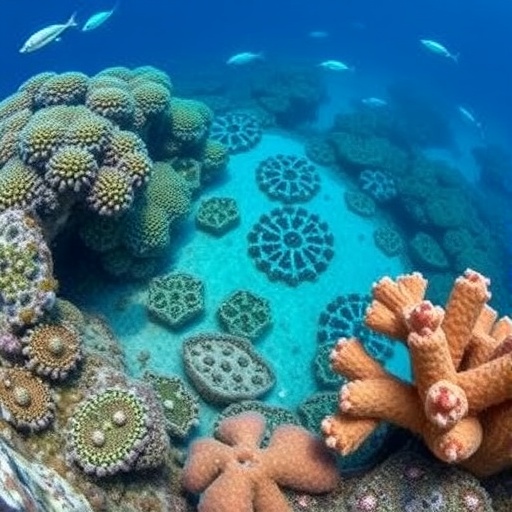
Coral reefs represent some of the most biologically rich ecosystems on our planet, occupying less than one percent of the seafloor yet supporting more than a third of all marine animal and plant species known to science. These vibrant underwater cities are not only critical habitats but also reservoirs of immense genetic and biochemical diversity. Over the last several decades, however, these ecosystems have faced unprecedented challenges from climate change-induced ocean warming, resulting in the disappearance of approximately 50% of the world’s coral population since the 1950s. This dramatic loss extends beyond the corals themselves, imperiling the complex microbial communities that live in intimate association with them.
Recent research spearheaded by interdisciplinary teams at ETH Zurich, in collaboration with EPFL and the Tara Pacific Consortium, has unveiled an astonishing wealth of microbial diversity hidden within coral microbiomes. Published in the prestigious journal Nature, this study explores the largely uncharted world of coral-associated bacteria and archaea whose genomes harbor biosynthetic pathways capable of generating novel natural compounds with potential applications in biotechnology and medicine. The investigation draws upon an extensive repository of more than 800 coral samples collected during a decade-old oceanic expedition aboard the research vessel Tara, focusing on reef-building fire and stony corals.
By sequencing microbial DNA fragments extracted from these samples, the researchers employed cutting-edge computational genomics to reconstruct the genomes of 645 previously unknown microbial species. This feat was made possible by leveraging high-performance computing infrastructure at ETH Zurich, enabling the assembly and annotation of metagenomic datasets into coherent genomic blueprints. Remarkably, over 99% of these species had never been described or sequenced before, highlighting the immense catalogue of undiscovered life forms residing within coral ecosystems. These findings dramatically expand our understanding of marine microbiology and the intricate symbiotic relationships fundamental to coral health and resilience.
Further analyses revealed that these microorganisms are not randomly dispersed throughout the Pacific Ocean but are instead highly specialized to their coral hosts. Their distribution is markedly restricted, demonstrating strong coral genus-specific microbiomes reminiscent of those observed in the human gut or skin. Many microbial taxa occupy niches such as the coral surface or the gastric cavity, where they form complex, tightly-knit communities that contribute to host defense through the production of chemical agents. This specificity suggests a co-evolutionary dynamic where microbial symbionts tailor their metabolic outputs to the needs of their coral hosts in a competitive reef environment.
One of the most groundbreaking aspects of this study lay in decoding the genomic loci responsible for biosynthesis of secondary metabolites. These natural products serve as molecular weapons and signaling molecules, affording the microbes—and by extension their coral hosts—protection against pathogens, predation, and microbial competitors within the densely populated reef environment. Through bioinformatic mining of biosynthetic gene clusters, the team discovered that coral reef microorganisms exhibit a far greater potential to produce diverse and novel chemical entities compared to microbes inhabiting the open ocean. The genomic repertoire uncovered suggests a vibrant chemical ecology wherein survival hinges upon sophisticated biochemical arsenals.
The implications of such chemical diversity extend well beyond coral biology. Many pharmaceuticals and biotechnological agents have historically been derived from natural products of microbial origin, especially those evolved in competitive environmental niches. The newfound microbial diversity within coral reefs thus constitutes a vast, largely untapped “natural pharmacy” that could revolutionize drug discovery and synthetic biology. However, the relentless deterioration of coral habitats threatens to extinguish these invaluable biological resources before their full potential can be realized.
Despite the comprehensive analysis of microbiomes from just three coral genera, the researchers emphasize that this represents only a small fraction of the millions of microbial species potentially associated with the hundreds of known coral genera worldwide. Similarly, other species-rich marine organisms—such as sponges, molluscs, and algae—likely harbor equally complex and chemically rich microbial assemblages that remain underexplored. This vast microbial “dark matter” is an urgent frontier for modern molecular ecology and natural product discovery.
In light of these revelations, the study’s authors express deep concern regarding conservation strategies to protect coral reefs. Traditional efforts have primarily focused on preserving coral macrofauna and visible biodiversity, yet the fate of their resident microbiomes is equally crucial for reef function and recovery. Microbial symbionts not only enhance coral health and stress resilience through biochemical interactions but also serve as reservoirs of genetic innovation critical for ecosystem adaptation under changing climatic conditions.
The technological advances in DNA sequencing, computational assembly, and functional annotation that enabled this study exemplify the power of genomics to uncover cryptic biodiversity and metabolic potential in environmental microbiology. The integration of omics data with ecological and chemical analyses promises to accelerate the discovery of novel natural products and inspire synthetic biology applications that mimic nature’s chemical ingenuity.
Ultimately, this research highlights the imperative to safeguard coral reef ecosystems holistically, encompassing not just the charismatic corals themselves but also their invisible microbial partners whose genetic and biochemical treasures could hold keys to future biotechnological breakthroughs. Heightened awareness and international collaboration aimed at mitigating climate impacts and protecting marine biodiversity will be essential to preserving this irreplaceable natural heritage.
As coral ecosystems continue to degrade, the loss of microbial diversity and its associated biosynthetic capacities may represent an irreversible depletion of potential new medicines and biotechnological tools. This study stands as a monumental step towards revealing the hidden microbial wealth of coral reefs, advocating for an expanded scope of marine conservation that embraces the molecular dimension of biodiversity. Unlocking the secrets of coral microbiomes is not only a scientific endeavor but a race against time to harness bioactive compounds with profound implications for human health and industry before they vanish from the ocean depths.
Subject of Research: Genetic and biosynthetic diversity of microbial communities associated with coral reefs, exploration of novel natural product biosynthesis potential within coral microbiomes.
Article Title: Coral microbiomes as reservoirs of unknown genomic and biosynthetic diversity
News Publication Date: 25-Feb-2026
Web References: DOI: 10.1038/s41586-026-10159-6
Keywords: Coral reefs, microbiomes, marine biodiversity, metagenomics, natural products, biosynthetic gene clusters, microbial symbiosis, climate change, biotechnology, drug discovery, molecular ecology, secondary metabolites
Tags: climate change impact on coral reefscoral microbiomes and biotechnologycoral reef conservation challengescoral reef microbial diversitycoral reefs as drug discovery sourcescoral-associated bacteria and archaeainterdisciplinary coral reef researchmarine genetic and biochemical diversitynatural compounds from coral reefsocean warming effects on marine liferare coral reef ecosystemsTara Pacific Consortium coral study