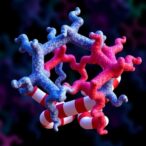
In a groundbreaking leap for bacterial genome editing, scientists at the Gladstone Institutes have shattered the long-standing confines of genetic manipulation that were previously limited predominantly to Escherichia coli (E. coli). Their pioneering research now extends these powerful genome editing capabilities across fifteen diverse bacterial species representing three major branches of the bacterial phylogenetic tree. This scientific stride is made possible by harnessing and engineering bacterial retrons—unique immune system elements that synthesize DNA—as versatile molecular tools for precise genomic modifications, a method detailed in a recent publication in Nature Biotechnology.
At the heart of this advancement lies the innovative repurposing of retrons, which are naturally occurring within bacteria as a defense mechanism against viral infection. Essentially, retrons function as tiny intracellular DNA factories that continuously produce single-stranded DNA molecules. The Gladstone team ingeniously co-opted these native DNA synthesizers to create “recombitrons,” advanced genome editing systems that produce the precise DNA templates required to instruct specific genetic alterations within bacterial cells. This contrasts with traditional editing systems, relying heavily on external DNA delivery, thus overcoming significant barriers in complex bacterial species manipulation.
Prior to this research, retron-mediated editing had demonstrated tremendous efficiency solely in E. coli, a mainstay model organism in molecular biology. While E. coli’s genetic tractability made it the preferred species for genome editing, its environmental and clinical relevance is comparatively limited. Realizing this constraint, the team led by Seth Shipman, PhD, sought to devise a method that capitalizes on the natural robustness and specificity of retrons while broadening their applicability beyond E. coli to bacteria with critical roles in ecology, industry, and human health.
To test their hypothesis, researchers systematically engineered a diverse library of ten retron-based recombitron constructs. These constructs varied in their retron sequences and accessory components to optimize genetic compatibility and editing efficacy across disparate bacterial hosts. They then orchestrated a global, collaborative effort involving nine specialized laboratories familiar with cultivating and genetically manipulating various bacterial species. By distributing these recombitron constructs to their partners, the team facilitated extensive cross-species experimentation.
The collaborative approach not only accelerated high-throughput testing but also generated a comprehensive dataset of editing efficiencies across the fifteen selected bacterial species. These species included human pathogens such as Klebsiella pneumoniae and Pseudomonas aeruginosa, notorious for their virulence and escalating antibiotic resistance. Additionally, industrially relevant bacteria like Vibrio natriegens—celebrated for its rapid doubling time—and Pseudomonas putida, known for its metabolic versatility, were successfully targeted, underscoring the technology’s broad utility.
Analysis demonstrated that while each recombitron exhibited distinctive editing efficiencies varying by bacterial host—sometimes reaching impressive editing success rates exceeding 90 percent—no single retron system was universally optimal. This nuanced performance suggests a complex interplay between retron molecular architecture and host bacterial cellular machinery, emphasizing the need for tailored editing solutions. Notably, for species exhibiting modest editing frequencies, strategic modifications to the retron design or auxiliary proteins significantly augmented editing outcomes, revealing a path toward custom-engineered genome editors for specific bacterial species.
Underpinning this research is a larger endeavor to mine retron diversity, highlighted by prior studies in 2024 where Alejandro González-Delgado and colleagues characterized over 160 previously underevaluated retron variants. These efforts unveiled numerous retrons with superior editing kinetics and efficiency compared to standard laboratory options. This expanded retron repertoire provides a rich toolkit for scientists seeking to deploy genome editing across an array of bacterial species, facilitating studies ranging from microbial ecology to synthetic biology.
The implications of broadened retron recombineering are profound. Precise genome editing in a wider spectrum of bacteria heralds new frontiers in manipulating microbial communities and dissecting pathogenic mechanisms. It empowers synthetic biologists to engineer designer microbes tailored for bioproduction of fuels, pharmaceuticals, and other biologics, while enabling microbiologists to unravel complex host-microbe interactions critical to human health. The accessibility of this technology fosters interdisciplinary innovations that were previously untenable due to technical constraints.
The Gladstone Institutes’ vision extends beyond this paper alone. “Our goal is to democratize genome editing for bacteria, enabling researchers worldwide to harness these molecular tools for their unique scientific questions,” Dr. Shipman explained. Through concerted collaboration and open sharing of molecular designs and protocols, this technology holds promise to catalyze a new era of bacterial genetic research and therapeutic development.
In summary, this landmark study charts a comprehensive path for deploying retron-mediated genome editing across phylogenetically diverse bacteria, transforming retrons from enigmatic bacterial immune elements into transformative engineering platforms. The recombitron systems developed offer unprecedented flexibility and precision, enabling genome modifications previously inaccessible in many bacterial species. This breakthrough not only enriches our molecular toolkit but also accelerates our capacity to confront pressing challenges in medicine, environment, and biotechnology through microbial engineering.
Subject of Research:
Genome editing across diverse bacterial species using retron-mediated recombineering
Article Title:
Genome editing of phylogenetically distinct bacteria using cross-species retron-mediated recombineering
News Publication Date:
April 23, 2026
Web References:
https://www.nature.com/articles/s41587-026-03076-6
References:
González-Delgado, A., Shipman, S., et al. (2026). Genome editing of phylogenetically distinct bacteria using cross-species retron-mediated recombineering. Nature Biotechnology. DOI: 10.1038/s41587-026-03076-6
Image Credits:
Photo: Michael Short/Gladstone Institutes
Keywords
Genome editing, retrons, bacterial genetics, recombineering, Escherichia coli, Klebsiella pneumoniae, Pseudomonas aeruginosa, synthetic biology, antibiotic resistance, biotechnology, microbial engineering, molecular technology
Tags: advanced bacterial genome engineeringbacterial genome editing toolsbacterial immune system DNA elementsbacterial retron engineeringDNA template production in bacteriagenome editing beyond E. colimulti-species bacterial genome manipulationovercoming bacterial editing barriersprecise bacterial genetic modificationsrecombitron genome editing systemretron-based DNA synthesisuniversal bacterial genome toolkit