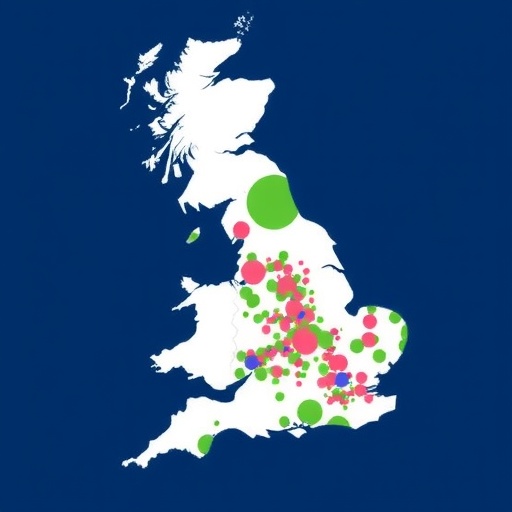
Recent research from England unveils a concerning rise in the incidence of several cancers among both younger and older adults, with particular upticks in bowel and ovarian cancers specifically noted among individuals under 50. This pattern challenges existing assumptions about cancer epidemiology, especially as traditional behavioral risk factors appear insufficient to fully explain the increases observed in younger populations. These findings emerged from a thorough statistical analysis of population-based data presented in BMJ Oncology, highlighting a nuanced and complex landscape of cancer risk that transcends age brackets.
The researchers undertook an in-depth examination of cancer trends in England spanning nearly two decades, from 2001 to 2019, utilizing the National Disease Registry Service to gather comprehensive incidence data. This longitudinal approach allowed for the dissection of cancer patterns among different age cohorts, specifically contrasting those aged 20 to 49 against the 50-plus demographic. By stratifying the data by sex and cancer type—covering more than twenty distinct cancers—the study aimed to discern differential trends that could inform future public health strategies.
Crucially, alongside incidence rates, the study integrated national health survey data to evaluate behavioral risk factors commonly linked to cancer development. These included smoking habits, alcohol consumption, dietary intake (particularly red and processed meats, alongside fiber levels), body mass index as a proxy for excess weight, and physical inactivity. This comprehensive risk factor profiling was essential to assess whether contemporary lifestyle changes correspond to shifts in cancer incidence across age groups.
The analysis revealed statistically significant increases in new cancer cases among younger women for 16 out of 22 cancer types examined, and among younger men for 11 out of 21 cancers. Among the cancers showing notable rises, eleven have established behavioral risk factors and were particularly prominent in the younger cohort. These include thyroid, multiple myeloma, liver, kidney, gallbladder, bowel, pancreatic, endometrial, oral cavity, breast, and ovarian cancers. Interestingly, while all these cancers also rose among older adults, bowel and ovarian cancers were exceptions, showing increases restricted to the under-50 age group.
Further distinctions emerged in the comparative growth rates of certain cancers across age groups. Notably, endometrial, kidney, pancreatic, multiple myeloma, and thyroid cancers increased significantly faster in younger women compared to their older counterparts. Similarly, multiple myeloma showed a more rapid rise in younger men than in older men. These differential trends suggest potential age-related biological or environmental factors influencing cancer development and progression.
One of the most striking findings involves the role of obesity. Except for oral cancer, all eleven cancers with rising incidence in younger adults were linked to excess weight to varying degrees. Additionally, several of these cancers were also associated with other risk behaviors: smoking correlated with six cancers (liver, bowel, mouth, pancreas, kidney, and ovary), alcohol consumption with four (liver, bowel, mouth, breast), physical inactivity with three (bowel, breast, endometrial), and diet specifically with bowel cancer. This multifactorial web of risk highlights the intricate interplay of behaviors affecting cancer susceptibility.
However, paradoxically, the trends in many of these behavioral risk factors among younger adults have been stable or improving in recent years, complicating explanations for the rising cancer rates. For example, red meat consumption—long implicated in certain cancer risks—declined significantly from 38 grams to 17 grams daily in younger men between 2008 and 2018, and similarly decreased among younger women. Processed meat intake also remains substantially lower in younger women compared to men. Despite this, cancer rates associated with these factors continue to climb, indicating that other dynamics must be contributing.
Fiber consumption, a protective dietary factor, remained insufficient in over 90% of younger adults yet did not decline over the study period. Meanwhile, smoking, alcohol intake, and physical inactivity rates generally showed favorable or neutral trends in younger populations. These data collectively underscore that traditional behavioral risk factors, while influential, cannot entirely account for the age-specific cancer increases documented.
Evaluating the burden of cancer cases attributable to these known risk behaviors reveals substantial contributions across both younger and older age groups. For instance, smoking, alcohol, and diet combined accounted for significant percentages of mouth, liver, bowel, kidney, and pancreatic cancers. Among women, these factors explained a substantial fraction of mouth, endometrial, liver, bowel, kidney, pancreatic, and gallbladder cancers. Excess weight emerged as the predominant risk factor, implicated in up to 37% of endometrial cancers and influencing the majority of the evaluated cancers to varying extents.
Researchers emphasize that although similar risk factors appear across age groups, some cancers may involve age-specific exposures or susceptibilities, or may be influenced by differences in screening and diagnostic practices. These nuances paint a complex picture where biological, environmental, and healthcare-related variables intersect, necessitating multifaceted investigative approaches to clarify underlying mechanisms.
It is important to acknowledge that this study, being observational and restricted to England, cannot establish causality. Limitations include the absence of long-term national data for several emerging risk factors and reliance on a 10-year latency assumption for exposure–cancer development relationships. These methodological considerations warrant cautious interpretation and underscore the need for continued research incorporating broader geographic scopes and longer follow-up periods.
Beyond traditional risk factors, several hypotheses have been posited to explain the observed trends in younger adults, including the influence of ultra-processed foods, childhood obesity, sedentary behaviors, antibiotic use, consumption of sweetened beverages, and environmental pollutants such as air pollution. However, most of these factors have not exhibited increasing trends in recent decades, suggesting that other, less quantified influences may be at play.
The role of the gut microbiome—particularly dysbiosis or imbalance in microbial communities—has garnered attention as a promising avenue for further exploration. Emerging evidence links gut health to carcinogenesis through complex immune and metabolic pathways, but understanding its contribution to age-specific cancer risk remains in the early stages and requires extensive investigation.
Despite the alarming rise in cancer incidence among younger adults, experts urge a balanced perspective. The absolute number of cancer cases remains significantly higher in older populations, emphasizing that preventive and clinical efforts should remain inclusive of all ages. Studying cancer risk across a lifespan ensures comprehensive strategies that address both emerging and established epidemiological patterns, ultimately advancing public health outcomes.
This investigation into the shifting landscape of cancer incidence and its behavioral correlates sheds critical light on a pressing yet underappreciated public health issue. It calls for intensified surveillance, multidisciplinary research, and innovative preventive measures tailored to evolving population health dynamics, driving a more nuanced understanding of cancer etiology in the 21st century.
Subject of Research: People
Article Title: Temporal trends in behavioural risk factors for cancers with rising incidence in younger adults: an analysis of population-based data in England
News Publication Date: 28-Apr-2026
Web References: http://dx.doi.org/10.1136/bmjonc-2025-000966
Keywords: Cancer, Colorectal cancer, Ovarian cancer, Age groups, Young people, Risk factors
Tags: age-specific cancer incidence patternsbehavioral risk factors and cancercancer epidemiology in Englandcancer prevention strategies for younger demographicscancer risk beyond traditional factorscancer trends 2001-2019increasing ovarian cancer rates under 50longitudinal cancer trend analysis EnglandNational Disease Registry Service data analysispopulation-based cancer incidence studypublic health implications of rising young adult cancersrising bowel cancer incidence in young adults