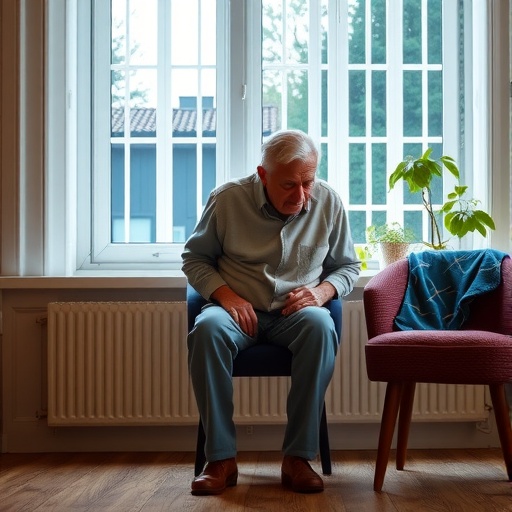
In the rapidly aging global population, understanding the intricate dynamics of frailty has taken center stage in geriatric research. A groundbreaking study led by researchers Jiarong, Xu, Qi, and colleagues unravels crucial factors contributing to frailty among older adults in China, shedding light on the combined influence of sedentary behavior and relative sit-to-stand power. This comprehensive investigation, published in BMC Geriatrics, pushes the boundaries of current knowledge by emphasizing the interplay between physical inactivity and muscle function as pivotal determinants of frailty, a condition that dramatically impacts quality of life and healthcare systems worldwide.
Frailty, a multidimensional syndrome characterized by diminished strength, endurance, and physiological function, predisposes individuals to increased vulnerability to adverse health outcomes. The Chinese demographic, given its immense size and rapidly aging profile, offers a poignant case study to examine these dynamics. By centering their research on this population, the study not only addresses a regional public health challenge but also contributes valuable insights with global relevance, particularly as sedentary lifestyles become increasingly prevalent.
Central to the study’s investigation is sedentary behavior, a modifiable lifestyle factor defined by prolonged periods of sitting or inactivity. Previous research has established a correlation between sedentary habits and various chronic conditions, but this work delves deeper to explore how these behaviors directly influence frailty status. The researchers meticulously measured sedentary time using validated self-reports and objective monitoring tools, capturing nuanced data that highlight the extent and patterns of inactivity among older Chinese adults.
Another innovative aspect of the study lies in its focus on relative sit-to-stand power, a functional measure that reflects lower limb muscular strength relative to body mass. The sit-to-stand test, while simple, serves as a powerful proxy for musculoskeletal health and physical capability. By normalizing muscle power to body weight, the researchers could more accurately assess physical function, accounting for variations in body composition that might confound traditional strength measurements. This metric provides critical insight into the physical capacity necessary to perform everyday activities and maintain independence.
The study’s methodology involved a representative cohort of Chinese elders, carefully balanced for age, sex, and socioeconomic variables. Through rigorous analytical techniques, including multivariate regression models, the research team evaluated the independent and combined effects of sedentary behavior and relative sit-to-stand power on frailty prevalence. Their findings revealed not only that each factor independently elevates frailty risk but also that their additive interaction significantly amplifies this vulnerability, underscoring a compounded detrimental effect when low muscle power and high inactivity coincide.
This complex interaction suggests that mitigating frailty demands a dual focus in intervention strategies. Public health initiatives targeting older adults could therefore benefit immensely from integrating approaches that both reduce sedentary time and enhance muscular strength. Physical activity promotion, particularly resistance and functional training tailored to improve sit-to-stand power, emerges as a potent therapeutic avenue with the potential to curb the progression of frailty.
The physiological underpinnings of these findings are rooted in the interplay between disuse muscle atrophy and systemic metabolic dysregulation. Prolonged sedentary behavior initiates a cascade of deleterious processes, including mitochondrial dysfunction, impaired muscle protein synthesis, and chronic inflammation. Concurrent reductions in muscle power exacerbate these changes, accelerating the decline in functional reserve critical for balance and mobility. This synergy creates a vicious cycle, reinforcing frailty and heightening risk of falls, hospitalization, and mortality.
Interestingly, the research also addressed potential confounders such as nutritional status, comorbidities, and psychosocial factors, ensuring the robustness of its conclusions. The control for these variables strengthens the assertion that physical inactivity and muscle dysfunction are primary drivers of frailty, rather than secondary consequences of other health conditions. This clarity is vital for framing effective prevention and treatment models.
Translating these findings into clinical practice necessitates accessible and scalable assessment tools. The sit-to-stand test exemplifies such an instrument, offering clinicians an easy-to-administer, objective measure to evaluate relative muscle power. Coupled with detailed sedentary behavior questionnaires or wearable activity monitors, healthcare providers can routinely screen older adults for frailty risk and tailor interventions accordingly.
Furthermore, the study advocates for culturally sensitive interventions that resonate with the unique lifestyle and societal norms prevalent among Chinese older adults. For instance, community-based exercise programs that incorporate traditional physical activities might enhance adherence while simultaneously addressing sedentary habits and muscle power deficits. Such strategies could be readily adapted to diverse populations worldwide, highlighting the global significance of these insights.
The implications for policymakers are equally profound. By framing sedentary behavior and muscle power as modifiable risk factors, health systems can prioritize resource allocation toward preventive measures rather than reactive care. Investment in public spaces conducive to physical activity, dissemination of educational campaigns, and integration of frailty screening into routine geriatric assessments represent concrete steps informed by this research.
Looking forward, the study paves the way for longitudinal investigations to explore causal pathways and the long-term effects of interventions aimed at altering sedentary behavior and bolstering muscle strength. It also invites exploration into the molecular mechanisms linking these factors, potentially unveiling novel therapeutic targets to attenuate frailty trajectories.
Moreover, the heightened relevance of frailty highlighted by the COVID-19 pandemic, which disproportionately affected vulnerable elderly populations, underscores the urgency of such research. Understanding how modifiable lifestyle components interplay to shape vulnerability could empower more resilient aging societies.
In sum, this seminal work by Jiarong and colleagues revolutionizes our understanding of frailty by illuminating the synergistic roles of sedentary behavior and relative sit-to-stand power among Chinese older adults. Through meticulous methodological design, rigorous analysis, and contextual sensitivity, the study charts a clear course for clinical, public health, and policy interventions aimed at preserving function, independence, and quality of life in aging populations worldwide.
As we face an era defined by demographic shifts and the inevitable rise in age-related health challenges, these findings emphasize the transformative potential of targeted, evidence-based strategies. Reducing sedentary behavior and enhancing muscle power are not merely individual health goals but integral components of sustainable aging frameworks that can mitigate frailty’s profound societal impact.
The research offers a compelling narrative that encourages a proactive paradigm shift, urging societies to reimagine aging not as inevitable decline but as a dynamic process amenable to positive intervention. By adopting the insights garnered from this study into clinical practice and public health policy, we can aspire toward healthier, more resilient elderly populations—thereby rewriting the story of aging for generations to come.
Subject of Research: Frailty in older adults, specifically examining the roles of sedentary behavior and relative sit-to-stand power and their interaction in a Chinese elderly population.
Article Title: Frailty in Chinese older adults: the roles of sedentary behavior, relative sit-to-stand power, and their additive interaction.
Article References:
Jiarong, Z., Xu, Z., Qi, M. et al. Frailty in Chinese older adults: the roles of sedentary behavior, relative sit-to-stand power, and their additive interaction. BMC Geriatr (2026). https://doi.org/10.1186/s12877-026-07230-2
Image Credits: AI Generated
Tags: aging population health challengeselderly health in Chinafrailty risk factors in older adultsgeriatric research on frailtyimpact of sedentary lifestyle on elderlymultidimensional frailty syndromemuscle function and agingmuscle strength decline in agingphysical inactivity and frailtyprevention of frailty in seniorssedentary behavior in elderlysit-to-stand power and frailty