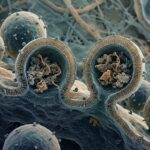
A newly formulated oral nanoparticle system combining mouse bone marrow-derived mesenchymal stem cell conditioned media with chitosan carriers demonstrated significant antibacterial and anti-inflammatory activity in an experimental mouse model of cholera. Reporting in BMC Infectious Diseases, researchers investigated whether encapsulating stem cell secretions inside chitosan nanocarriers could offer a novel strategy against Vibrio cholerae infections. While both conditioned medium and chitosan-based nanocarriers possess established therapeutic potential, the biological efficacy of combining both components within a single platform had not previously been evaluated in a living cholera model.
The investigation addressed cholera as an ongoing global health concern that continues to demonstrate increasing resistance to conventional antibiotic treatments. This growing resistance profile has generated substantial scientific interest in developing alternative non-antibiotic antibacterial compounds capable of combating infection without relying on traditional antimicrobial agents. The study specifically aimed to determine whether merging these two modalities could produce measurable therapeutic effects in mice infected with the pathogen.
To generate the therapeutic formulation, investigators synthesized chitosan nanoparticles using the ionic gelation method. During synthesis, chitosan polymer chains were crosslinked with sodium triphosphate polyanion, or TPP, and loaded with mouse bone marrow-derived mesenchymal stem cell conditioned media to produce m-MSCsCM-CTNPs. The synthesized nanoparticles were analyzed by dynamic light scattering, zeta potential, and scanning electron microscopy.
Morphological analysis using scanning electron microscopy confirmed that the m-MSCsCM-CTNPs exhibited a smooth surface and spherical shape. Dynamic light scattering measurements revealed a mean size scattering of 668.1 ± 300.4 nanometers alongside a zeta potential of 9.07 ± 11.5 millivolts. Furthermore, the formulation achieved an encapsulation efficiency of 87 percent for the conditioned medium. In vitro protein release assessments conducted at a neutral pH of 7 demonstrated that the nanoparticles released 64 percent of their protein content after 72 hours of continuous incubation.
The viability of Caco-2 cells in the presence of m-MSCsCM-CTNPs was evaluated. The viability of Caco-2 cells treated with m-MSCsCM-CTNPs was 84 percent. The in vivo phase examined forty-eight infant BALB/c mice aged five to six days, divided evenly into six experimental groups. Following experimental induction and confirmation of Vibrio cholerae infection, oral treatments consisting of m-MSCsCM-CTNPs, plain chitosan nanoparticles, and unencapsulated conditioned media were administered once daily for seven days starting 24 hours post-confirmation.
Treatment efficacy in the animal model was assessed through bacterial clearance, fluid accumulation ratios, small intestinal histopathology using hematoxylin and eosin staining, and inflammatory cytokine concentrations measured by enzyme-linked immunosorbent assay. Administration of m-MSCsCM-CTNPs resulted in significant bacterial clearance of 97 percent alongside a notable decrease in fluid accumulation. Histopathological examination showed reduced neutrophil infiltration within the small intestine, and cytokine profiling confirmed marked inhibition of interleukin-6 and tumor necrosis factor-alpha production.
The authors concluded that the m-MSCsCM-CTNP formulation serves as a promising preclinical candidate for non-antibiotic cholera therapy. Further experimental validation across additional disease models remains essential before the platform can be considered for potential clinical application.
Subject of Research: Evaluation of mesenchymal stem cell conditioned media loaded in chitosan nanoparticles against cholera in mice
Article Title: Mesenchymal stem cell conditioned media enclosed in chitosan nanoparticles: a promising therapeutic strategy against cholera
Article References: Saberpour, M., Bakhshi, B., & Shams, S. (2026). Mesenchymal stem cell conditioned media enclosed in chitosan nanoparticles: a promising therapeutic strategy against cholera. BMC Infectious Diseases. https://doi.org/10.1186/s12879-026-14801-6
Image Credits: AI Generated
DOI: 10.1186/s12879-026-14801-6
Keywords: cholera, Vibrio cholerae, mesenchymal stem cell conditioned media, chitosan nanoparticles, m-MSCsCM-CTNPs, ionic gelation, sodium triphosphate polyanion, BALB/c mice, bacterial clearance, fluid accumulation ratio, Caco-2 cells, interleukin-6, tumor necrosis factor-alpha, intestinal histopathology, zeta potential, dynamic light scattering, scanning electron microscopy