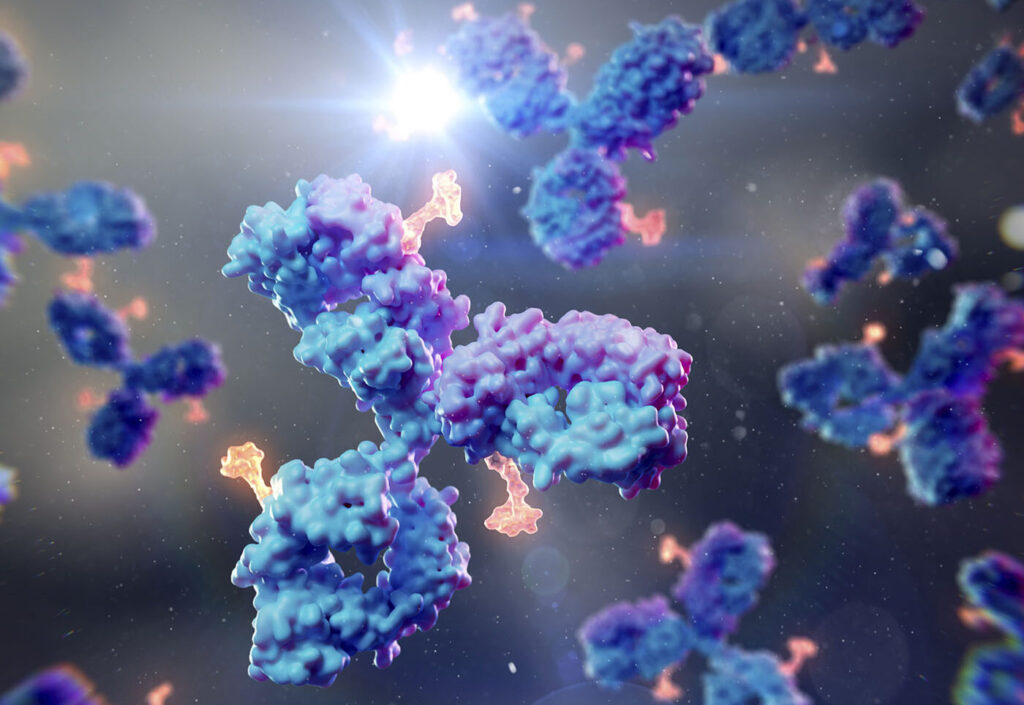
Antibody-drug conjugates (ADCs) have evolved from an elegant scientific concept into one of oncology’s most dynamic therapeutic classes. By fusing the targeting specificity of monoclonal antibodies with the cell-killing power of highly potent cytotoxic agents, ADCs aim to deliver chemotherapy directly to tumor cells while sparing healthy tissue. The approach promises to improve efficacy, widen therapeutic windows, and enable new strategies in both research and clinical oncology.
But as ADCs mature, it has become clear that their greatest strength—the integration of biology and chemistry—is also their greatest challenge. From discovery and cell-line engineering to conjugation chemistry, containment, cleaning validation, and commercial-scale production, ADCs push the boundaries of traditional biologics manufacturing.
An ADC is composed of three essential components: a monoclonal antibody that recognizes a tumor-associated antigen; a potent small-molecule payload designed to kill cancer cells; and a linker that connects the two and controls drug release. Once administered, the antibody binds to its target antigen on cancer cells, the complex is internalized, and the payload is released inside the cell, ideally minimizing systemic toxicity.
“ADCs represent an emerging class of therapies in cancer treatment,” says Raphael Frey, PhD, director of commercial development for bioconjugates at Lonza. Unlike conventional chemotherapy, which “often lacks specificity and can damage healthy cells,” ADCs are “designed to precisely target tumor antigens,” enhancing effectiveness while minimizing overall toxicity, Frey explains.
This precision makes ADCs not only therapeutic agents but also powerful research tools. In preclinical settings, ADC-like constructs help validate targets by selectively eliminating antigen-expressing cells. Related conjugate strategies are also used in diagnostics, where antibodies linked to imaging probes enable tumor visualization and response monitoring.
According to Frey, “more than 14 ADC therapies have received market approval for treating various cancers, and over 200 additional ADCs are currently in clinical development.”
Multimodal manufacturing
From a chemistry, manufacturing, and controls (CMC) perspective, ADCs present unique hurdles. “ADCs introduce unique challenges across areas like process and purification development, analytical characterization, formulation, and drug-product manufacturing,” Frey explains.
The reason lies in their multimodal nature. ADCs combine biologics and small molecules through intricate bioconjugation processes. “Each component requires its own technology platform and set of capabilities,” Frey says. The diversity of ADC formats—varying antibodies, linker chemistries, payload classes, and drug-to-antibody ratios (DARs)—adds another layer of complexity. Small changes in conjugation strategy or payload hydrophobicity can significantly influence stability, aggregation, pharmacokinetics, and safety.
For many biotech companies, building this breadth of expertise in-house is impractical. As a result, outsourcing has become the norm. Frey estimates that 70-80% of ADC manufacturing operations are outsourced today, a trend likely to continue as modalities grow more complex.
One of the most distinctive aspects of ADC production is the need to handle highly potent cytotoxic compounds safely. Payloads used in ADCs are often active at picomolar concentrations, posing occupational and environmental risks if not properly contained. Specialized infrastructure must include closed systems, dedicated containment suites, advanced air handling, and strict safety protocols.
At Lonza, this extends to an on-site incineration facility designed to process cytotoxic liquid and solid waste. Such integrated solutions reduce dependence on external waste management partners while supporting compliance and safety.
Containment considerations influence facility design, equipment selection, and workflow planning from the earliest stages of process development. Without appropriate infrastructure, scaling an ADC program can stall before it reaches pivotal trials.
Cleaning is crucial
Beyond containment, ADC manufacturing introduces significant cleaning challenges. Trace amounts of linker-payload residues can affect patient safety and pose exposure risks to operators.
“Even trace elements of the linker-payload will impact patient safety, and also pose the risk of exposure to operations personnel during maintenance activities,” says Marc Studer, senior director of ADC operations at Samsung Biologics.
In traditional monoclonal antibody production, cleaning typically follows standardized clean-in-place (CIP) and steam-in-place (SIP) protocols. Effectiveness is often assessed using compendial assays such as total organic carbon or conductivity. ADCs, however, require far more sophisticated strategies due to the presence of cytotoxic payloads.
“The challenge is to define a cleaning strategy that is able to reduce the residual payload or ADC to an acceptable limit in order to avoid carry-over between batches and/or different products,” Studer explains. Because each linker-payload combination has unique chemical properties, cleaning procedures and analytical assays must often be developed and validated for each product individually.
Samsung Biologics applies a scientific, risk-based approach, defining cleaning strategies early during technology transfer. Decisions about chemical deactivation versus flush-out methods consider payload characteristics, equipment compatibility, personnel safety, wastewater management, and analytical sensitivity. Robust validation ensures residual compounds remain below acceptable limits.
The molecular consistency problem
Manufacturing infrastructure and cleaning protocols address only part of the challenge. Another crucial issue lies in molecular heterogeneity.
“One of the biggest misconceptions in ADC development is that sequence diversity at discovery translates into functional diversity after conjugation,” says Sean Muthian, PhD, chief technology and strategy officer for biotechnology integrated solutions at Cytiva.
Antibodies that appear stable as unconjugated IgGs may exhibit stability or aggregation liabilities once a hydrophobic payload is attached. Conventional conjugation methods can generate heterogeneous DAR populations, creating what Muthian describes as “multiple pharmacological species rather than a single drug.”
Even site-specific conjugation approaches, though chemically cleaner, can expose biological constraints related to folding, secretion, and glycosylation as development progresses. “The recurring issue is treating these effects as late CMC problems instead of recognizing them as design mismatches between discovery assumptions, biological production systems, and clinical performance,” Muthian says.
To address these mismatches, Cytiva is collaborating to advance AI-driven, cell-line-design strategies that model antibody sequence, conjugation chemistry, and host-cell biology together. Rather than optimizing each element independently, this integrated approach aims to predict stress points in folding pathways, glycosylation capacity, and secretion efficiency.
“This shifts key decisions earlier,” Muthian explains, “allowing both molecule and host to be adjusted before variability becomes locked in during development.” The impact includes tighter DAR distributions, more consistent post-translational modifications, and reduced aggregation risk.
Clinically, the payoff can be substantial. “ADCs have often fallen short not because the biology was wrong, but because molecular inconsistency made exposure-response relationships unreliable,” he says. Producing well-defined molecular populations helps stabilize pharmacokinetics and improve dosing predictability.
Greater molecular consistency may also expand the range of viable targets, including tumors with moderate or heterogeneous antigen expression. It can facilitate combination strategies and next-generation ADC formats by reducing variability-driven toxicity.
PAT brings ADC control
Process analytical technology (PAT) is becoming indispensable as ADCs continue to gain traction as targeted cancer therapies. Lisa McDermott, director of process and analytical development at MilliporeSigma, the U.S. and Canada Life Science business of Merck KGaA, Darmstadt, Germany, emphasizes that PAT provides the analytical depth and process control needed to reliably manufacture these complex molecules while safeguarding product quality.
“Advanced analytical techniques provide valuable insights that help ensure a consistent DAR,” McDermott says, underscoring the importance of this ratio in determining ADC safety and efficacy in oncology. By integrating PAT tools with multivariate statistical analysis, developers can perform “thorough analysis of the conjugation chemistry,” gaining “a deeper understanding of the interactions between the antibody, reagents, and drug linkers,” she says. This insight is “crucial for optimizing conjugation conditions,” including reaction time, temperature, and reagent concentrations, which she describes as “essential for achieving the target DAR even with site-directed technologies.”
Beyond analytics, broader progress in conjugation chemistry and manufacturing platforms is helping ADCs move into the cancer-therapy mainstream. “Improvements in all areas of conjugation chemistry and manufacturing platforms have had a significant impact” on the field, McDermott notes, enabling more reliable and scalable processes that support clinical and commercial development.
A key advantage of PAT is real-time process visibility. These tools “provide a deep understanding of conjugation chemistry and unit operations,” allowing developers to “closely monitor and control critical process parameters in real time,” McDermott notes. Such control ensures that “all critical quality attributes remain consistent,” which is essential not only for regulatory success but also for delivering safe and effective cancer therapies, she explains.
Looking ahead, McDermott stresses that “the integration of advanced PAT tools and innovative conjugation platforms” is accelerating the path from development to commercialization. As she emphasizes, the result is “faster access to effective treatments for patients,” making “a significant impact on the landscape of cancer therapy,” while also opening the door to broader applications of ADCs beyond oncology.
A partner-centric ecosystem
Given the modality’s complexity, collaboration has become central to ADC success. Frey emphasizes that partnering with an experienced contract development and manufacturing organization (CDMO) capable of integrating linker and payload technologies, cytotoxic fill-finish, and containment solutions “under one roof” can accelerate timelines and reduce risk from early clinical development through commercialization.
Studer highlights the importance of early risk assessment and analytical rigor, particularly in cleaning validation. Muthian underscores the need to push integration even further upstream, aligning discovery, cell line engineering, and manufacturing strategy from the outset.
Across these perspectives, a consistent theme emerges: ADC performance depends as much on engineering discipline as on biological insight. If that integration succeeds, ADCs may fully realize their promise: targeted cancer therapies that deliver precision without compromise.