Targeting the cellular processes that govern fungal virulence represents a promising therapeutic approach for countering emerging and drug-resistant fungal infections, according to a systematic review published in Clinical Microbiology Reviews. Conducted by Professor Alf Botha from Stellenbosch University’s Department of Microbiology in South Africa and Dr. Elizaveta Koroleva, a diagnostic specialist at the Wemmershoek Diagnostic Laboratory, the study evaluates how disrupting fungal polyamine metabolism could provide a viable pathway to inhibit fungal replication and pathogenesis. By examining global literature alongside their own investigations into opportunistic mammalian pathogens, the authors suggest that intervening in polyamine metabolic pathways could help overcome the therapeutic limitations currently facing modern medicine.
The growing urgency surrounding fungal pathogens was formally recognized in 2022 when the World Health Organization published its first catalogue of fungal priority pathogens, detailing nineteen fungi identified as the greatest threats to public health worldwide. Fungal diseases remain a serious yet chronically neglected public health challenge, inflicting particularly severe consequences on individuals with compromised or weakened immune systems. Clinically vulnerable populations facing substantial risk from these infections include patients undergoing treatment for cancer, people living with HIV/AIDS, organ transplant recipients, and individuals suffering from chronic respiratory diseases or post-primary tuberculosis infections.
This escalating medical threat has been largely driven by environmental changes and human practices, most notably a steady rise in global temperatures alongside the widespread misuse of antifungal chemicals in agricultural and clinical healthcare sectors. As ambient temperatures rise globally, environmental fungi have undergone evolutionary adaptation toward higher thermotolerance. This physiological shift enables these organisms to survive and thrive within the naturally elevated internal body temperatures characteristic of mammals. Consequently, climate-driven thermotolerance is progressively eroding one of the primary evolutionary thermal defenses that historically shielded human hosts and other mammals from severe environmental fungal colonisation and systemic infections.
To identify innovative methods for combating resistant species, the authors centered their analysis on polyamines, which are small, multifunctional biogenic molecules that serve crucial regulatory and structural functions in basic fungal biology. In their published assessment, the researchers emphasize that polyamines are tightly linked to fungal virulence and cellular survival. Dr. Koroleva noted that by analyzing previous scientific literature as well as data from their own laboratory investigations, the research team focused on understanding how polyamine metabolic machinery can be strategically interrupted during specific biological periods when fungal cells are most reliant on these molecules to function.
The underlying biological rationale is that impairing essential cellular functions during windows of high metabolic vulnerability severely compromises a pathogen’s capacity to proliferate and establish invasive disease. Scientific investigation into chemical inhibitors of polyamines is not entirely new, having been explored in laboratory settings for more than four decades. However, historical attempts that relied strictly upon single-molecule inhibition repeatedly failed to translate into safe, clinically viable antifungal therapies for patients. By undertaking a broad synthesis of the worldwide scientific literature, Botha and Koroleva sought to move beyond past clinical roadblocks by identifying alternative therapeutic paradigms that demonstrate greater clinical viability.
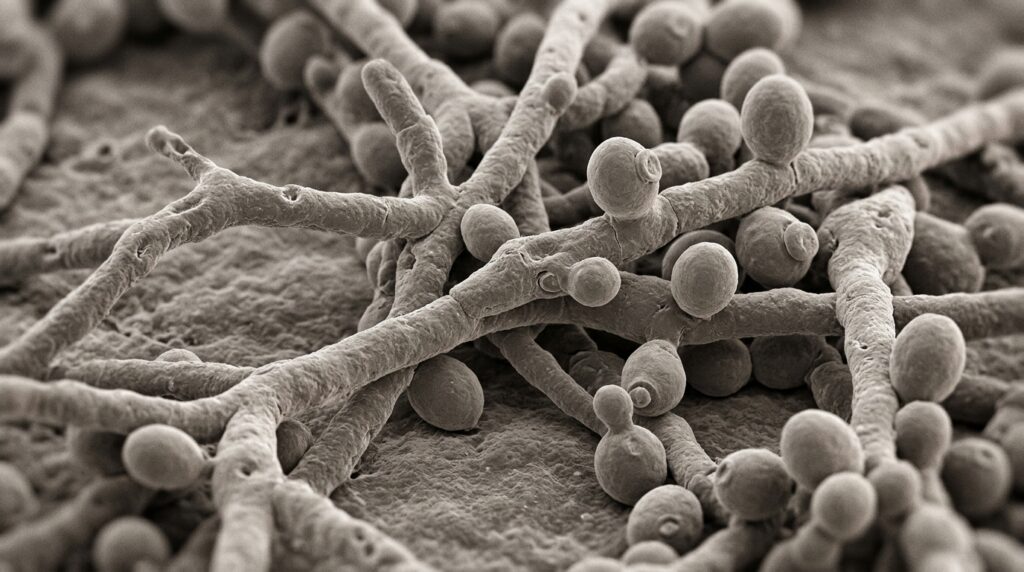
Their findings indicate that polyamine synthesis inhibition displays heightened efficacy when pathogenic fungi actively produce virulence factors, which are the specialized biological mechanisms used to infect host tissue. A prominent example highlighted in the review involves species within the genus Candida, where the formation of hyphae serves as an essential tool for fungal cells to adhere to host surfaces and evade host immune responses. Suppressing polyamine synthesis directly obstructs this morphological transition into hyphae, effectively disarming the pathogen’s primary invasive mechanism while limiting its ability to withstand host immune defenses.
Furthermore, the literature review shows that combining polyamine inhibitors with established, conventional antifungal drugs yields therapeutic efficacy superior to utilizing polyamine inhibitors alone. Dr. Koroleva explained that this synergistic approach operates by simultaneously blocking fungal virulence factors while disabling the basal cellular machinery that pathogens require to survive.
Despite these encouraging findings, substantial research hurdles remain before laboratory discoveries can become clinical realities, most notably discovering candidate molecules that disrupt fungal polyamine pathways without causing toxic harm to healthy human cells. In concluding their assessment, the authors stressed that polyamine pathways offer a viable yet understudied frontier for antifungal drug design, expressing optimism that outlining current advancements and therapeutic obstacles will inspire targeted research into safer, more effective treatments against clinically relevant fungi.
Subject of Research: Fungal polyamine metabolism as an antifungal drug target
Article Title: Outsmarting deadly fungi: South African researchers identify promising strategy against emerging fungal infections
Article References: Outsmarting deadly fungi: South African researchers identify promising strategy against emerging fungal infections. Original publication (Bibliographic details unavailable.)
Image Credits: AI Generated
DOI: Not provided
Keywords: polyamine metabolism, antifungal resistance, Candida hyphae, fungal virulence, opportunistic pathogens, systematic review, Clinical Microbiology Reviews, Stellenbosch University, priority pathogens, thermotolerance, combination antifungal therapy, Wemmershoek Diagnostic Laboratory, immunocompromised patients, selective toxicity, virulence factors, mammalian body temperature, antifungal drug discovery