
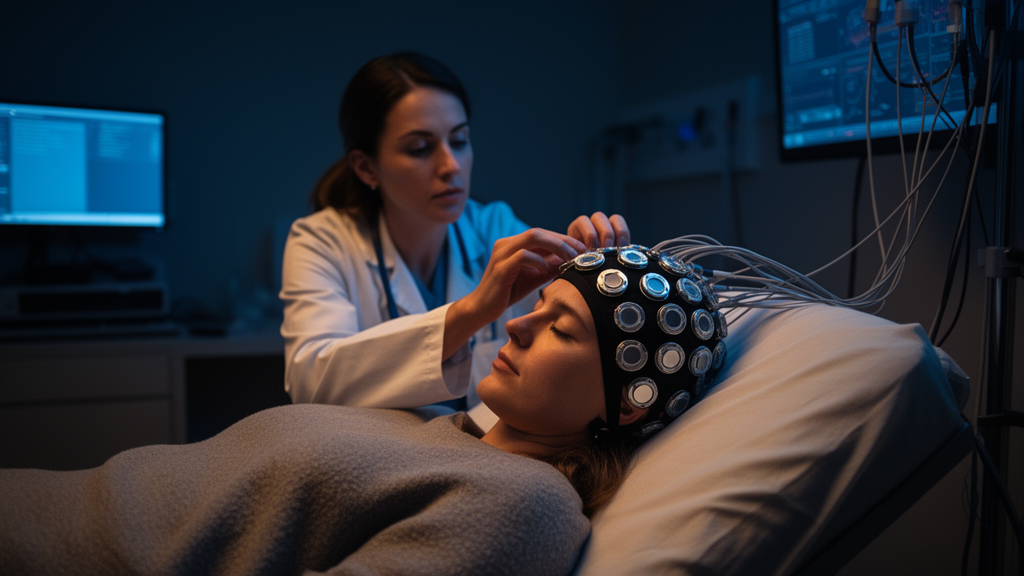
Quantifying human consciousness through electroencephalographic recordings has long challenged neuroscientists and clinical practitioners because conventional markers typically examine only isolated dimensions of brain dynamics, such as raw statistical complexity, global spectral power, or isolated phase synchrony. To overcome these constraints, researchers Hassan Ugail and Newton Howard have introduced a multidimensional mathematical framework published in Biological Cybernetics that unifies three complementary dynamical properties into a singular composite metric termed Psi. Rather than pursuing an elusive scalar measure of consciousness itself or committing to a single philosophical doctrine, the framework models consciousness-related brain activity as organised dynamical complexity. The architecture decomposes electrophysiological activity into scale-free temporal organisation, organised cross-frequency complexity, and large-scale metastability. By integrating these three fundamental operational hallmarks, the approach evaluates whether spontaneous neural fluctuations demonstrate coordinated multiscale temporal persistence, functional coupling across frequency bands, and flexible transitions between integrated and segregated network configurations.
The mathematical formulation of the framework establishes distinct quantitative operators for each constituent feature before merging them into a unified evaluation pipeline. Scale-free temporal organisation, denoted as H_eff, is estimated using detrended fluctuation analysis across temporal scales to quantify long-range power-law correlations from demeaned, integrated channel time series. Because conscious brain functioning degrades under both totally uncorrelated white noise and excessively rigid, non-stationary persistence, the resulting scaling exponents are transformed using dedicated tuning functions that peak at theoretically optimal scaling regimes. In synthetic data, this is achieved via a Gaussian tuning function centered at an exponent of 0.35 with a standard deviation of 0.12, whereas real recordings utilize a range-normalised triangular tuning function anchored to each subject’s median waking exponent. This calibration accounts for the substantial empirical shift from synthetic dynamics to genuine physiological 1/f scaling, where human waking dynamics operate near an exponent of 1.07 across compressed distributions.
The second pillar of the framework captures organised cross-frequency complexity, designated as component D, by evaluating structural interactions between distinct oscillatory regimes alongside temporal signal richness. Focusing on canonical theta and gamma interactions, the algorithm filters recordings into low-frequency theta bands between 4 and 8 Hertz and higher gamma frequencies, spanning 30 to 80 Hertz in simulated data and 30 to 45 Hertz in empirical recordings to respect the Nyquist limit of 100 Hertz sampling rates. The Hilbert transform extracts instantaneous theta phase and gamma amplitude envelopes, and phase-amplitude coupling is quantified through the Tort Modulation Index across 36 phase bins. To eliminate deceptive mathematical artifacts generated by low-amplitude signals, an amplitude guard sets D to zero whenever the mean gamma envelope falls below 0.001 standard deviations of the z-scored input. Temporal richness is incorporated by binarizing broadband analytic amplitude envelopes at their median to calculate channel-averaged Lempel-Ziv complexity, which multiplicatively scales the modulation index.
Metastability, represented by M, forms the third operational pillar and reflects the ongoing balance between neural integration and segregation by tracking the temporal variability of phase synchronisation in the alpha band between 8 and 13 Hertz. For every recording channel, band-pass filtered alpha components are transformed to yield instantaneous phases, which feed into the Kuramoto order parameter at each time step. This parameter approaches unity when phase trajectories across channels align into absolute synchrony and approaches zero when phases disperse uniformly across the unit circle. The standard deviation of this order parameter across time defines metastability, where elevated values signal fluid, recurrent transitions between strongly coherent assemblies and desynchronized modular processing. In 16-channel synthetic montages, this measure directly monitors distributed network flexibility, whereas in limited two-channel recordings, the operator simplifies mathematically to a pairwise phase-lag measure, providing an indicative index of synchrony fluctuation.
To generate the composite index Psi, the individual values of H_eff, D, and M are normalized using min-max scaling relative to an established reference ensemble and combined as a weighted sum. The structural weighting factors were defined a priori rather than fitted to test data, assigning a weight of 0.40 to scale-free temporal organisation, 0.35 to organised cross-frequency complexity, and 0.25 to metastability. Pairwise Spearman rank correlations among components across extensive simulated cohorts revealed moderate positive associations, demonstrating that while all three dimensions respond coherently to shifts in conscious state, they contribute distinct, non-redundant dynamical information. The resulting index scales predictably between zero and one, capturing whether neural time series preserve coordinated temporal hierarchies, structured cross-frequency communication, and balanced dynamical flexibility across diverse experimental and pathological regimes.
The authors initially evaluated the framework within an abstract, biologically grounded generative model capable of simulating nine distinct classes of brain states across multichannel arrays. The simulated repertoire spanned active wakefulness, wakeful rest, psychedelic states, dreaming, non-rapid eye movement sleep, minimally conscious conditions, surgical anesthesia, non-conscious states, and generalized hypersynchronous seizures. Synthetic baseline signals approximated 1/f noise distributions superimposed with oscillatory generators spanning delta through gamma bands, with channel interactions governed by Kuramoto coupling equations and targeted phase-amplitude modulation. Across 30 independent Monte Carlo realizations per state, the composite metric tracked the expected dynamical hierarchy without parametric drift. High-consciousness states clustered at elevated values between 0.76 and 0.90, intermediate vigilance states occupied mid-range values between 0.43 and 0.49, and non-conscious, anesthetized, and seizure conditions registered minimal values between 0.05 and 0.10, yielding an across-state Kruskal-Wallis omnibus statistic of H = 260.42.
Systematic validation within the generative simulation demonstrated robust performance across comprehensive classifier benchmarks, parameter ablations, and sensitivity analyses. When synthetic runs were categorized into pooled conscious classes comprising wake, task, and psychedelic states, and non-conscious classes comprising anesthesia and non-conscious states, the composite index achieved an area under the receiver operating characteristic curve of 1.000 with a 95 percent bootstrap confidence interval of 1.000 to 1.000, confirming completely non-overlapping distributions across 150 evaluations. Pairwise transition analyses proved that no single component could reliably discriminate every state boundary on its own; for example, scale-free scaling completely failed to separate sleep from minimally conscious states with an individual area under the curve of 0.00, but metastability achieved perfect discrimination of 1.00, enabling Psi to rescue the transition with an index of 0.98. Selective ablations of individual mechanisms caused targeted collapses in their respective components while leaving others stable, directly confirming that the composite prevents collinear redundancy.
Following synthetic benchmarking, the investigators conducted an empirical validation using human polysomnographic recordings drawn from the open-access Sleep-EDF Expanded database on PhysioNet. The empirical sample comprised 30 healthy adult subjects representing 1,078 artifact-free 30-second epochs distributed evenly across wakefulness, stage N2 non-rapid eye movement sleep, and rapid eye movement sleep. Electrophysiological data were recorded from two scalp bipolar derivations, Fpz-Cz and Pz-Oz, sampled at 100 Hertz without artificial upsampling, while epochs exceeding 500 microvolts were excluded. Calculating subject-level means across stages revealed marked physiological differentiation. A non-parametric Friedman omnibus test verified highly significant within-subject state dependency with a chi-square of 45.27 and p less than 0.0001 across the 30 complete-case cohorts. Post-hoc Wilcoxon signed-rank tests with Bonferroni correction confirmed that waking values differed significantly from both sleep stages at p less than 0.0001, demonstrating complete paired separation where every single participant exhibited higher values in wakefulness than in either sleep condition.
Benchmarking against established neuroscientific measures highlighted the specific discriminative capabilities and nuances of the composite architecture. For the contrast between wakefulness and rapid eye movement sleep, Psi emerged as the top-performing metric with an area under the curve of 0.996, surpassing the spectral slope at 0.993, Lempel-Ziv complexity at 0.783, and alpha power at 0.780. In distinguishing wakefulness from stage N2 sleep, the composite achieved an area under the curve of 0.973, closely trailing the spectral slope’s 1.000. Conversely, the contrast between stage N2 and rapid eye movement sleep revealed an unresolved boundary. Conventional complexity baselines systematically inverted the traditional vigilance hierarchy by ranking rapid eye movement sleep above stage N2 with areas under the curve between 0.204 and 0.317, reflecting the elevated signal complexity of dreaming. Psi yielded an area under the curve of 0.584 with a confidence interval spanning 0.501 to 0.676 and a non-significant paired p-value of 0.058, indicating that neither the composite nor established baselines reliably resolved this internal sleep contrast.
The researchers underscored several methodological boundaries and emphasized that their findings represent conceptual proof-of-principle rather than immediate clinical diagnostic tools. Most notably, the empirical evaluation was restricted to two-channel surface montages, which unavoidably collapsed the Kuramoto order parameter into simple pairwise phase differences and precluded robust estimation of physiological cross-frequency coupling, as confirmed by surrogate z-scores hovering between negative 0.03 and positive 0.15. Consequently, empirical discrimination was propelled primarily by scale-free scaling and the rank distribution of raw modulation values rather than fully engaged multichannel network dynamics. Furthermore, the reliance on within-subject waking anchors for detrended fluctuation scaling introduces domain adaptation that naturally advantages wakeful contrasts. The authors conclude that extending this open-source framework will require rigorous evaluation across high-density recording arrays, pharmacological anesthesia induction cohorts, and diverse disorders of consciousness to confirm whether organized dynamical complexity provides a truly generalizable metric of human neural states.
Subject of Research: Multidimensional dynamical framework for quantifying consciousness-related neural organisation in electroencephalography
Article Title: A three-component dynamical index of consciousness-related neural organisation
Article References: Ugail, H., & Howard, N. (2026). A three-component dynamical index of consciousness-related neural organisation. Biological Cybernetics, 120(3-4), Article 20. https://doi.org/10.1007/s00422-026-01049-1
Image Credits: AI Generated
DOI: 10.1007/s00422-026-01049-1
Keywords: dynamical systems, electroencephalography, consciousness research, scale-free dynamics, detrended fluctuation analysis, cross-frequency coupling, theta-gamma phase-amplitude coupling, Lempel-Ziv complexity, metastability, Kuramoto order parameter, Sleep-EDF dataset, non-rapid eye movement sleep, rapid eye movement sleep, neural organisation, computational neuroscience, spectral slope, perturbational complexity, synthetic neural modeling

