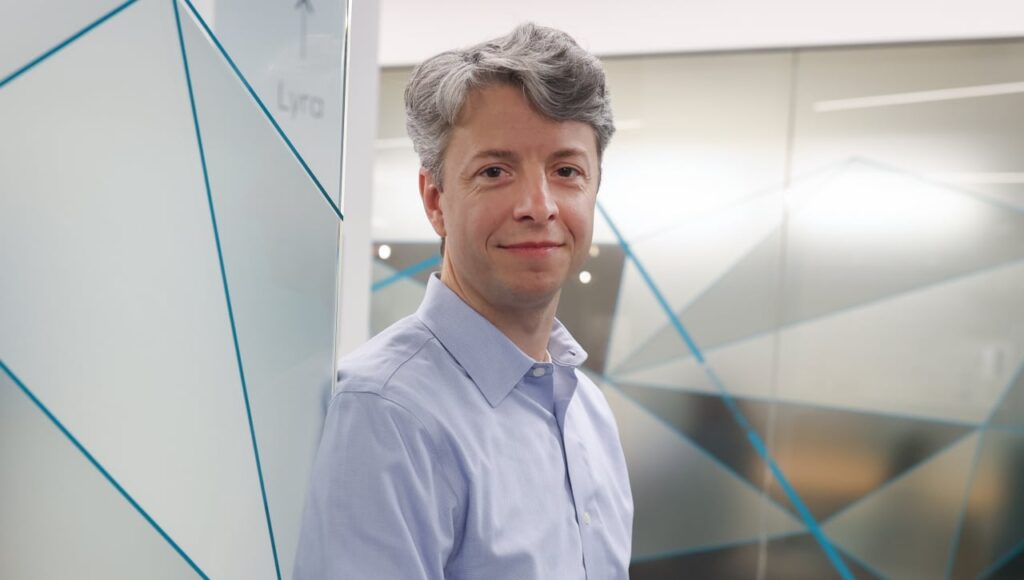
Few companies stand better poised than Beam Therapeutics to reap the first fruits of the FDA’s promised flexibility toward cell and gene therapies. The biotech is pioneering treatments based on base editing, the very technology used to treat baby KJ last year. The infant’s case, underpinned by a custom gene editing therapy that was rapidly cleared by the FDA for experimental use, is now frequently invoked by U.S. health officials as proof of their dedication to fostering the next generation of genetic medicines.
One sign that the FDA intends to keep its promise around regulatory flexibility came recently for Beam’s lead genetic disease program, BEAM-302. The company and the agency have agreed that Beam may use biomarkers evaluated over a year to support a potential application for an accelerated approval of the gene editing candidate as a treatment for alpha-1 antitrypsin deficiency (AATD), Beam said in a Jan. 11 release—the eve of the annual J.P. Morgan Healthcare Conference.
“That’s classic accelerated approval,” Beam’s CEO John Evans said in an interview with Fierce on the sidelines of JPM. “We have biomarkers […] and they all predict clinical benefit, which is what the FDA wants to see. We would do accelerated approval, get to market, and then do a confirmatory trial.”
AATD is caused by changes in the SERPINA1 gene, which instructs the production of the lung-protecting AAT protein. A lack of functional AAT leaves patients’ lungs vulnerable, and an accumulation of misfolded AAT can lead to liver damage.
BEAM-302 is designed to correct the PiZ mutation that’s common in most patients with severe AATD by introducing a one-time adenine-to-guanine (A-to-G) correction of their DNA. The therapy involves a liver-targeting lipid nanoparticle (LNP) carrying Beam’s base editor.
The biomarker-based path to potential approval marks a win for Beam, and investors celebrated the news by lifting the company’s share price by 22% on Jan. 12. Back in November, Evercore ISI analysts projected that regulators may require functional endpoint data to hand out an endorsement, which would push back a potential launch into 2030.
Initial phase 1/2 clinical data reported last year showed that BEAM-302 at the 60-mg dose level helped three AATD patients with lung disease achieve an average AAT level of 12.4 μM at Day 28. By then, the corrected M-AAT protein made up an average 91% of total AAT in circulation, as the amount of the mutant Z-AAT had decreased by 79% versus baseline. On the safety side, BEAM-302 was said to be well tolerated in altogether nine patients across three doses explored. M-AAT is the most common form of AAT that protects the lungs and liver.
A successful AATD therapy would need to reach AAT production of at least 11 μM, with the vast majority being functional protein, accompanied by a dramatic reduction in mutant protein, Evans said. With the trial results generated so far, BEAM-302 has ticked those boxes.
“Now it’s just a matter of, do we continue to see that robustly? How does the data evolve? Is it durable? And then, as we treat more and more patients—adding another 50—is the safety consistent?” Evans said.
Beam is testing two additional doses—up to 75 mg of the drug or two 60-mg doses administered a few weeks apart. It’s also treating AATD patients with liver disease in part B of the phase 1/2 trial. The company plans to report updated data from both parts and its pivotal development plan by the end of March.
In AATD, Beam is racing against several RNA programs, including Wave Life Sciences’ RNA editing candidate, plus Takeda and Arrowhead Pharmaceuticals’ RNA interference program fazirsiran.
Evans said he was surprised by how many patients favor one-time treatment. Existing AATD treatment options include lifelong augmentation therapy.
Meanwhile, Wave’s early data recently underwhelmed expectations. But there’s an ongoing safety concern around permanently editing a patient’s DNA versus RNA.
Safety-wise, Beam is treading carefully on two fronts: minimizing off-target editing and managing short-term acute toxicities from delivery.
“It turns out that these are actually quite specific tools, and we have amazing assays,” Evans said. “You literally can go super-deep resolution sequencing on every single base in the entire genome—there are 3 billion of them.”
The LNPs so far appear to be well tolerated, especially compared to viral vectors used in other gene therapies. But Evans noted that to ensure liver tolerability, their doses can’t go too high.
Another SCD cell therapy?
While Beam investors are highly focused on BEAM-302’s blockbuster opportunity in AATD, the company has another potentially closer-to-market program, ristoglogene autogetemcel (risto-cel), a base-edited cell therapy for treating sickle cell disease (SCD). There, the company is wrapping up a phase 1/2 trial and is guiding to an FDA filing as early as the end of 2026.
With risto-cel, Beam plans to go up against Vertex and CRISPR Therapeutics’ Casgevy and Genetix Biotherapeutics’ Lyfgenia. All three agents involve modifying a patient’s own blood stem cells. Ristol-cel and Casgevy are more similar as they both use CRISPR gene editing to increase fetal hemoglobin (HbF), but Beam hopes that base editing could give its program an edge.
Evans called the double-strand break induced by traditional CRISPR a “genotoxic event” that impacts the viability and robustness of the cell. Through chemical conversion of a base without cutting both DNA strands, risto-cel could lead to a more efficient manufacturing process that requires fewer cycles of cell collection, which means patients can get the final product faster and health facilities can save resources. Once infused, the modified cells could get to work faster, with more rapid engraftment.
SCD patients who received BEAM-101 in a phase 1/2 trial underwent at the median just one cycle of mobilization for cell collection, and the neutrophil and platelet engraftments—which suggest that the new, healthy stem cells have successfully traveled to the bone marrow to start producing healthy blood cells—happened in less than 20 days. The early results, published last year, compared favorably to Casgevy’s data in a phase 3 trial in a larger group of patients.
“Everyone has asked, ‘Why hasn’t the market grown more quickly as these launches have gone off?’ And from everything that we hear, it is really the struggle with the collection and manufacturing steps that is slowing it down,” Evans said.
However, doctors and investors seem less convinced that BEAM-101 boasts enough differentiation.
“[O]ur KOL feedback suggests that the incremental benefits do not yet significantly move the clinical needle, and more data (larger [number of patients] and longer follow-up) are needed to determine which therapy would be preferred choice,” Evercore analysts said in their November note.
Evans acknowledged that some industry watchers view BEAM-101 as more of a wait-and-see story as they continue to hold a cautious view of the SCD market. For the longer term, Evans believes that deeper resolution of the disease, with increasing HbF levels and decreasing sickle hemoglobin and hence less anemia, would help an SCD treatment gain more traction.
While improving these clinical markers is key for patient outcomes, the broader commercial success of SCD therapies may ultimately hinge on more than just efficacy. A major inflection point could come for SCD if a treatment can get rid of the need for toxic chemotherapy conditioning, currently a necessary step to clear out existing stem cells in a patient’s bone marrow to make room for new therapeutic cells.
About 90% of SCD patients are not getting a transplant cell therapy because of the chemo component, Evans said.
Toward that goal, Beam has developed BEAM-103, an antibody that’s designed to suppress hematopoietic stem and progenitor cells that express CD117, and BEAM-104, a next-generation HbF-boosting cell therapy that includes an additional edit to CD117 that spares it from BEAM-103. Essentially, the combination offers a potential nongenotoxic alternative.
But moving into JPM, in what Evans called Beam’s “big push,” the company said it will now prioritize in vivo delivery for its next-generation SCD therapies. That pivot mirrors a broader surge in in vivo cell therapies, highlighted by major investments from heavyweights like AstraZeneca, Gilead Sciences and Bristol Myers Squibb, as well as federal support from the Advanced Research Projects Agency for Health (ARPA-H).
The ability to go in vivo is enabled by advancements in targeted LNP delivery that allows the therapy to bypass the liver and get directly to hematopoietic stem cells (HSCs). Beam is ironing out the specifics in the coming weeks, and it may or may not use the BEAM-103 antibody, according to Evans. But one thing is clear.
“We’re putting all of our eggs now in that basket,” Evans said.
Edit, regulate, fund
Casgevy and Lyfgenia were approved by the FDA in late 2023. But Beam’s in vivo program is still in the lead optimization stage without a candidate to move to the clinic, putting its most optimistic commercialization timeline well into the 2030s.
“We’re never moving fast enough for my satisfaction,” Evans said. “But ultimately, it’s all limited by science.
“I think in vivo to HSC has been a dream for a long time, but it needed some of these technical breakthroughs before I would even have said it was ready for prime time,” Evans continued. “I think we have those now […] There’s nothing fundamental that we need to discover in order to make this real. Once you get to that point, now it’s just a foot race to go as fast as you possibly can. I think you’ll start to see it accelerate.”
The advancement of cell and gene therapies is also highly dependent on support from regulators. Hoping to replicate the one-off success for baby KJ, the FDA recently introduced the “plausible mechanism pathway” to expedite the development and approval of personalized gene editing therapies. Under this approach, rather than approving each individual therapy, the agency would essentially approve a treatment mechanism to be adopted in similar bespoke therapies.
“We’re quite eager to do that ourselves,” Evans said. “Of course, we’re doing [AATD] where we’re going to treat tens of thousands of patients potentially with one single kind of editor. But we can equally manufacture bespoke editors for smaller populations and take advantage of that plausible mechanism pathway.”
Beam is hoping to talk to the FDA about potential regulatory flexibility on BEAM-301, a candidate in glycogen storage disease Type Ia (GSDIa), which affects “hundreds of patients at most in the U.S.,” Evans said.
The agency “has done a lot of listening” and has come up with new approaches to regulating cell and gene therapy, Evans said.
Beam has at least found some initial support from Big Pharma. The Massachusetts biotech reached a potential blockbuster research collaboration with Pfizer in late 2021. The initial four-year term of the deal expired at the end of 2025. For now, the two companies are tight-lipped on whether Pfizer has extended the term or opted into any program.
“Big Pharma is watching this space very closely,” Evans said. “What they’re generally doing, like with any long-term disruptive new technology, is they want to have a seat at the table.”
As gene editing is still growing up, Big Pharma now prefers partnering or licensing over full-on platform acquisitions, Evans observed.
Beam has generated more than $900 million of funding through business development and had an estimated $1.25 billion in cash as of the end of 2025, which will be able to cover its transition into a commercial firm, Evans said. With a clear regulatory path forward for BEAM-302 and enough funding to sustain operations into 2029, Evans said right now is the first time that he’s felt the company has the capital on hand to execute fully on the pipeline’s potential.
“This is a business that’s still quite labor-intensive and people-intensive,” the chief executive said. “The more streamlining the FDA does, the better it gets. But it’s still going to be expensive to do this.”