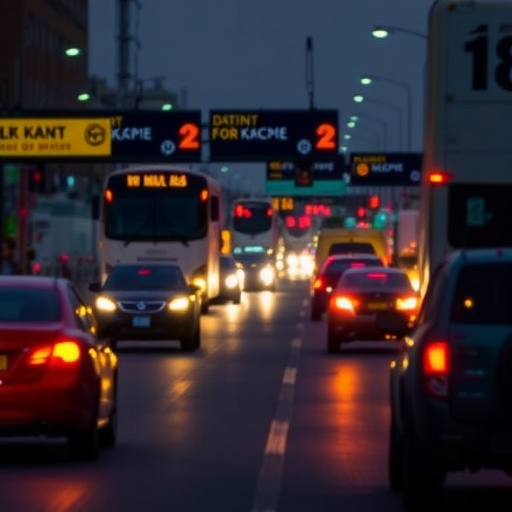
In an age bustling with ceaseless urbanization and relentless development, the cacophony of transportation noise has emerged as more than just an inconvenience—it is increasingly recognized as a significant public health threat. Recent research ventures into this sonic landscape unveil an intricate relationship between transportation noise and cardiovascular disease (CVD) outcomes. A systematic review and meta-regression analysis, spearheaded by Gonzato and colleagues, rigorously unpacks this association, shedding light on the physiological impacts and the pressing need for policy interventions.
Transportation noise, emanating from road traffic, railways, and aircraft, permeates the environmental soundscape of modern cities. Unlike transient noise exposures, chronic exposure to these anthropogenic sound levels engenders a persistent assault on the auditory and cardiovascular systems. The research team synthesized data from multiple epidemiological studies, meticulously quantifying the dose-response curves. Their meta-regression analysis demonstrates a clear positive correlation: as the decibel level of transportation noise escalates, so does the incidence of cardiovascular pathologies.
At the core of this research is the exposure-response relationship, a critical epidemiological construct that elucidates how varying magnitudes of noise influence health outcomes. The analysis dissected sound exposure profiles to determine thresholds and increments associated with measurable increases in specific cardiovascular disease risks, including hypertension, ischemic heart disease, and stroke. Findings suggest nuanced risk amplifications even at exposure levels previously regarded as tolerable, compelling a reevaluation of current environmental noise guidelines.
Physiologically, the human body interprets excessive noise as a stressor activating neuroendocrine pathways. This triggers a cascade of biological responses such as the secretion of stress hormones—cortisol and adrenaline—which elevate heart rate and blood pressure over time. The chronic activation of these pathways underlies the pathogenesis of diverse cardiovascular events, effectively linking external environmental factors with internal systemic dysfunctions. The study underscores the multifactorial mechanisms by which noise exacerbates vascular inflammation, endothelial dysfunction, and oxidative stress.
Equally compelling is the consideration of exposure duration and temporal patterns. Not all noise exposure is created equal; nighttime noise emerges as disproportionately harmful, disrupting sleep architecture and impairing the body’s natural circadian rhythms. Such disruption precipitates systemic inflammation and impairs autonomic regulation, exacerbating cardiovascular vulnerability. The meta-regression highlights that the timing of noise exposure is a critical modifier in the risk equation, emphasizing the need for temporal monitoring in noise mitigation strategies.
Crucially, the research consolidates the heterogeneous data from distinct cohorts spanning diverse geographical and demographic contexts. Variability in noise measurement methods, population sensitivity, and confounding variables posed analytical challenges, deftly managed through advanced statistical techniques. This rigorous standardization enhances the robustness of the exposure-response estimates, providing policymakers and healthcare professionals with dependable evidence to inform protective regulations.
The implications of these findings ripple beyond academic inquiry. Transportation noise is omnipresent and often underregulated, yet its health ramifications are insidious and profound. Urban planners and public health officials historically prioritized air quality and chemical pollutants—but this study reinvigorates the discourse surrounding acoustic pollution. The systematic evaluation articulates an urgent call for integrated noise management policies encompassing urban design, traffic flow modulation, and sound insulation technologies.
Moreover, this research sheds light on socioeconomically disparate impacts. Vulnerable populations—those in lower-income neighborhoods often proximal to major highways, rail lines, or airports—bear a disproportionate burden of noise exposure and thus heightened cardiovascular risk. This environmental injustice compounds existing health disparities, framing transportation noise as a critical environmental justice issue demanding equitable policy responses.
Interdisciplinary efforts emerge as paramount, merging expertise from environmental science, epidemiology, cardiology, and urban planning. Technological advancements in noise detection and mapping enable more nuanced exposure assessments. Concurrently, public health campaigns geared toward noise awareness and personal protective practices gain importance. The study advocates for community engagement in shaping quieter, healthier urban spaces, recognizing that local context and stakeholder involvement are essential for effective intervention.
From a clinical perspective, these findings encourage healthcare providers to incorporate environmental noise exposure assessments into patient evaluations, particularly for those with or at risk of cardiovascular disease. Personalized risk stratification and preventive strategies could integrate noise reduction advice alongside traditional lifestyle modifications. The research thus bridges epidemiological evidence with bedside implications, fostering a holistic approach to cardiovascular health promotion.
The systematic review and meta-regression also set the stage for future research trajectories. Key questions remain regarding the interaction between noise and other environmental stressors, such as air pollution, and their combined effect on cardiovascular health. Additionally, explorations into genetic susceptibilities and adaptive physiological responses could refine risk predictions and therapeutic targets. The study’s comprehensive approach provides a methodological template for such investigations.
Importantly, the findings have international relevance. As urbanization accelerates globally, particularly in low- and middle-income countries, transportation noise exposure is escalating in both scale and intensity. This universality necessitates transnational cooperation in developing and implementing effective noise control standards, fostering knowledge exchange, and leveraging global health initiatives to mitigate this growing burden.
In summary, transportation noise emerges from this authoritative investigation not merely as an environmental nuisance but as a quantifiable cardiovascular hazard with substantial public health implications. The precise characterization of the exposure-response relationship fortifies the evidence base that neuroscience, physiology, and epidemiology converge upon. Addressing this challenge calls for multifaceted strategies spanning scientific research, urban policy reform, technological innovation, and community advocacy, ultimately redefining how we navigate the soundscape of modern life.
As cities continue to expand, this pioneering meta-regression analysis illuminates a pathway toward healthier environments and populations. By rigorously delineating the cardiovascular consequences of transportation noise exposure, it sparks an imperative for redefining urban sound policies worldwide. This research not only advances scientific understanding but also galvanizes collective action to silence a hidden threat—offering reprieve to millions vulnerable to the unseen soundtrack of cardiovascular disease.
Subject of Research: The relationship between transportation noise exposure and cardiovascular disease outcomes.
Article Title: Exposure-response relationship between transportation noise and cardiovascular disease outcomes: a systematic review and meta-regression analysis.
Article References:
Gonzato, E., Haverkate, T.M.I., Breitner-Busch, S. et al. Exposure-response relationship between transportation noise and cardiovascular disease outcomes: a systematic review and meta-regression analysis.
J Expo Sci Environ Epidemiol (2026). https://doi.org/10.1038/s41370-026-00856-9
Image Credits: AI Generated
DOI: 06 April 2026
Tags: aircraft noise cardiovascular impactcardiovascular disease risk factors environmentalchronic exposure to traffic noisedose-response relationship noise exposureepidemiological analysis of noise pollutionmeta-regression analysis transportation noisenoise-induced hypertension studiespublic health policy on noiserailway noise and heart diseaseroad traffic noise and heart disease risktransportation noise and cardiovascular diseaseurban noise pollution health effects