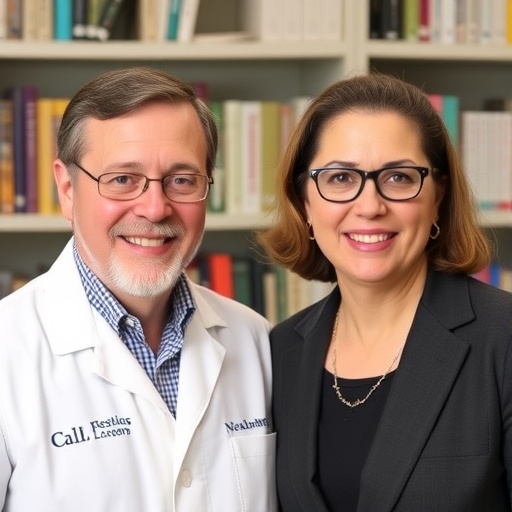
In a remarkable declaration shaking the currents of contemporary science, two distinguished researchers at the Salk Institute have been elected as Fellows of the American Association for the Advancement of Science (AAAS) for the year 2025. This prestigious honor acknowledges not only their exceptional scientific achievements but also their ongoing commitment to advancing society through research and innovation. Gerald Shadel, PhD, a molecular biologist renowned for his expertise in mitochondrial dynamics, together with Tatyana Sharpee, PhD, a visionary neuroscientist exploring the computational principles underlying brain function, now join an elite cohort of nearly 500 scientists acknowledged this year for their profound contributions.
Gerald Shadel’s laboratory centers on mitochondria, the cellular organelles often referred to as the powerhouses of the cell, due to their essential role in energy production. His work delves deeply into how mitochondrial function and dysfunction intersect with pivotal biological processes such as aging, cancer progression, and neurodegeneration. A key breakthrough from his research published recently highlights the role of mitochondrial DNA as an active participant in promoting inflammatory processes. This finding not only reshapes the understanding of mitochondrial involvement in immunity but also opens new therapeutic avenues for autoimmune diseases like lupus, as well as for conditions linked to aging-related inflammation.
Shadel’s impact extends beyond foundational biological insight. His pioneering approach combines molecular genetics with systems biology, enabling the identification of intricate regulatory networks that govern mitochondrial behavior. By elucidating the mechanisms by which mitochondrial DNA fragments escape from mitochondria and trigger immune signaling, his research paves the way for designing targeted anti-inflammatory interventions. Such therapies could revolutionize the treatment of chronic inflammatory diseases, which remain a major public health burden worldwide.
This recognition as an AAAS Fellow reflects the trajectory of Shadel’s career, marked by numerous accolades. These include the Amgen Outstanding Investigator Award, underscoring his innovation in biomedical science, and the Paul F. Glenn Foundation Award for Research in Biological Mechanisms of Aging, which honors his contributions to understanding how cellular senescence and mitochondrial decay catalyze the aging process. Furthermore, Shadel’s involvement in large interdisciplinary collaborations, such as the $19.2 million American Heart Association-Allen Initiative and the $13 million NIH-funded project on aging and liver cancer, attests to the translational potential of his research. These partnerships integrate cutting-edge molecular biology with clinical applications aimed at combating degenerative diseases.
Parallel to these accomplishments, Tatyana Sharpee’s scientific journey illuminates the complex dynamics of neural circuitry through a computational lens. Her pioneering investigations harness the principles of mathematics, statistics, and physics to unravel how the brain maintains perceptual stability despite the continuous remodeling of neural connections. This problem is central to understanding cognition, as it addresses how organisms retain a coherent sense of self and sensory environment in the face of neural plasticity. The implications of this work extend deeply into medical science, offering insights into disorders where neural computation is disrupted, such as Alzheimer’s disease, schizophrenia, and stroke.
Sharpee’s research stands as a bridge between theoretical neuroscience and tangible biomedical outcomes. By decoding how sensory information is processed and stabilized at the level of neural circuits, her work enables the identification of pathological deviations from normative brain function. This approach allows for the conceptualization of novel diagnostic tools and therapeutic strategies aimed at restoring circuit integrity or compensating for lost functionality. Her scholarly achievements are reflected in recognitions such as her election as a Fellow of the American Physical Society and receipt of the NSF CAREER Award, which acknowledge her interdisciplinary expertise and innovative trajectory.
The election of these two scientists to AAAS Fellowship not only honors individual excellence but also underscores the enhanced visibility and impact of the Salk Institute as a crucible of transformative research. With Shadel and Sharpee joining seven other AAAS Fellows at Salk, the Institute consolidates its reputation as a powerhouse in life sciences, spanning from molecular biology to neural computation. Their complementary expertise exemplifies a synergistic model of modern bioscience, where the molecular and computational realms intersect to generate comprehensive understandings of human health and disease.
The AAAS itself, with a heritage dating back to 1848, has evolved into a pivotal platform for scientific advocacy and interdisciplinary advancement. Recognizing leaders like Shadel and Sharpee consolidates the organization’s mission to integrate scientific inquiry with societal progress, ensuring that scientific knowledge translates into policy and public benefit. The fellowship is lifelong, positioning these researchers as perpetual ambassadors for science, charged with influencing both public dialogue and the direction of innovation globally.
At the core of Shadel’s work is the notion that mitochondria are not merely energy factories but also critical hubs of cellular signaling and systemic regulation. His lab’s findings on mitochondrial DNA triggering inflammation involve complex biochemical pathways where mitochondrial components, once released into the cytoplasm or extracellular space, interact with innate immune receptors. This mechanistic insight is pivotal in understanding sterile inflammation, a key contributor to numerous chronic diseases and aging phenotypes. Such discoveries redefine the mitochondrion as a multifaceted organelle integral to both health maintenance and pathology.
Concurrently, Sharpee’s approach to neuroscience embodies modern computational paradigms where neural responses are modeled through sophisticated algorithms that incorporate temporal dynamics and noise filtering. By applying statistical physics to the brain’s adaptive patterns, she elucidates how sensory systems maintain fidelity amidst environmental and internal variability. Her contributions clarify fundamental biological questions about perception and memory, providing a theoretical scaffold for interpreting experimental data from electrophysiology and neuroimaging studies. This cross-disciplinary methodology is crucial for developing precision medicine approaches tailored to neurological disorders.
Together, the research led by Shadel and Sharpee reflects the cutting edge of biological science, integrating molecular insights with systems-level understanding. Their election as AAAS Fellows not only celebrates their achievements but also heralds a future where integrative biology unlocks solutions to some of humanity’s most recalcitrant health challenges. Their work embodies the spirit of innovation and dedication essential for advancing science in the 21st century, providing hope that foundational research will continue to yield transformative impacts on medicine and society.
Subject of Research:
Gerald Shadel’s research focuses on molecular and cellular mechanisms of mitochondrial function and its role in inflammation, aging, cancer, and degenerative diseases. Tatyana Sharpee’s research investigates computational neuroscience principles underlying neural circuit function, sensory perception, and neuroplasticity.
Article Title:
Salk Institute’s Gerald Shadel and Tatyana Sharpee Named AAAS 2025 Fellows for Pioneering Contributions to Mitochondrial Biology and Computational Neuroscience
News Publication Date:
March 26, 2026
Web References:
– Salk Institute: https://www.salk.edu/scientist/gerald-shadel/
– Salk Institute: https://www.salk.edu/scientist/tatyana-sharpee/
– American Heart Association-Allen Initiative: https://www.salk.edu/news-release/salk-awarded-19-2-million-by-the-american-heart-association-allen-initiative-to-study-alzheimers-and-aging-in-the-brain/
– NIH Aging and Liver Cancer Project: https://www.salk.edu/news-release/peter-adams-and-gerald-shadel-awarded-13-million-from-nih-to-study-aging-and-liver-cancer/
– American Physical Society Fellowship: https://www.salk.edu/news-release/salks-tatyana-sharpee-elected-2018-fellow-of-american-physical-society/
– NSF CAREER Award: https://www.salk.edu/news-release/salk-scientist-tatyana-sharpee-receives-career-award-from-nsf/
– ASBMB Delano Award: https://www.salk.edu/news-release/salk-professor-tatyana-sharpee-receives-asbmb-delano-award/
– Prebys Research Hero: https://www.salk.edu/news-release/prebys-foundation-awards-1-million-to-support-salk-institutes-research-and-diversity-efforts/
Image Credits:
Salk Institute
Keywords:
AAAS Fellowship, Mitochondrial DNA, Inflammation, Aging, Neurodegeneration, Computational Neuroscience, Neural Circuits, Sensory Perception, Brain Plasticity, Systems Biology, Molecular Biology, Neurobiology, Biomedical Science, Aging Research
Tags: autoimmune disease mitochondrial therapybrain function computational neuroscienceGerald Shadel mitochondrial researchinnovative biomedical research advancementslupus mitochondrial inflammationmitochondrial DNA inflammation rolemitochondrial dynamics and agingmitochondrial dysfunction in cancermolecular biology mitochondrial studiesneurodegeneration and mitochondriaSalk Institute AAAS Fellows 2025Tatyana Sharpee neuroscience computational principles