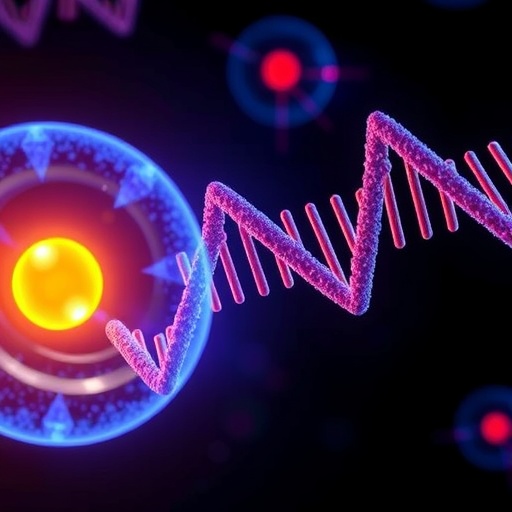
In a groundbreaking discovery that is poised to redefine cellular biology, an international team of researchers has unveiled a direct physical and energetic connection between mitochondria and the cell nucleus. This new insight, led by Dr. Ivan Menéndez-Montes and Dr. Hesham A. Sadek of the University of Arizona, challenges the prevailing dogma that cellular energy supply to the nucleus is mediated simply through diffusion of ATP molecules throughout the cytoplasm. Instead, their study presents compelling evidence that mitochondria, traditionally known as the powerhouses of the cell, establish a dedicated, intimate contact with the nucleus, effectively functioning like a private power line delivering energy where it is most critically needed.
Historically, textbooks and cell biology teaching have portrayed the distribution of energy within cells as a passive diffusion process, where ATP and other mitochondrial energy products diffuse through the cytosol to meet cellular demands. This new work overturns this assumption, revealing a highly organized and selective energy channeling mechanism that ensures the nucleus—the command center of cellular activities—receives a highly efficient, localized supply of energy. This is essential because the nucleus consumes energy at remarkably high rates, particularly to support complex processes including DNA replication, transcription, chromatin remodeling, and other epigenetic modifications.
The research team employed an array of cutting-edge techniques including advanced fluorescence microscopy, proteomics, genetic engineering, and in vivo animal models to meticulously investigate how mitochondria physically and functionally connect to the nucleus. They focused on mitochondrial protein VDAC1, situated in the outer mitochondrial membrane, and the nuclear pore complex protein RANBP2, revealing a direct molecular interaction that physically tethers mitochondria to the nuclear envelope. This precise docking mechanism facilitates the channeling of mitochondria-generated ATP directly into the nucleus.
Notably, the findings highlight that even a minor spatial displacement of mitochondria from the nucleus—on the order of a few hundred nanometers—drastically diminishes nuclear energy availability. This exquisite spatial specificity underscores the critical nature of this mito-nuclear interaction for nuclear function. To experimentally validate this model, researchers engineered cells and whole organisms in which the molecular bridge between mitochondria and the nucleus was genetically disrupted while preserving mitochondrial energy production capacity. The results were striking: cells lacking this mito-nuclear liaison failed to mature properly, particularly cardiomyocytes, the specialized cells responsible for heart contraction.
In whole-animal models, mice harboring mutations that inhibited the VDAC1-RANBP2 interaction exhibited profound developmental abnormalities, especially within cardiac and neural tissues. These embryos succumbed before birth, illustrating the indispensable role that this mitochondrial energy channel plays in embryogenesis and organogenesis. This severe phenotype unequivocally implicates the mito-nuclear energy conduit as a fundamental driver of cellular differentiation and organ development.
The discovery opens a new frontier in cell biology, revealing that the nucleus is not a passive recipient of energy but rather is actively supplied through a specialized and dynamic structure that integrates mitochondrial output with nuclear demand. This paradigm shift invites a reevaluation of cellular energetics and demands closer scrutiny of how these mito-nuclear contacts are regulated, maintained, and potentially disrupted in disease states.
Moreover, the study’s implications extend far beyond developmental biology. Given the centrality of mitochondria and nuclear function in diverse pathological conditions, this finding holds promise for understanding mechanisms underlying cardiovascular disease, cancer, neurodegenerative disorders, and aging. It suggests that perturbations in the structural or functional integrity of the mito-nuclear connection could contribute to disease progression or cellular senescence by impairing nuclear energy homeostasis.
One of the most intriguing questions raised by this research is how cells modulate the formation and dissolution of mito-nuclear junctions in response to physiological and environmental cues. The study suggests that this interface might serve as a regulatory hub where mitochondrial signaling molecules and nuclear transcriptional machinery intersect, coordinating cellular responses to metabolic demands, stress signals, and differentiation signals.
The research consortium, spanning eight years and involving 38 scientists globally, reflects the complexity and interdisciplinary nature of investigating such a fundamental cellular mechanism. Their collective efforts have not only identified the molecular machinery involved but also established functional consequences that bridge molecular, cellular, and organismal biology.
The molecular interaction between VDAC1 and RANBP2 represents a novel tethering mechanism distinct from previously characterized mitochondrial-nuclear interactions. VDAC1, a voltage-dependent anion channel, traditionally known for its role in metabolite transport across the mitochondrial outer membrane, here assumes an unexpected structural role. Simultaneously, RANBP2—a component of the nuclear pore complex known for nucleocytoplasmic transport—also acquires an additional function in energy homeostasis, signifying multifunctional versatility of these proteins beyond their classical roles.
Technical advances in microscopy provided unprecedented visualization of the mito-nuclear contacts, enabling the resolution of structures within nanometer scales. The precise apposition of mitochondrial membranes to the nuclear envelope challenges limitations of earlier imaging techniques and sets the stage for further ultrastructural and dynamic studies to unravel how these contacts form and reorganize during various cellular states.
This transformative insight into compartmentalized energy transfer mechanisms incites new hypotheses on how metabolic efficiency and fidelity of nuclear processes are maintained. It also advocates for reexamination of mitochondrial dysfunction-related pathologies through the lens of disrupted mito-nuclear energy transfer, potentially offering new therapeutic targets to restore proper energy flow and rescue cellular function.
In conclusion, this landmark study redefines our understanding of cellular bioenergetics by revealing a sophisticated, direct physical energy delivery system from mitochondria to the nucleus. This previously invisible “power line” underpins vital nuclear activities, orchestrates cellular growth and differentiation, and is crucial for proper embryonic development. Future research aiming to decode the regulatory networks controlling this mito-nuclear liaison promises to unlock novel insights into health, disease, and regenerative medicine.
Subject of Research: Cells
Article Title: Mitochondria directly interact with the nuclear pore complex
News Publication Date: 10-Jun-2026
Web References: 10.1038/s41586-026-10588-3
References: Menendez-Montes, I., Sadek, H. A., et al. Nature, 2026.
Image Credits: Ivan Menendez-Montes et al. Schematic created in BioRender; Menendez-Montes, I. https://biorender.com/plzo9bu (2026).
Keywords: Mitochondria, nuclear pore complex, VDAC1, RANBP2, cellular energetics, ATP transfer, nuclear metabolism, cardiomyocyte differentiation, embryonic development, mitochondrial-nuclear interaction, cell biology, bioenergetics
Tags: cellular bioenergetics new discoveriescellular energy supply mechanismschromatin remodeling energy usedirect energy transfer in cellsDNA replication energy requirementsenergy channeling in cell nucleusepigenetic modifications and energylocalized ATP delivery in cellsmitochondria nucleus energy connectionmitochondria-nucleus physical contactmitochondrial role beyond ATP diffusiontranscription energy metabolism