Postpartum breast cancer remains one of the most enigmatic and urgent challenges in oncology, largely due to its aggressive nature and the perplexing timing of its diagnosis—typically five to ten years after childbirth. Distinguished from cancers diagnosed during pregnancy or in women who have never borne children, this form carries a notably higher risk of metastasis and poorer survival outcomes. Researchers at the prestigious Institut Pasteur have taken a pivotal step towards unraveling the biological intricacies underpinning this condition by focusing on the dynamic, yet transient, remodeling process of the mammary gland known as involution. Their groundbreaking study illuminates the dualistic role played by cellular senescence during postpartum involution and how this process, vital for normal tissue repair, paradoxically facilitates tumor progression and dissemination.
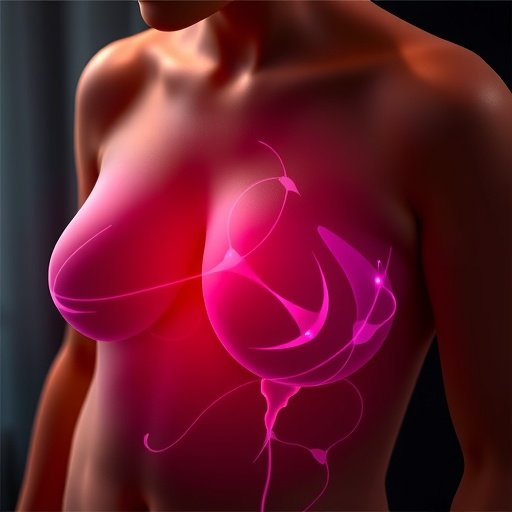
Mammary gland involution is an extraordinary physiological transformation triggered after the cessation of lactation, marking the gland’s reversion from an active milk-secreting organ back to its pre-pregnancy state. This remodeling echoes the mechanisms of wound healing, encompassing widespread apoptosis of alveolar epithelial cells, infiltration by immune cells, extracellular matrix reorganization, and adipocyte repopulation. Intriguingly, this transient yet profound tissue remodeling fosters a unique inflammatory milieu that temporarily heightens breast cancer susceptibility in postpartum women. Clinical data consistently underscore that these cancers are biologically distinct, characterized by rapid progression and resistance to standard therapies. Furthermore, the risk amplifies with increasing maternal age, underscoring an unmet need for targeted interventions tailored to this vulnerable population.
Central to the newly published findings in Nature Aging, the team led by Han Li at the Institut Pasteur pinpointed senescent cells as critical modulators during the involution process. Cellular senescence, defined by permanent cell cycle arrest in stressed cells, typically functions as a tumor-suppressive mechanism. However, its role goes beyond growth arrest. By employing sophisticated lineage tracing and senescence-specific markers in mouse models, researchers demonstrated that senescence is predominantly induced in milk-producing alveolar cells during involution. This observation provides compelling evidence that senescence is integral to orchestrating the complex choreography of tissue repair, rather than merely representing a cellular endpoint.
A notable advance in this study lies in the use of pharmacological agents designed to selectively eradicate senescent cells, termed senolytics. Administration of these drugs during the involution phase resulted in delayed remodeling, illuminating the indispensable contribution of senescence to efficient tissue restoration. Mechanistically, senescent cells secrete a potent cocktail of cytokines, chemokines, and growth factors—collectively known as the senescence-associated secretory phenotype (SASP)—which actively recruit macrophages and remodel the extracellular microenvironment. This paracrine signaling ensures the clearance of apoptotic cells and facilitates the reconstruction of the glandular architecture, rendering involution a scarless, controlled regenerative event.
Despite these regenerative benefits, the researchers uncovered a haunting paradox: the very senescence pathways promoting healthy tissue repair can be subverted to foster oncogenesis and metastasis. The SASP factors were shown to enhance tumor cell plasticity, enabling malignant cells to adapt rapidly to the changing microenvironment characteristic of involution. This increased plasticity facilitates tumor cell survival, invasiveness, and ultimately, systemic dissemination. Targeting senescent cells during involution in breast cancer-prone mouse models resulted in a marked reduction in primary tumor growth and metastatic spread, highlighting senescence as a double-edged sword in breast cancer biology.
The implications of these findings are profound, extending beyond fundamental biology to clinical translation. Postpartum breast cancer, currently lacking tailored preventive strategies, could be mitigated by temporal, targeted senolytic therapies administered during the vulnerable involution window. This approach holds promise to shift the paradigm in managing postpartum breast cancer risk, particularly in older mothers who face disproportionate hazards. Further research is warranted to elucidate the molecular determinants governing senescence induction and SASP composition in human mammary tissue, and to identify optimal senolytic regimens with minimal adverse effects.
Significantly, this body of work underscores a paradigm shift in understanding the complexities of tissue remodeling and cancer biology—the interplay between normal physiological processes and malignant transformation is far more nuanced than previously appreciated. Senescence, once thought solely a defensive firewall against cancer, emerges as a versatile regulator capable of either facilitating homeostasis or enabling tumor-promoting inflammation, depending on context. This dynamic duality emphasizes the delicate balance tissues must maintain to heal without paving the way for disease.
Technological innovations underpinning this study include advanced histological techniques, high-resolution imaging of senescent cells within mammary tissue, and the employment of genetically engineered mouse models. These tools provided unprecedented insight into the spatial and temporal dynamics of senescence during involution and its influence on immune cell recruitment and tissue architecture remodeling. The use of senolytics in vivo further validated the functional significance of these findings, marking a critical step towards therapeutic applicability.
From a broader perspective, the findings evoke parallels with other contexts where senescence and inflammation intersect, such as aging and fibrosis, suggesting that lessons from postpartum breast tissue remodeling may reverberate across multiple fields. Understanding how senescent cells communicate within tissue microenvironments opens new vistas for therapeutic strategies aimed at modulating senescence, improving tissue regeneration, and combating cancer progression simultaneously.
In conclusion, this seminal study from the Cellular Plasticity in Age-Related Pathologies Unit at the Institut Pasteur charts a transformative course in unraveling the biological underpinnings of postpartum breast cancer risk. By dissecting the ambivalent nature of cellular senescence during mammary gland involution, it reveals both a critical process for tissue repair and a potential vulnerability exploited by tumor cells. The promise of senolytic interventions during involution represents a bold and innovative therapeutic frontier that could profoundly alter the clinical landscape of postpartum breast cancer prevention. As we advance, translating these insights into human clinical studies remains a pivotal challenge and opportunity to improve the health outcomes of countless women worldwide.
Subject of Research: Cells
Article Title: Induction of senescence during postpartum mammary gland involution supports tissue remodeling and promotes postpartum tumorigenesis
News Publication Date: February 18, 2026
Web References:
https://www.nature.com/articles/s43587-025-01058-y
http://dx.doi.org/10.1038/s43587-025-01058-y
References:
Chiche, A., Djoual, L., Charifou, E., Wang, S., Temime, L., Saclier, M., Wang, S., Chantrel, J., & Li, H. (2026). Induction of senescence during postpartum mammary gland involution supports tissue remodeling and promotes postpartum tumorigenesis. Nature Aging. https://doi.org/10.1038/s43587-025-01058-y
Image Credits: Institut Pasteur / Cellular Plasticity in Age-Related Pathologies Unit
Keywords:
Breast cancer, Cellular senescence, Metastasis, Tumor cells, Human reproduction, Gestational age
Tags: apoptosis in mammary gland involutionbreast cancer survival outcomesbreast tissue remodeling after lactationcellular senescence in breast cancerextracellular matrix changes in cancerimmune cell role in breast cancerinflammation and cancer progressionmammary gland involution processpostpartum breast cancer aggressivenesspostpartum breast cancer metastasis riskpostpartum cancer diagnosis challengeswound healing mechanisms in cancer