In the ever-evolving landscape of oncology, the management of melanoma remains a critical field of study due to the aggressive nature of this skin cancer and its potential for rapid progression. A groundbreaking new study published in the British Journal of Cancer on June 16, 2026, has shed light on one of the pivotal components in melanoma staging and treatment: the timing of sentinel lymph node biopsy (SLNB). This research provides the most comprehensive analysis to date on how wait times for SLNB affect disease progression, the burden of micrometastatic tumors, and overall survival outcomes in an era marked by advanced treatment modalities.
Sentinel lymph node biopsy is a standard procedure employed to determine the extent of melanoma spread beyond the primary tumor site. By pinpointing the first lymph node (or nodes) to which cancer cells are likely to migrate, clinicians can more accurately stage the disease and tailor treatment regimens accordingly. However, discrepancies in wait times for this critical diagnostic intervention have historically been reported, raising concern about potential impacts on patient prognosis. The new investigation by Breeze et al. systematically explores the implications of these delays using state-of-the-art patient cohorts and rigorous statistical modeling.
The researchers embarked on an extensive retrospective cohort study, leveraging a dataset of melanoma patients from multiple high-volume cancer centers. The timeline from initial biopsy-confirmed melanoma diagnosis to the performance of SLNB was meticulously documented, allowing for stratification of patients based on the duration of delay. Through this stratification, the authors correlated wait times with key clinical endpoints, such as progression of melanoma stage, micrometastatic tumor burden within sentinel nodes, and long-term survival rates, thus providing a granular understanding of the temporal impact on melanoma dynamics.
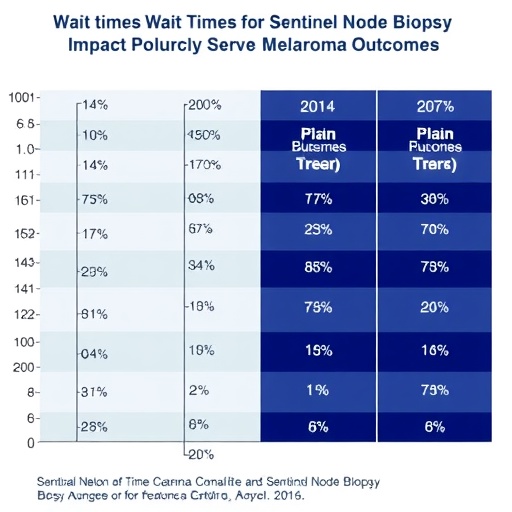
A central revelation from the study was a statistically significant correlation between prolonged wait times for sentinel node biopsy and increased micrometastatic tumor burden. This finding indicates that delays may facilitate the proliferation of melanoma cells within the nodal basin, effectively allowing the disease to advance silently. This finding is of particular clinical relevance because increased tumor burden within sentinel nodes has been associated with worse prognostic outcomes and may necessitate more aggressive adjuvant therapies.
Delving deeper, the study analyzed the heterogeneity of micrometastatic tumor volume and revealed that patients who underwent SLNB within an optimal window exhibited minimal tumor load, while those subjected to protracted wait times showed proliferative nodal involvement, often translating to higher nodal staging. This advancement of disease within the nodal system provides a pathway for further dissemination to distant sites, thereby complicating therapeutic strategies and reducing survivorship.
Beyond tumor burden, the research also explored the relationship between SLNB wait times and survival outcomes. Utilizing survival analysis techniques such as Kaplan-Meier curves and Cox proportional hazards modeling, the authors demonstrated a clear survival disadvantage for patients experiencing delays beyond four to six weeks. These data underscore the crucial time sensitivity of sentinel node biopsy in the management paradigm of melanoma and advocate for minimizing procedural wait times as a standard of care.
In the context of modern melanoma therapies, including immune checkpoint inhibitors and targeted molecular agents, the findings gain additional weight. Early and accurate staging facilitated by timely SLNB allows for better patient selection for these advanced treatments, which have revolutionized outcomes but are most efficacious when implemented in a well-defined disease context. Delays that permit tumor progression can diminish the window of therapeutic opportunity, underscoring a need for systemic healthcare improvements.
Importantly, the study also aligns with emerging biomolecular data suggesting that during the waiting period, micrometastatic melanoma cells may undergo phenotypic transformations that enhance invasive potential and resistance to apoptosis. These cellular alterations contribute to a more aggressive disease profile and argue for clinical urgency in timely diagnosis and staging. Thus, the research integrates molecular oncology perspectives with clinical outcomes, presenting a holistic view of melanoma pathophysiology.
Healthcare system factors contributing to wait times were also examined, revealing that logistical inefficiencies, resource limitations, and prioritization protocols significantly influence patient experiences. The authors advocate for policy interventions to optimize scheduling processes and resource allocation to reduce unnecessary delays. This approach resonates with ongoing quality improvement initiatives aiming to enhance cancer care delivery at institutional and national levels.
The implications of these findings extend into the realm of patient counseling and shared decision-making. Oncologists and surgical teams can leverage this evidence to stress the importance of expeditious sentinel node biopsy and provide realistic prognostic expectations based on timing. This transparency enhances patient engagement and may improve adherence to follow-up and treatment plans.
From a research standpoint, this study paves the way for prospective trials to evaluate interventions aimed at reducing SLNB wait times and their impact on clinical outcomes. Additionally, it highlights the need for the development of predictive biomarkers that could identify patients at greatest risk from biopsy delays, enabling prioritized scheduling or alternative staging strategies.
Another salient point is the potential economic impact of optimizing SLNB wait times. By mitigating disease progression, fewer patients may require extensive treatments or experience complications associated with advanced melanoma. This reduction in downstream healthcare costs reinforces the value proposition of investing in timely diagnostic services, aligning clinical benefit with economic sustainability.
The study also prompts a re-examination of current clinical guidelines regarding melanoma management. While many protocols recommend SLNB within a certain timeframe, empirical data to justify these benchmarks have been limited. Breeze et al.’s work provides a robust evidence base that can refine these recommendations and harmonize practices internationally.
Moreover, the integration of advanced imaging techniques and diagnostic pathways to streamline SLNB scheduling is an area ripe for innovation inspired by these findings. Combining molecular profiling with precise imaging could improve risk stratification and expedite treatment timelines, a critical step toward personalized melanoma care.
Finally, the study’s emphasis on the “modern treatment era” context ensures that conclusions are relevant to current practice, reflecting the transformations brought by immunotherapy and targeted treatments. This temporal relevance makes the findings particularly urgent for contemporary oncology clinics striving to maximize patient outcomes in a highly competitive therapeutic landscape.
In summary, the meticulous investigation by Breeze and colleagues elucidates the profound impact of sentinel lymph node biopsy timing on melanoma progression, tumor burden, and survival. It sends a clear message to clinicians, healthcare systems, and policymakers: reducing delays in sentinel node assessment is not merely a procedural target but a critical determinant of melanoma prognosis. As melanoma incidence continues to rise globally, these insights will be instrumental in shaping strategies that improve survival while optimizing healthcare resources.
The study signals a paradigm shift by firmly establishing temporal aspects of melanoma staging as a modifiable factor influencing disease biology and clinical outcomes. This research underscores the urgent need for concerted action to reduce procedural delays, integrate multidisciplinary care, and adapt guidelines to embrace new evidence. The future of melanoma management hinges on such data-driven optimizations that align molecular insights with clinical pragmatism, ultimately altering the trajectory of this complex disease.
Subject of Research: The impact of wait times for sentinel lymph node biopsy on melanoma disease progression, micrometastatic tumor burden, and survival outcomes.
Article Title: Implications of wait times for sentinel node biopsy on melanoma disease progression, micrometastatic tumour burden and survival outcomes in the modern treatment era.
Article References:
Breeze, S.O., Heaton, M.J., Snelling, A.P. et al. Implications of wait times for sentinel node biopsy on melanoma disease progression, micrometastatic tumour burden and survival outcomes in the modern treatment era. Br J Cancer (2026). https://doi.org/10.1038/s41416-026-03497-9
Image Credits: AI Generated
DOI: 16 June 2026
Tags: advanced melanoma treatment outcomesBritish Journal of Cancer melanoma studyclinical implications of biopsy wait timeseffects of delayed sentinel lymph node biopsyimpact of biopsy wait times on melanoma survivalmelanoma progression and diagnostic delaysmelanoma staging and sentinel node biopsymicrometastatic tumor burden in melanomaoptimizing melanoma biopsy schedulingprognosis factors in melanomasentinel lymph node biopsy timing in melanomastatistical analysis of melanoma biopsy timing