Since its 2014 founding, Zai Lab has built its business by licensing drugs from Big Pharma, like GSK’s ovarian cancer med Zejula and Bristol Myers Squibb’s schizophrenia star Cobenfy, and selling them in China.
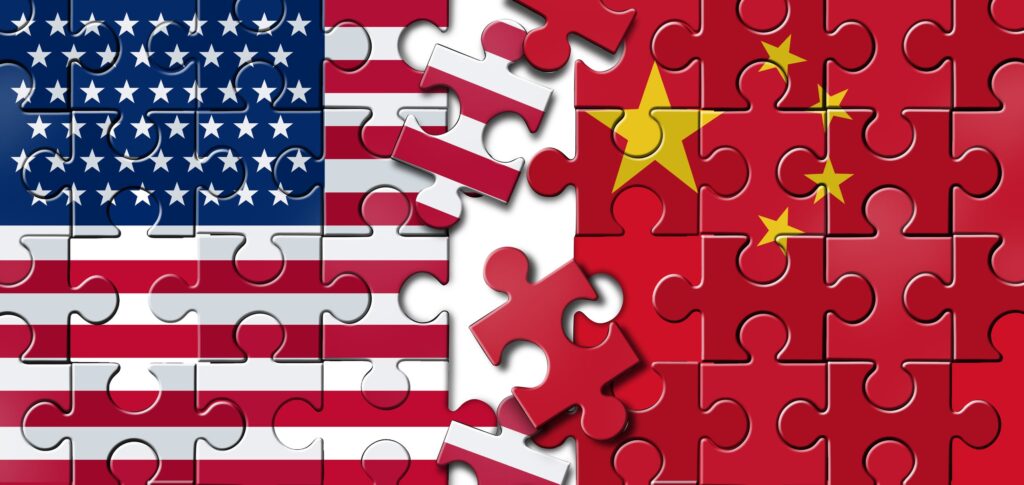
But in the last three years, the company has sought to leverage its footholds in China and the U.S. to become a multinational biopharma in its own right. And in so doing, Zai Lab offers a potent reality check on how big a disruptor China’s surging biotech sector is to America’s dominance in the industry.
The truth is that so long as U.S. drug prices remain comparatively high, biopharmas with global aspirations will need an American presence, Josh Smiley, Zai Lab’s president and chief operating officer, told Fierce Biotech at the American Association for Cancer Research annual meeting in San Diego.
“You can’t afford global development unless you have an opportunity to be in the U.S. market,” Smiley said. And unless drug prices in America drop dramatically in the future, “innovation is going to end up here.”
Related
The massive potential of the U.S. market is abundantly clear to Zai Lab. Smiley pointed out that the company brought in $460 million last year by selling eight of “some of the best drugs in the world” in China. In the U.S. market, one good drug can top that all by itself, he said.
And while Chinese biotechs are upping their innovation game, their scientific expertise is still limited in certain areas. If you’re looking for an antibody-drug conjugate or a T-cell engager for an established target, China will have plenty of options; if you’re looking for the next best thing in obesity, not so much.
“Anybody in China who’s working on metabolic disease is working on another GLP,” Smiley said. The real breakthroughs, he added, are still most likely to come from the U.S. and Europe.
“The fact that we have more things coming out of China is not necessarily a threat, today, to the U.S. biotech industry,” Smiley said, and it certainly isn’t a bad thing for patients who can benefit from the country’s innovations.
One area where China can threaten U.S. biotech is in talent, as funding cuts and immigrations policies in the States drive top scientists out. Many researchers who come to the U.S. from China to study or build experience are now returning to China rather than staying stateside, Smiley observed.
“Twenty years from now, if things don’t change, we will see some degree of shift in where the most talented people in the world are working,” the exec said. “We should worry about that.”
But even as China’s scientific prowess grows, the country still lacks expertise in global regulatory affairs, Smiley said, which will limit how many biotechs there can successfully expand outside their home turf. Zai Lab’s head of global R&D, Rafael Amado, M.D., agrees with Smiley.
“There’s a lot more expertise in China in discovery and local drug development than there is in global drug development,” Amado told Fierce at AACR. “It’s a harder step for companies to take. Not to say that it’s not going to happen, because there are many [Chinese biotechs], but I see that as something that’s going to be more progressive.”
Chinese biotechs also suffer from a lack of easy access to cash. American investors want easier returns than China—with its strict government and tougher IPO market—can provide, Smiley said.
“There’s not a clear path to get 5x, 10x returns on your money,” he said. Because of these limitations, Smiley expects licensing deals with Big Pharma—which have become ever more popular—to remain the key source of capital for Chinese startups.
Some companies that ink deals worth hundreds of millions of dollars will “put some of that money back into development,” he said. And when the time comes to take another drug candidate to late-stage trials, perhaps in the 2030s, “maybe they have enough cash to try it on their own.”
The world is Zai’s oyster
Though Zai Lab started in China, the company really takes a Western approach to its business, Smiley said. Founder Samantha Du, Ph.D., envisioned the company as a “bridge” between the West and the East, a way for Western companies to tap into the Chinese market. Now, though, the company wants to go global.
“For the past three years, we started an effort to develop drugs on a global scale,” R&D chief Amado told Fierce. “We opened laboratories here in San Diego, continued an effort that has been expanded in Shanghai, where we do protein sciences, and then implemented our business development strategy for the acquisition of local compounds to the global arena.”
The linchpin of Zai Lab’s plans is zocilurtatug pelitecan, an ADC licensed from Chinese biotech MediLink Therapeutics that targets delta-like ligand 3 (DLL3).
At AACR, Zai Lab shared data from early studies of zoci in neuroendocrine tumors and small cell lung cancer (SCLC) that has metastasized to the brain.
For non-lung neuroendocrine carcinomas, “we’re seeing responses in the 38% range,” Amado said, and zoci also shrank brain tumors in 10 of 16 SCLC patients given the phase 3 dose.
Zoci “penetrates the blood-brain barrier, and it acts very quickly,” Amado explained, which is why Zai Lab chose to home in on lung cancer brain tumors. “About 30% of our patients have brain metastases, and eventually about 70% of patients will develop it sometime during the course of the disease.”
Related
Zai Lab is now running a phase 3 trial of zoci in patients with relapsed SCLC, with plans for more registrational trials to follow by the end of the year. If all goes according to plan, the ADC will become Zai Lab’s first global drug launch, and serve as a model for future medicines to come.
“The zoci program supports the narrative shift towards the company’s potential to launch important oncology products in the US/EU markets,” analysts from Citi wrote in an April 20 note. The analysts currently model zoci’s peak sales potential at around $500 million, eclipsing the total amount Zai Lab’s China business brought in last year.
China has become well-known as a place for speedy phase 1 trials, much to the chagrin of some in the U.S. biotech industry—and FDA Commissioner Marty Makary, M.D. To take advantage of this alacrity, many global pharmas need to rely on Chinese contract research organizations (CROs). Zai Lab, in contrast, has strong relationships with Chinese trial sites and can quickly push its candidates through early trials on its own.
“We have a team of a few hundred clinical development specialists in China,” said operations chief Smiley, who previously spent decades at Eli Lilly, including as chief financial officer. “No pharma company likes working with CROs, and they particularly don’t like working with China CROs.”
Amado agreed that Zai Lab’s entrenchment in China offers a boon to both internal R&D and external licensing opportunities. The company can rapidly move promising candidates it develops into human trials, and also has a front-row seat to the Chinese innovation ecosystem.
“There are a number of modalities that are being pioneered in China and also in the United States that we could have access to as we move forward,” he told Fierce.
But while China’s biotech rise has been a hot topic, and Zai Lab plans to focus only on China and the U.S. for the time being, that doesn’t mean they are the only two countries where innovation is increasing. Japan and South Korea are both making concerted efforts to boost their biopharma industries too, and Smiley thinks there is room for all of it.
“I think of this industry different than, like, cars and stuff,” the Lilly vet said. “There’s only so many cars that a person can have,” but there’s an “unlimited” need for new drugs.
“More innovation, and the more opportunities to look around the world and take advantage of it, the better it is for everybody,” Smiley said.