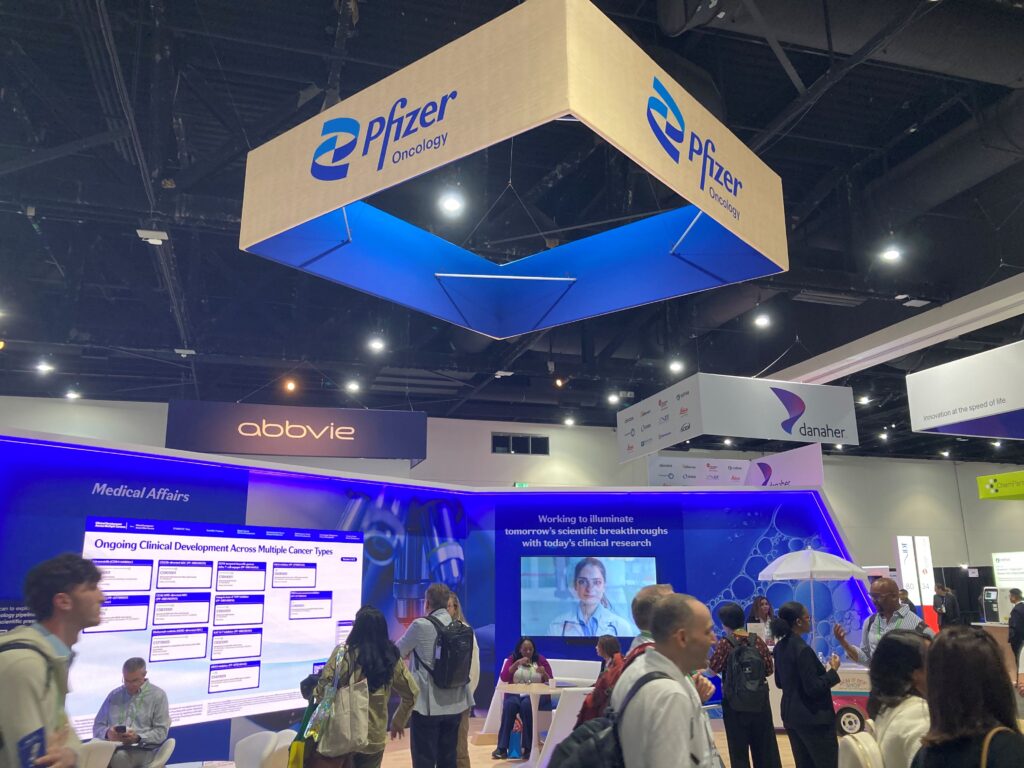
Pfizer’s $2.3 billion bet on Trillium Therapeutics doesn’t look like it will ever pay out, with the Big Pharma abandoning the second and final clinical-stage candidate from that acquisition.
The buyout back in 2021 gave Pfizer ownership of a pair of CD47 inhibitors, which were rechristened ontorpacept and maplirpacept. While ontorpacept made it into a phase 2 study for soft tissue cancers, the therapy slipped out of Pfizer’s pipeline last year.
Maplirpacept faced its own problems. A mid-stage study of the CD47 blocker in combination with Incyte’s Monjuvi and Bristol Myers Squibb’s Revlimid for B-cell lymphoma was scrapped last year due to recruitment problems.
Pfizer persevered with phase 1 and 2 studies of the drug for blood cancers, but the pharma revealed in its first quarter financial results on May 5 that it has finally decided to drop maplirpacept completely. With it went the last hopes of salvaging something from the $2.3 billion Trillium acquisition.
The company made the decision “in the context of the Pfizer oncology portfolio,” a spokesperson told Fierce Biotech this morning.
“These decisions are not due to safety concerns, regulatory request, or any study conduct issues,” they added.
Despite various other bold attempts across the sector, there remain no approved drugs that target the CD47 receptor, a protein embedded in cell membranes that instructs macrophages not to destroy the cell. Cancer cells take advantage of CD47 to evade the immune system, so inhibiting the receptor’s activity could enable macrophages to see and destroy the malignant cells.
Gilead Sciences had its own high-profile failure when it spent $4.9 billion in 2020 to acquire Forty Seven and the biotech’s lead asset, the CD47 inhibiting antibody magrolimab. After years of failed trials, clinical holds from the FDA and even patient deaths, Gilead finally dumped magrolimab for good in 2024.
Meanwhile, this morning’s first-quarter earnings results for Pfizer also revealed that the Big Pharma has pulled back from another cancer modality. The company has called time on PF-08046052, an EGFR-targeting T-cell engager (TCE) that Pfizer had been evaluating in a phase 1 study for advanced solid tumors.
A spokesperson told Fierce that this had been a “business decision” and was not related to safety concerns.
Pfizer doesn’t appear to list any other TCEs in its pipeline, despite the modality being a red-hot area of pharma dealmaking this year. Pfizer’s spokeperson didn’t directly answer Fierce’s question on whether the pharma will continue to explore any other TCEs.
The end of the road for PF-08046052 follows Fierce’s reporting last month that Pfizer had discontinued PF‑08046037, an immunostimulatory drug conjugate with a TLR7 agonist payload. The hope had been that PF‑08046037’s payload would engage TLR7, a protein found in immune cells, which would in turn activate antigen-presenting cells.
A final asset thrown on the scrapheap by Pfizer this morning was PF-07905428, a investigational topical drug that the company had taken into a phase 1 trial as an acne treatment.
The pharma made the call on PF-07905428 based on a “combination of factors, including phase 1 study results and pipeline prioritization efforts,” according to a spokesperson.