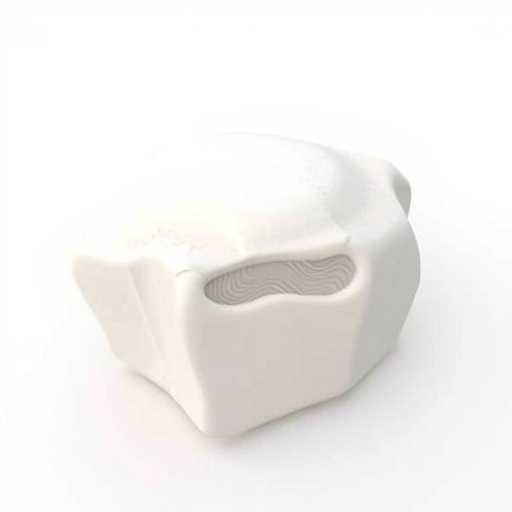
In a groundbreaking advancement in biomaterials and regenerative medicine, researchers at Tampere University in Finland have engineered a novel 3D-printed ceramic implant material that closely replicates the chemical composition and structural intricacies of natural human bone. This innovative development paves the way for personalized bone regeneration therapies that promise higher efficacy and wider accessibility, potentially revolutionizing treatments for bone defects on a global scale.
Bone graft surgeries rank as the second most frequently performed tissue transplantation procedures worldwide, exceeding two million annually. Current methodologies often depend on autologous or donor-derived bone tissues, which are inherently constrained by limited supply, donor site morbidity, extended recovery times, and risk of complications. As demographic shifts lead to aging populations, the demand for improved, scalable, and safer alternatives to traditional bone grafting techniques intensifies.
Spearheaded by Postdoctoral Research Fellow Antonia Ressler from the Tampere Institute for Advanced Study, the research team harnessed hydroxyapatite, the principal inorganic mineral of human bone, as the foundational material to fabricate biomimetic scaffolds through high-precision ceramic 3D printing techniques. These scaffolds are designed to serve not only as structural supports but also as conducive environments that stimulate the body’s intrinsic regenerative capabilities without the dependency on pharmaceutical agents or biological growth factors, thus mitigating associated side effects.
The team’s state-of-the-art ceramic vat photopolymerization technology enabled an unprecedented level of control over the internal topology of the implants. By precisely tuning pore size and interconnectivity, they engineered a porous network with roughly 400 micrometres in diameter pores and approximately 45% overall porosity—a pore architecture that expertly balances mechanical strength and biological functionality. This configuration facilitates optimal cell infiltration, nutrient diffusion, and vascularization, which are critical for effective new bone tissue formation.
Mechanical integrity alongside biological affinity was a cornerstone consideration in the scaffold design. The researchers established that such a pore architecture yields scaffolds robust enough to withstand physiological loads while providing an inviting milieu for osteoblast adhesion and proliferation. Moreover, their investigations revealed that the sintering process, critical for ceramic fabrication, induces subtle alterations in the surface chemistry of hydroxyapatite. These modifications can adversely affect cell attachment, underscoring the necessity to optimize processing parameters to maintain or enhance the material’s osteoinductive properties.
This study, among the first to systematically engineer and assess bone-mimetic ceramic scaffolds with such precision, marks a significant milestone toward translating biomaterial innovations into clinically viable therapies. It emphasizes the dual importance of both chemical composition and microstructural surface properties in dictating cellular responses and regenerative outcomes. The findings substantially contribute to the foundational knowledge required for future personalized medical solutions.
The implication of this technology extends beyond technical innovation; it heralds a paradigm shift from traditional one-size-fits-all bone implants to customizable grafts tailored to the unique anatomy and pathology of individual patients. By eliminating the need for donor tissues and potentially reducing reliance on pharmacological agents, these implants could expedite surgery times, diminish recovery periods, and lower healthcare costs, enhancing patient outcomes and overall quality of life.
Looking forward, ongoing projects such as GlassBoneS aim to refine this technology further by incorporating substituted calcium phosphates and exploring biomimetic glass-ceramic composites that might offer enhanced biological activity and affordability. The overarching goal remains to scale these personalized scaffolds for routine clinical applications, making next-generation bone regeneration therapies broadly accessible.
The research exemplifies the convergence of advanced manufacturing methods with biomaterial science, underpinned by interdisciplinary collaboration. It offers a promising glimpse into a future where tissue regeneration is not only more efficient and effective but also widely available, fulfilling a critical need in modern medicine.
Scientists and clinicians anticipating the clinical translation of these findings can expect major strides within the next decade, as the scalability and customization capabilities of ceramic 3D printing mature. With an emphasis on patient-centric design and biofunctionality, this work stands to redefine the standard of care in orthopedic and reconstructive surgery.
This seminal contribution was published in the scientific journal Materials Today Bio under the title “Biomimetic bone calcium phosphate-based scaffolds fabricated via ceramic vat photopolymerization: Effect of porosity, sintering temperature, mineralogical phases and trace elements on the osteogenic potential,” cementing its vital role in the ongoing evolution of biomaterial science.
Subject of Research:
Article Title: Biomimetic bone calcium phosphate-based scaffolds fabricated via ceramic vat photopolymerization: Effect of porosity, sintering temperature, mineralogical phases and trace elements on the osteogenic potential
News Publication Date: 26 March 2026
Web References: https://www.sciencedirect.com/science/article/pii/S2590006426003170, http://dx.doi.org/10.1016/j.mtbio.2026.103074
Image Credits: Jonne Renvall, Tampere University
Keywords:
3D-printed scaffolds, hydroxyapatite, bone regeneration, ceramic vat photopolymerization, biomimetic implants, tissue engineering, porous architecture, osteointegration, personalized medicine, regenerative biomaterials, bone graft alternatives, advanced manufacturing
Tags: 3D-printed ceramic bone implantsadvanced biomaterials for bone repairaging population bone repair solutionsalternatives to autologous bone graftsbiomimetic hydroxyapatite scaffoldshigh-precision ceramic 3D printinghydroxyapatite-based bone scaffoldsinnovative treatments for bone graftingpersonalized bone regeneration therapiesreducing donor site morbidity in bone surgeryregenerative medicine for bone defectsscalable bone tissue engineering