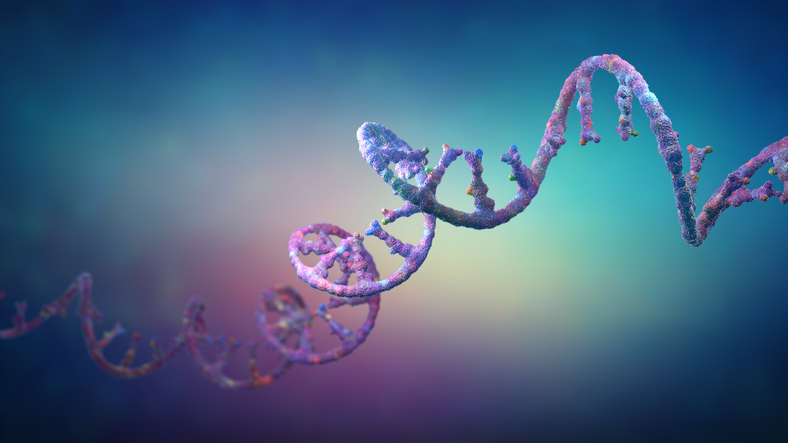
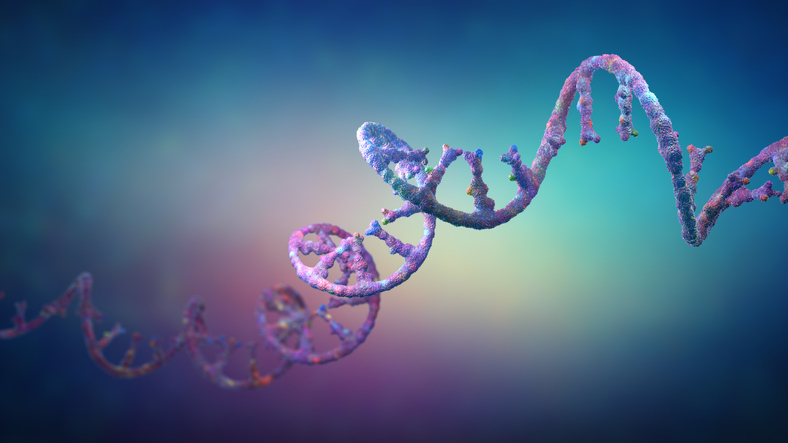
CRISPR’s rise from obscure bacterial defense system to molecular scalpel has always hinged on one small component: the guide RNA. For years, that guide RNA—meticulously designed, modified, and optimized in countless labs—has been treated as an immutable feature of the system. CRISPR cuts where the RNA tells it to cut. That’s the central dogma of the system.
But a new approach suggests the system is more flexible than anyone expected. The study, published in Nature Biotechnology, is titled “DNA-guided CRISPR–Cas12 for cellular RNA targeting.”
Researchers at the University of Florida (UF) have developed the first CRISPR system that uses DNA, rather than RNA, to direct Cas enzymes to RNA targets. The platform, called ΨDNA, reprograms Cas12 nucleases to recognize and act on RNA using a DNA-based guide scaffold. The result is a fundamentally different way of controlling RNA inside cells—one “that extends Cas12 systems beyond genome editing and diagnostics to enable precise, programmable control of cellular transcriptomes and their epitranscriptomic marks,” according to the authors.
The concept is rooted in a simple biological distinction. DNA stores the cell’s long-term instructions, but RNA carries the working copies. “Those RNA copies are like Xerox copies of the original manual, and sometimes those copies have errors,” said Piyush Jain, PhD, associate professor of chemical engineering at UF and lead author of the study. Errors in those working copies can drive disease, and targeting RNA offers a way to intervene without altering the underlying genome. But RNA‑guided CRISPR systems, such as Cas13, can suffer from instability and off‑target effects. “Existing RNA-targeting CRISPR systems rely on RNA guides to find their targets,” Jain said. “While effective, they can sometimes affect unintended molecules… They can also be costly and less stable.”
ΨDNA takes a different approach. The team engineered a DNA guide that mimics the crRNA scaffold in reverse orientation, enabling AsCas12a and Cas12i1 to bind RNA and trigger strong single‑stranded DNA trans‑cleavage. As the abstract describes, “ΨDNA… enables RNA targeting by Cas12 nucleases… including 100% accurate hepatitis C virus RNA detection in clinical samples.” In human cell lines, ΨDNA achieved 70–95% knockdown of endogenous RNA transcripts, driven by mechanisms such as ribosome stalling and RNase H1 recruitment.
Jain sees the work as a conceptual shift for CRISPR. “The most meaningful advance is that we show CRISPR‑Cas12 can be reprogrammed to target RNA using a DNA guide rather than an RNA guide,” he told GEN. “That is a real conceptual shift for the field.” Until now, RNA targeting has been dominated by RNA‑guided systems. ΨDNA demonstrates that Cas12 enzymes—traditionally DNA editors—can be redirected toward RNA “while preserving strong specificity and enabling multiple functions, including RNA detection for developing diagnostics, intracellular knockdown, multiplex targeting, dual DNA and RNA targeting, and effector fusion strategies for RNA modification and potential therapeutic strategies.”
The discovery emerged from a structural puzzle. Simply swapping RNA bases for DNA bases does not work; Cas12 enzymes are thought to be tightly dependent on RNA scaffolds. “Several groups have tried to achieve DNA-guided CRISPR/Cas, but simply converting RNA bases to DNA bases doesn’t work,” Jain said. The breakthrough came from engineering a 3′ DNA handle that recreated the crRNA scaffold. Mutational screening revealed that a stem‑loop architecture was essential for activity, and recent cryo‑EM structures—solved in collaboration with David Taylor’s group at UT Austin—showed that AsCas12a has more structural flexibility than expected, allowing it to accommodate a DNA guide bound to an RNA target.
What surprised the team most was how robust the system proved to be. “It was especially exciting to see that this was not just an in vitro curiosity,” Jain said. ΨDNA worked in clinical RNA detection, achieving 100% accuracy on hepatitis C virus samples, and functioned inside cells with lower off‑target effects than Cas13d.
The platform’s modularity may be its most powerful feature. ΨDNA can be fused to RNase H1 for targeted RNA degradation or to METTL3 for epitranscriptomic editing. And because crRNA and ΨDNA can be codelivered, a single Cas12a enzyme can operate in two modes at once. “A single Cas12a effector can simultaneously edit DNA and regulate RNA,” Jain said. “This work starts to blur that boundary.”
Looking ahead, the team is expanding both the mechanistic and translational sides of the platform. They are refining guide design rules, dissecting how ΨDNA‑guided Cas12 triggers knockdown, and exploring applications in diagnostics, multiplex RNA regulation, and ex vivo therapeutic settings. One emerging direction involves using the technology to repair donor organs before transplantation.
More broadly, DNA guides offer practical advantages. They are easier to synthesize, more stable, and potentially more scalable than RNA guides. That combination could make ΨDNA a versatile platform for basic research, diagnostics, and future therapeutic engineering.
After decades of CRISPR research built around RNA‑guided systems, ΨDNA introduces a new way to direct one of biology’s most powerful tools. As Jain put it, “At its core, this is about giving us better control—not just rewriting the instruction manual but also precisely managing how those instructions are used.”