Sponsored content brought to you by

Selecting and advancing drug candidates through discovery and development is a long, resource-intensive process. Demonstrating efficacy, mechanism of action (MOA), and product quality requires robust functional data.
In early discovery, researchers use high-throughput screening (HTS) to identify active compounds in a biologically relevant context. During lead characterization and validation, these assays generate reproducible, quantitative data to confirm activity and support candidate selection. In later stages, cell based assays are commonly used as potency assays to ensure reliability, consistency, and lot-to-lot comparability of biologics, supporting regulatory compliance.
BPS Bioscience maintains upstream licensing agreements for its cell lines, enabling clients to operate within established regulatory frameworks. This approach mitigates downstream risks associated with third-party restrictions and supports a smoother transition from research to clinical and commercial use.
Scientific rationale for using cell-based assays in biologics development
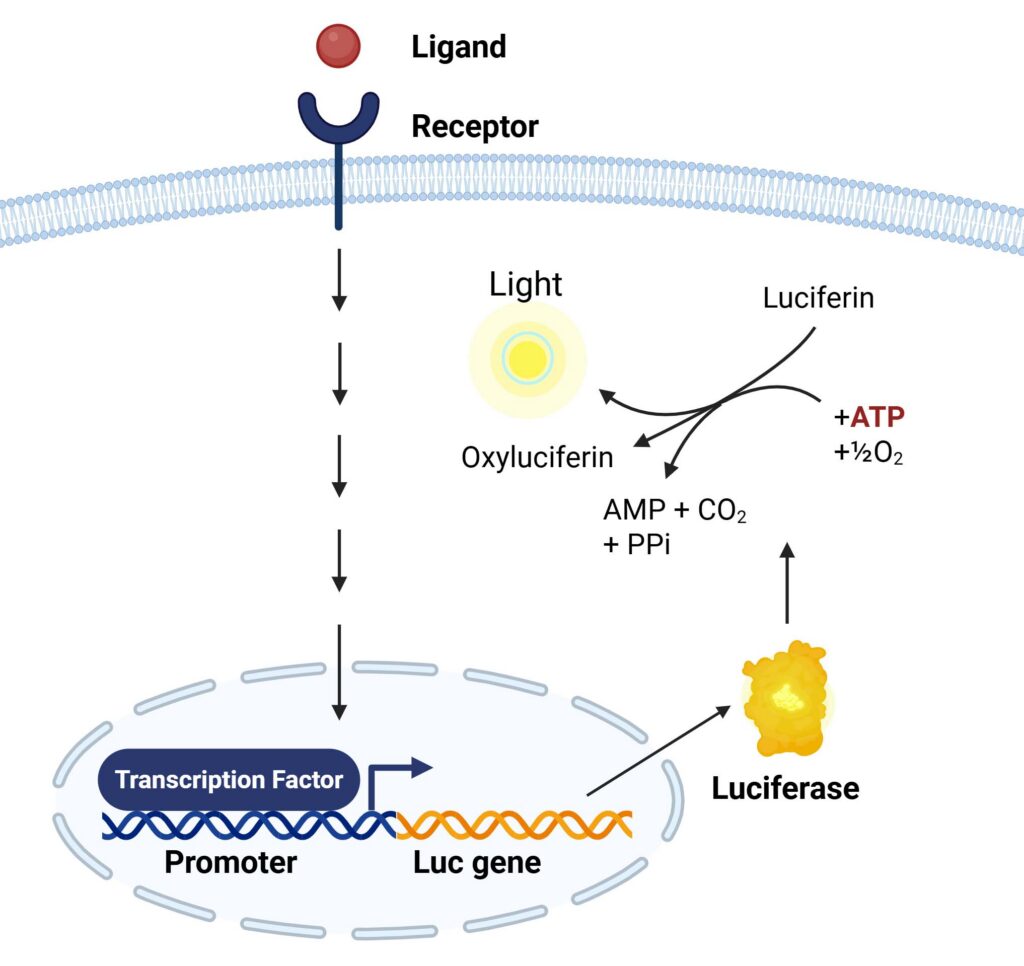
Unlike biochemical assays, cell-based assays capture key parameters such as membrane permeability, receptor engagement, and downstream signaling in intact cells, providing a more accurate representation of biological activity. Genetically engineered cell lines include overexpression and knockout models used to validate therapeutic targets and assess compound activity. Inducible reporter assays are particularly valuable for studying signaling pathways. Luciferase reporters, placed under the control of pathway-specific response elements, enable sensitive, quantitative, and reproducible measurement of pathway activation.
Reporter systems are broadly applicable across diverse cell types and signaling pathways, supporting HTS as well as more complex applications such as research in metabolism/obesity and immunotherapy, chimeric antigen receptor and T-cell receptor functional evaluation, antibody-dependent cellular cytotoxicity assays, and other co-culture models. Many biologics, including cytokine-targeting antibodies, peptides, and mimetics, are defined by their effects on specific signaling pathways. For example, GLP-1 receptor agonists activate cAMP-dependent signaling cascades, while anti-TL1A antibodies inhibit TL1A-mediated immune signaling. Accurately measuring these pathway-specific responses is essential for candidate selection and mechanistic validation.
Applications
Reporter cell lines enable a wide range of applications:
- Discovery and screening • Identify agonists or antagonists of specific signaling pathways
• Screen compound libraries for selective modulators
- Mechanistic studies • Characterize MOA
• Analyze pathway function and regulation
- Functional assays • Perform co-culture cytotoxicity assays to evaluate immune effector function
• Support immunotherapy development and cell-based therapeutic evaluation
BPS Bioscience reporter cell portfolio
BPS Bioscience offers a comprehensive portfolio of pathway-specific reporter cell lines designed to support biologics development across multiple therapeutic areas. Reporter cell lines include IL-2, IL-6, and IL-15-responsive reporter cells, GLP-1-responsive models for metabolic research, and TL1A-responsive Jurkat cells.
Luciferase-based reporter systems provide rapid, sensitive, and quantitative detection of cellular responses, enabling efficient compound screening, pathway analysis, and target validation. Supporting reagents, including optimized culture media and the One-Step™ Luciferase Assay System, further streamline experimental workflows and improve reproducibility.
Advantages of luciferase reporter cell systems
- Quantitative readouts enable precise measurement of pathway activity
- High sensitivity allows detection of subtle biological effects
- Low background and high signal-to-noise ratio ensure robust data
- Compatibility with high-throughput formats supports large-scale screening
Advantages of BPS Bioscience reporter cell lines
- Optimized protocols and media simplify assay implementation
- Human cell backgrounds improve physiological relevance (with select alternative models available)
- Cost-effective workflows with minimal reagent requirements
- Extensive validation, with data often benchmarked against clinically relevant compounds
- Clonal cell lines ensure consistency and reduce variability over time
Together, cell based reporter assays and their supporting tools enable efficient, pathway
relevant evaluation of biologics from discovery through late stage development.

Learn more bpsbioscience.com.