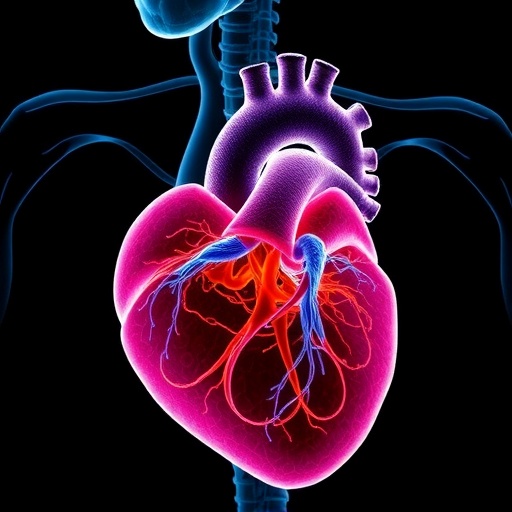
Adipose tissue, long underestimated as merely a passive fat storage site, is now emerging as a dynamic and multifaceted organ integral to both metabolic regulation and immune system interactions. Recent research has fundamentally shifted our understanding, revealing that adipose tissue depots do not simply contribute to body mass but play diverse roles that directly influence cardiovascular health. In particular, the nuanced roles of visceral, subcutaneous, and epicardial adipose tissues are gaining attention for their distinct effects on cardiometabolic risk, transcending total fat quantity to encompass complex biological functions. This evolving perspective prompts a reassessment of how fat distribution and phenotype contribute to the pathogenesis of cardiovascular disease.
One of the pivotal advances shaping this new understanding is the ability to analyze adipose tissue through cutting-edge imaging technologies. Over the past few years, modalities such as cardiac computed tomography (CT), magnetic resonance imaging (MRI), dual-energy X-ray absorptiometry (DXA), and sophisticated artificial intelligence (AI) algorithms have enhanced the precision of adipose tissue characterization. These tools allow assessment not just of volume but also of tissue quality, density, and textural heterogeneity, commonly referred to as radiomics. Such quantifications provide deeper insights into adipose tissue biology, capturing subtle pathological signatures that link fat depots to cardiovascular inflammation and tissue remodeling, key drivers of cardiometabolic disease.
The heterogeneous nature of adipose tissue is underscored by the distinct functional profiles of different depots. Visceral adipose tissue (VAT), which surrounds internal organs, is strongly associated with adverse cardiometabolic outcomes due to its pro-inflammatory secretory profile and close anatomical proximity to vital structures. This depot’s endocrine and paracrine signaling profoundly impacts systemic metabolism and vascular function. In contrast, subcutaneous adipose tissue (SAT), predominantly located beneath the skin, often exhibits more benign or even protective roles, producing anti-inflammatory adipokines and serving as a metabolic buffer. Epicardial adipose tissue (EAT), enveloping the myocardium and coronary arteries, is uniquely positioned to exert paracrine and vasocrine influences on cardiac function and coronary plaque stability.
Beyond their location, the cellular and molecular phenotypes of adipose tissue depots vary significantly, informing their divergent effects on cardiovascular health. Adipocyte size, macrophage infiltration, and the profile of secreted factors—including cytokines, chemokines, and adipokines—differ markedly between depots and within the same depot under varying physiological or pathological states. This variation in inflammatory milieu directly modulates the progression of atherosclerosis, myocardial fibrosis, and vascular remodeling. Emerging multi-omics approaches, integrating transcriptomics, proteomics, and metabolomics, are shedding light on the signaling pathways mechanistically linking adipose tissue alterations to cardiometabolic dysregulation.
The communication between adipose tissue depots and cardiovascular organs occurs through complex signaling networks encompassing endocrine, paracrine, vasocrine, and neural pathways. Endocrine signals from adipocytes and resident immune cells modulate systemic metabolism and vascular reactivity, whereas paracrine effects influence local myocardial inflammation and fibrosis. Vasocrine signaling involves the transfer of bioactive molecules via vasa vasorum to the vessel wall, potentially promoting endothelial dysfunction and atherogenesis. Neural pathways linking adipose depots to the central nervous system and autonomic fibers further regulate adiposity and systemic metabolic homeostasis, completing a feedback loop critical for cardiovascular regulation.
This sophisticated inter-organ communication system underscores why adipose tissue cannot be viewed in isolation but rather as an integrated signaling hub that orchestrates cardiometabolic health. The emerging ‘unified adipose tissue’ model conceptualizes all regional fat depots as components of a singular, interactive system in which the qualitative biology overrides total adipose mass as the determinant of cardiovascular risk. This paradigm shift has major implications for diagnosis, risk stratification, and therapeutic targeting in cardiovascular medicine, advocating for a precision medicine approach centered on depot-specific biology and function.
Ethnic and sex-related differences further complicate the interplay between adipose tissue and cardiovascular disease. Epidemiological studies highlight disparities in fat distribution and depot-specific risks among populations, suggesting genetic and environmental modifiers of adipose tissue biology. For example, certain ethnic groups display higher visceral fat accumulation despite similar body mass indices, correlating with increased cardiovascular morbidity. Similarly, sex hormones influence fat depot characteristics; premenopausal women tend to have greater subcutaneous fat with cardioprotective properties, whereas men accumulate more visceral fat correlating with elevated risk. Understanding these demographic influences is crucial for developing tailored interventions.
Therapeutic modulation of adipose tissue biology offers a promising frontier to mitigate cardiovascular risk. Lifestyle interventions, including diet and exercise, are well-established in reducing harmful visceral fat and improving adipose tissue inflammatory profiles. However, recent pharmacological advances target molecular pathways specific to adipose tissue inflammation and remodeling. Agents affecting adipokine signaling, inflammatory cytokines, or metabolic regulators promise to selectively modify depot function rather than merely reduce fat mass. Emerging cellular and gene therapies hold potential to reprogram adipose tissue towards a protective phenotype, expanding the armamentarium against cardiometabolic disease.
Multi-modal imaging combined with AI analytics is revolutionizing clinical and research evaluation of adipose tissue. Quantitative imaging biomarkers derived from radiomics enable risk prediction models incorporating adipose tissue attributes beyond traditional metrics. AI-driven algorithms can detect subclinical changes in fat quality predictive of disease progression, enabling earlier intervention. Such technological integration facilitates longitudinal monitoring of adipose tissue dynamics in response to therapy, offering a non-invasive window into the evolving interplay between fat depots and cardiovascular health.
The integration of multiomics data with imaging phenotyping heralds a new era of systems biology in cardiovascular medicine. Through this lens, the complex biochemical networks within adipose tissue—and their systemic reverberations—can be mapped and manipulated. For example, transcriptomic analyses reveal gene expression signatures indicative of pro-inflammatory states, while metabolomics highlights shifts in lipid mediators that influence vascular function. Combining these with imaging-derived phenotypes creates a robust framework to decode adipose tissue heterogeneity and its pathogenic roles.
The recognition that adipose tissue depots contribute differentially to cardiovascular pathology also invites reconsideration of diagnostic criteria and clinical endpoints. Traditional reliance on anthropometric measures such as body mass index is insufficient to capture cardiometabolic risk fully. Instead, refined measurements of regional fat distribution and depot-specific characteristics should inform personalized risk profiles and guide treatment decisions. This approach promises to identify high-risk individuals who may otherwise be overlooked and tailor therapies for maximal impact.
Moreover, understanding the molecular underpinnings of epicardial adipose tissue’s unique role expands potential mechanistic explanations for coronary artery disease progression. Its proximity to the myocardium and coronary vessels allows direct modulation of myocardial contractility, plaque vulnerability, and arrhythmogenesis through paracrine secretion of pro-inflammatory and fibrotic mediators. Targeting EAT inflammation may, therefore, represent a novel therapeutic axis for preventing adverse cardiac remodeling and ischemic events.
In sum, the evolving paradigm positions adipose tissue as a central player in cardiometabolic disease, governed not simply by quantity but by depot-specific quality and biological activity. As research uncovers the complex molecular dialogues between fat depots and cardiovascular organs, clinicians and scientists are poised to integrate this knowledge into innovative diagnostic, prognostic, and therapeutic frameworks. The unified adipose tissue model synthesizes these advances, framing fat tissue as an interconnected system whose biology drives health and disease, heralding a transformative shift in cardiovascular medicine tailored to the nuanced biology of adipose depots.
Continued exploration of adipose tissue heterogeneity, leveraging advances in imaging, multiomics, and AI, promises to unveil new pathways and interventions. This dynamic field exemplifies how precision medicine can redefine chronic disease management, with the potential to reduce the global burden of cardiovascular disease by addressing the fat beneath the surface—not through weight alone but via the deeper biology that orchestrates health.
Subject of Research:
The comprehensive investigation of systemic and epicardial adipose tissue depots and their roles in modulating cardiometabolic disease risk, with a focus on biological function, imaging phenotyping, and therapeutic implications.
Article Title:
Role of systemic and epicardial adipose tissue in cardiometabolic disease
Article References:
Khanna, S., Mann, G., Bhat, A. et al. Role of systemic and epicardial adipose tissue in cardiometabolic disease. Nat Rev Cardiol (2026). https://doi.org/10.1038/s41569-026-01304-9
Image Credits: AI Generated
Tags: adipose tissue phenotype and heartartificial intelligence in adipose tissue characterizationcardiac computed tomography for fat quantificationdual-energy X-ray absorptiometry in fat distributionepicardial fat role in cardiovascular diseasefat distribution and cardiovascular pathogenesisimaging techniques for adipose tissue analysisMRI assessment of epicardial adipose tissueradiomics in cardiometabolic diseasesubcutaneous fat and metabolic regulationsystemic adipose tissue and cardiometabolic riskvisceral fat impact on heart health