The approval in December 2023 of Casgevy and Lyfgenia marked a major milestone in the treatment of sickle cell disease (SCD). This genetic disease, caused by a recessive point mutation in the gene for beta-globin, was first described in the medical literature in 1910.
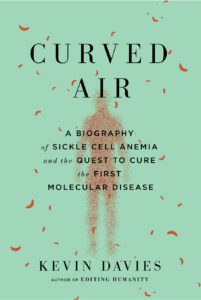
This month—appropriately Sickle Cell Awareness month—sees the publication of a new popular science book on SCD, Curved Air, written by Kevin Davies, PhD, and published by Harvard University Press. I sat down with Kevin to ask him about the genesis of the book and the extraordinary story of SCD.
(This interview has been lightly edited for length and clarity.)
GEN: Kevin, how did the idea for Curved Air come about?
Kevin Davies: My last book, Editing Humanity, which was about the CRISPR revolution, came out six years ago. Whenever I was asked about the most exciting application of gene editing, I would invariably answer: ‘sickle cell.’ That’s because, like many people, I’d been moved to learn about the journey of Victoria Gray, the first SCD patient to undergo CRISPR cell therapy, back in July 2019. She talked openly about her therapy and recovery in a series of interviews on National Public Radio.
I found it ironic that CRISPR—this incredible 21st century, Nobel Prize-winning technology for performing DNA surgery—should find its first clinical success treating patients with a disease that, many would argue, has been underfunded and forgotten by large sections of the medical and pharma communities.
I also have to give a shout-out to John Evans, the CEO of Beam Therapeutics. During an interview he gave to GEN about five years ago, John described SCD as ‘the most famous genetic mutation in the world.’ That quote really hit home and gave me added impetus to write the book proposal that became Curved Air.
GEN: I do like the title of the book. Where did it come from?
Davies: As you probably know John, ‘Curved Air’ was a British progressive rock band in the 1970s. I’m a huge fan of the genre, although not that band specifically. But the phrase seemed to fit perfectly. ‘Curved’ reflects the trademark crescent- or sickle-shaped red blood cells (RBCs) in SCD. And ‘Air’ corresponds to the compromised ability of those sickled RBCs to transport oxygen around the body, hence the anemia. I kept waiting for my editor at Harvard University Press, Rachel Field, to say something, but she was happy to keep the working title.
GEN: When did you first encounter or remember learning about SCD?
Davies: That’s the thing. It was the first genetic disease I learned about in school in the U.K. some half a century ago! I remember sketching the healthy and diseased RBCs and learning about the sort of superpower that carriers of the sickle cell gene have against malaria. So many milestones in molecular biology revolve around the study of hemoglobin and SCD. Linus Pauling, PhD, dubbed sickle cell ‘the first molecular disease’ back in 1949. And yet, prior to the advent of CRISPR, the only effective therapy had been hydroxyurea, a generic chemotherapy drug. This community—an estimated 100,000 patients in the United States—has been waiting an eternity for something to get excited about.
GEN: You mentioned Victoria Gray. Is she a big part of the book? What makes her story so compelling?
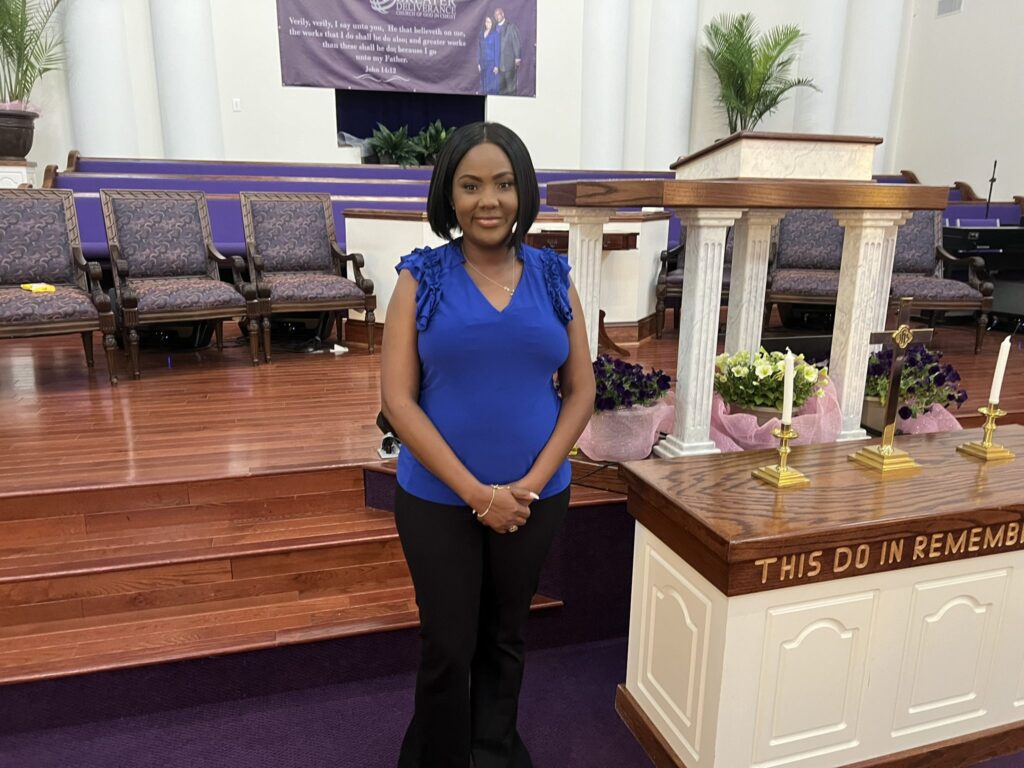
Davies: Oh yes, absolutely! She was a guest on one of GEN’s virtual summits a few years ago. I met her in person a few months later and she invited me down to her home in Mississippi for an in-depth interview. We did that in her local church, which was special because I know how important her faith is. She opened up about the many episodes of discrimination that she experienced, something that is all too prevalent in the way people with SCD—almost exclusively persons of color—are treated in the medical system on both sides of the Atlantic.
Victoria deserves all her flowers. By going public with her story, she literally inspired other warriors to enroll in the CRISPR trial (sponsored by Vertex). I’m thrilled that she’s healthy and serving now as a patient advocate to raise awareness and help educate others with the disease. I also interviewed many other warriors in the book. I really hope readers will enjoy meeting LaRae, Danielle, Kwanzaa, Ray’Neshia, Jimi, and others. Every person’s story is unique and special in its own right.
GEN: Much of your book is spent detailing the story behind Casgevy. What was notable about that work?
Davies: Casgevy works not by fixing the SCD mutation directly but via a clever workaround: boosting the levels of fetal hemoglobin (HbF) to compensate for the inherited mutation in adult hemoglobin. The first inkling of that strategy dates back to 1948 and the clinical observations of a New York pediatrician named Janet Watson. Two decades ago, researchers made the key discovery that variants in a transcription factor called BCL11A influence HbF levels. It is great to see the scientists behind that fundamental discovery—Swee-Lay Thein, MD (NIH) and Stuart Orkin, MD (Harvard Medical School)—belatedly receive recognition in the form of the 2026 Breakthrough Prize.
I talk about the work at CRISPR Therapeutics and Vertex that led to the commercial approval of Casgevy. It’s impressive that Vertex has also driven the discovery of life-changing small-molecule drugs for cystic fibrosis, another classic genetic disease that also rose in frequency because carriers had a selective advantage, most likely against an infectious disease.
GEN: Many GEN readers will be broadly familiar with the story of SCD. Did you discover anything new or surprising in your research?

Davies: Hopefully a few surprises, yes! One is in regard to the first documented case in the United States—Walter Clement Noel, a dental student from Grenada, who was treated in Chicago in 1904. It was his case that was first documented in a medical journal in 1910. But obviously there were thousands of patients with SCD who reached the Americas during the Middle Passage. I spoke to a researcher at 23andMe who was an author on a major paper in Science two years ago analyzing the remains of some 30 enslaved African Americans at the Catoctin Furnace, an iron foundry in northern Maryland. She told me that forensic DNA sequencing revealed that three children buried there, dating back to the early 1800s, carried the SCD mutation.
I also interviewed the first patient to be cured of SCD via gene therapy more than a decade ago, a young Frenchman named Leeroy Tegar. Initially, his physician, Marina Cavazzana, MD, in Paris, didn’t think he’d want to talk to a journalist. But he did, with a big assist from Google Translate and Rodolphe Barrangou, PhD, the editor of The CRISPR Journal, who is French.
GEN: You also visited the site of Walter Noel’s grave in Grenada?
Davies: After dental school, Walter returned to his home on the Caribbean island of Grenada in 1907 and set up his own practice, only to die in 1916. His identity was uncovered decades after the famous 1910 medical journal paper by Todd Savitt, PhD, a retired history professor. A few years ago, I felt compelled to follow in Savitt’s footsteps, hiring a driver to take me from the capital of Grenada to Sauteurs, a town on the north coast of the island, where Noel is buried in a Catholic cemetery.
GEN: Despite the excitement over CRISPR and gene therapy, you depict a much darker side of sickle cell care. Tell me about Brittany Hightower.
Davies: Early on in my reporting, I watched some videos that had been live-streamed by Brittany Hightower, a 30-something sickle cell warrior in Texas. Brittany documented some distressing scenes at a major Dallas hospital, staff not wanting to care for her. In one viral video, two security guards informed her that she was being kicked out of the hospital—in the middle of a pain crisis. She died of pneumonia a couple of years ago.
I tracked down Brittany’s best friend and fellow sickle cell warrior, Kwanzaa, who ironically had taken part in the Lyfgenia gene therapy trial at NIH. Kwanzaa graciously shared Brittany’s final texts to her, sent just days before she died. I included them in the book as a poignant reminder that medical progress is one thing, but we can do so much better in educating medical professionals about this disease.
GEN: What impact will Casgevy and Lyfgenia have on sickle cell treatments in the long run?
Davies: We have to keep these launches in perspective. The experiences of the first cohort of patients taking these therapies have been amazing—almost all report no pain crises or hospitalizations or even the need for blood transfusions. Those that do typically had too much vascular damage before they received therapy. As Haydar Frangoul, MD, the physician who treated Victoria, says: ‘I can take the hammer away, but I can’t fix the wall.’
Remember this is ex vivo therapy, requiring months in hospital and a brutal chemotherapy regimen prior to therapy. The dream is to develop a much less complex in vivo gene therapy. Of course, even that will be of limited benefit to the millions of SCD patients across Africa, India and other parts of the world. I am optimistic that eventually scientists will develop a small molecule drug that can mimic the effects of Casgevy. Wouldn’t that be something?
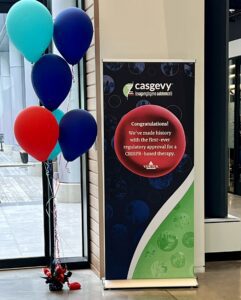
GEN: The elephant in the room of course is that Casgevy costs $2.2 million, and Lyfgenia more than $3 million. What happens to patients who really need it but cannot afford the therapy?
Davies: True, the costs are very high, but that doesn’t appear to be the big stumbling block. Most private insurance companies and a majority of states in the U.S. are covering these therapies. $2–3 million in a one-time therapy is still good value compared to the costs of treating patients for recurring pain crises and organ failure over decades. The manufacturing process is also improving, which is helping to shorten the treatment timeline.
GEN: Thanks for speaking with me and congratulations, Kevin. Best of luck with the book!