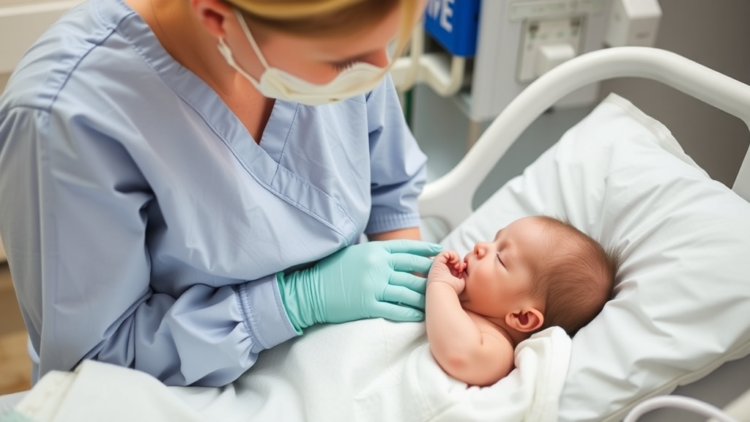
When a newborn is admitted to a neonatal intensive care unit, one of the most powerful tools clinicians can offer is the mother’s own milk. Human milk has been repeatedly linked to lower rates of sepsis and necrotizing enterocolitis in preterm and low-birth-weight infants, improved neurodevelopmental outcomes that persist well beyond the hospital stay, and reduced health care costs after discharge. Yet for mothers whose babies are in the NICU, establishing a milk supply is uniquely difficult. Unlike mothers of healthy term infants, who can put their babies to the breast on demand, NICU mothers depend almost entirely on breast pumping, often while recovering from complicated deliveries, managing stress and grief, and traveling back and forth to the hospital. A new retrospective cohort study published in the Journal of Perinatology by researchers at the Medical College of Wisconsin now provides some of the clearest quantitative evidence to date that the timing and intensity of professional lactation support during the first two postpartum weeks can dramatically change whether an infant is discharged home receiving mother’s own milk.
The research team, led by Chloe Salzmann and Evan Cross of the Division of Neonatology, together with biostatisticians Ke Yan and Jian Zhang of the Division of Quantitative Health Science, set out to answer a deceptively simple question: which maternal and infant factors actually influence lactation success within the NICU, and does early lactation consultation make a measurable difference? To do so, they assembled a cohort of 862 maternal-infant dyads admitted to the NICU and examined the relationship between lactation support and discharge home receiving mother’s own milk, adjusting for a comprehensive panel of demographic and clinical covariates. Because the study was retrospective, it cannot prove causation in the way a randomized trial would, but the scale of the association and the rigor of the adjustment make the signal difficult to dismiss.
The headline finding is striking. Infants whose mothers had four to six lactation consultant visits within the first fourteen days after birth were 8.93 times more likely to be discharged home receiving mother’s own milk than infants whose mothers received less support in that window, with a 95 percent confidence interval of 4.86 to 16.40 and a P value below 0.05. In epidemiological terms, an adjusted odds ratio approaching nine is an unusually large effect for a modifiable health care intervention. It suggests that the first two weeks after delivery, a period physiologists call secretory activation, represent a critical window during which the groundwork for long-term milk production is either laid or lost.
The biology behind that window helps explain why timing matters so much. Lactogenesis, the onset of copious milk secretion, is driven by a sharp postpartum drop in progesterone combined with sustained prolactin signaling. For most mothers, secretory activation occurs within roughly seventy-two hours of delivery, but mothers of preterm infants frequently experience delayed lactogenesis II, often because of pregnancy complications such as preeclampsia, hemorrhage, or infection, as well as the absence of an infant suckling at the breast. Milk volume achieved in the first two weeks has been shown in prior work to strongly predict mother’s own milk feeding at NICU discharge, which means that early difficulties compound: a mother who misses the secretory activation window tends to have a lower baseline supply for the entire hospitalization, making it progressively harder to sustain an exclusive or predominant human milk diet as her infant grows and her nutritional demands increase.
This is precisely where professional lactation consultants enter the equation. Pumping for a hospitalized infant is a technically demanding routine, typically requiring eight or more sessions per day with well-fitted flanges, effective pump settings, and careful milk handling, all coordinated with rounds, skin-to-skin sessions, and the emotional labor of parenting a fragile newborn. Lactation consultants address pump dependence directly, troubleshooting fit and technique, reinforcing pumping frequency, setting realistic milk volume goals, and providing the psychosocial encouragement that prior research has identified as a key social factor in human milk feeding. The new study quantifies what many clinicians have long suspected: repeated, early engagement with these specialists is associated with a transformation in outcomes, not merely a marginal improvement.
The dose-response structure of the findings is as important as the magnitude. Four to six visits within fourteen days, roughly a consultation every two to three days during the hospitalization’s opening stretch, corresponded to the strongest association with discharge on mother’s own milk. The study also examined the relationship between the number of days until the first lactation consultation and outcomes, adding to a growing literature, including quality improvement work such as the ‘pump early, pump often’ initiative, indicating that the first consultation should occur as close to delivery as possible. The message for hospital administrators is concrete: NICUs need enough lactation consultant staffing to deliver intensive support in the first postpartum fortnight, not occasional or on-demand advice that arrives after the critical window has closed.
Alongside the support findings, the study exposed persistent and sobering disparities. After adjustment, infants born to mothers who were White, primiparous, partnered, covered by private insurance, and living in higher-income households were more likely to be discharged home receiving mother’s own milk. These results echo a broader body of research documenting that barriers to human milk feeding in the NICU are not evenly distributed, with neighborhood structural factors, insurance status, and social support all shaping access to lactation care. First-time mothers, despite having no prior breastfeeding experience, may have more flexibility to remain at the bedside and more intensive engagement with hospital services, while mothers juggling employment, other children, and long commutes face structural obstacles that no amount of individual motivation can fully overcome.
The equity implications are significant for both clinical practice and health policy. Access to medical lactation support remains inconsistent across institutions and payers, and advocates have argued for expanded Medicaid reimbursement for lactation counseling precisely because the mothers least likely to receive it are often those who stand to benefit most. If intensive early lactation support is associated with a nearly ninefold increase in the odds of discharge on mother’s own milk, then unequal access to that support functions as an amplifier of existing disparities in infant nutrition, with downstream consequences for infection rates, neurodevelopment, and long-term health. The authors conclude that hospitals should provide adequate access to lactation consultants to account for the demonstrated need for at least four visits within the first two postpartum weeks, effectively converting a research observation into a staffing and policy benchmark.
Several caveats frame the interpretation. As a single-center retrospective cohort, the findings reflect the practices and population of one academic NICU, and unmeasured confounding remains possible: mothers who attend four to six lactation visits may differ in ways related to intention and opportunity that adjustment cannot fully capture. The authors note that a deidentified dataset will be made available upon reasonable request, inviting replication across centers. The study was approved by the Medical College of Wisconsin Institutional Review Board with a waiver of informed consent and conducted in accordance with the Declaration of Helsinki, and the authors report no competing interests. Even with these limitations, the work lands at a moment of growing clinical consensus that human milk should be the default diet for vulnerable newborns. What this study adds is a practical, testable lever: schedule lactation consultation early, repeat it often, and make sure it reaches every mother, not only those with the resources to seek it out. For the 862 families in this cohort, and for the hundreds of thousands of NICU families each year, the first fourteen days after birth may prove to be the most consequential fortnight in an infant’s nutritional future.
Subject of Research: The effect of early, intensive lactation consultant support on mother’s own milk feeding at neonatal intensive care unit discharge.
Article Title: Timing and intensity of lactation support influences NICU discharge on maternal milk
Article References: Salzmann, C., Cross, E., Yan, K., Zhang, J., Cabacungan, E., Nghiem-Rao, T. H., & Sprecher, A. (2026). Timing and intensity of lactation support influences NICU discharge on maternal milk. Journal of Perinatology. https://doi.org/10.1038/s41372-026-02895-4
Image Credits: AI Generated
DOI: 10.1038/s41372-026-02895-4
Keywords: lactation support, NICU, mother’s own milk, lactation consultant, preterm infants, secretory activation, breastfeeding disparities, human milk feeding, neonatology, pumping, Journal of Perinatology, postpartum care
Cite Scienmag News
APA MLA Chicago
Copy citation Download RIS
Tags: breastfeeding disparitieshuman milk feedingJournal of Perinatologylactation consultantlactation supportmother’s own milkneonatologyNICUpostpartum carepreterm infantspumpingsecretory activation