
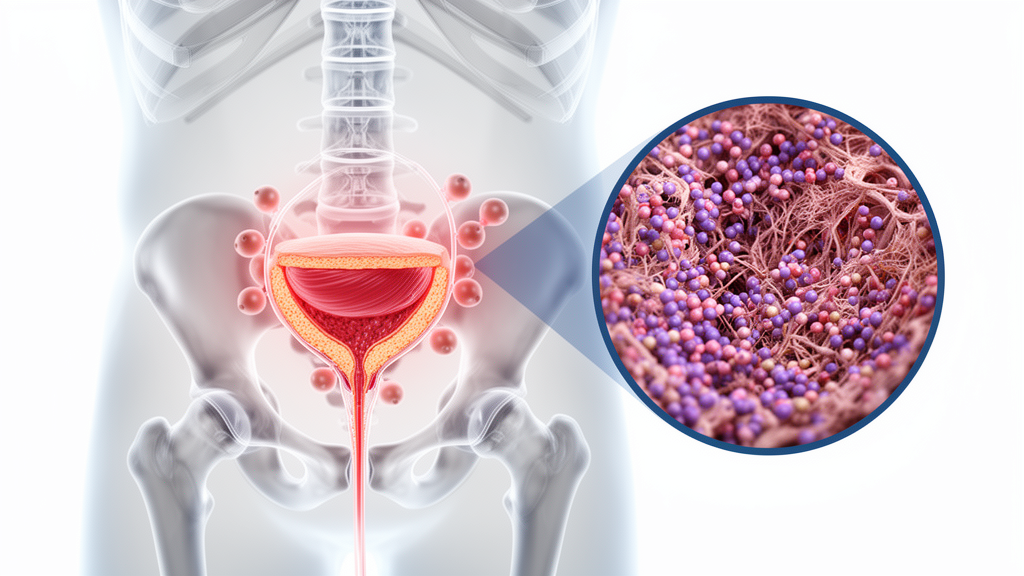
The study focuses on patients who achieve an apparent clinical complete response after neoadjuvant or multidisciplinary therapy. The central question is whether favorable findings from endoscopy, cytology, pathological sampling, and imaging can sufficiently exclude both residual intravesical disease and occult systemic minimal residual disease to justify omitting or deferring radical cystectomy. The authors argue that current clinical definitions of complete response are heterogeneous and that the concordance between clinical and pathological complete response is only moderate, creating a significant safety gap in treatment de-escalation.
The review was updated through June 5, 2026, and includes an aggregate-data Bayesian calibration analysis. The primary aim was not to establish a validated clinical pathway but to examine the post-treatment, pre-omission decision point. The authors utilized the pooled concordance estimate between clinical and pathological complete response from recent systematic evidence as a pretest anchor. This approach allows for a quantitative assessment of the residual probability of pathological disease remaining in patients who appear to have achieved a complete clinical response. The analysis highlights that a negative molecular restaging layer would need to meet specific performance thresholds to meaningfully reduce this residual risk.
According to the aggregate-data calibration, the residual probability of pathological disease after an apparent clinical complete response is approximately 49%. This figure underscores the limitations of conventional restaging methods. To reduce this residual disease probability below 10%, a negative molecular restaging layer would require a negative likelihood ratio of about 0.12. To reduce the probability below 15%, the required negative likelihood ratio is approximately 0.18, and to reduce it below 20%, the value must be about 0.26. These thresholds are demanding, indicating that an additional test must be more than merely prognostic. It must reduce posterior residual-risk uncertainty at a level relevant to withholding a standard curative operation.
The biological incompleteness of conventional clinical complete response is further illustrated by the performance of individual restaging components. Clinical restaging and pretreatment tumor sequencing have misclassified response after neoadjuvant chemotherapy. Repeat transurethral resection of bladder tumor improves local sampling but can miss spatially separate or deeper residual disease. Post-neoadjuvant computed tomography correlates poorly with final pathology and should not be used as a clearance test. This creates a biological blind spot that standard clinical complete response definitions fail to address.
The review emphasizes that histologic heterogeneity can widen the gap between clinical and pathological complete response. Variant histologies, such as micropapillary, plasmacytoid, sarcomatoid, squamous, glandular, nested, and neuroendocrine differentiation, should not be treated as interchangeable with pure conventional urothelial carcinoma when omission is being discussed. These variants may change the probability of occult extravesical disease, response to systemic therapy, and local recurrence patterns. The minimum response-assessment package should include expert pathological review, documentation of variant type and extent, and explicit recording of carcinoma in situ, multifocality, lymphovascular invasion, and incomplete resection. For small-cell or other neuroendocrine carcinoma, decision-making is biologically distinct and should follow disease-specific principles.
Organ-preservation cohorts have demonstrated that surveillance after apparent response is feasible in selected patients, but they do not prove that conventional complete response alone is sufficient for omission. Modern prospective data, including the HCRN GU16-257 and RETAIN 1 trials, show that while some patients can enter surveillance, clinically meaningful residual risk remains. RETAIN 1 combined DNA damage response alterations with restaging, but recurrence remained frequent and the primary endpoint was not met. These findings support bladder preservation as a program requiring close surveillance and timely salvage, rather than a one-time declaration of cure.
The study proposes a dual-compartment molecular restaging framework, interpreting plasma circulating tumor DNA and urine tumor DNA as complementary, non-interchangeable readouts. Plasma circulating tumor DNA is more closely aligned with systemic molecular residual disease, whereas urine tumor DNA more directly samples intravesical tumor shedding. Evidence from paired plasma and urine tumor DNA monitoring linked to HCRN GU16-257 indicates that plasma circulating tumor DNA was most informative for metastatic risk, while restaging urine tumor DNA among patients with clinical complete response was associated with shorter bladder-intact survival. This conceptual advance suggests that plasma and urine should be interpreted as paired readouts of systemic and intravesical residual disease, rather than competing liquid biopsy specimens.
The authors outline four post-restaging molecular states to guide clinical decision-making. First, concordant plasma-negative and urine-negative results define the lowest apparent combined risk, potentially providing the strongest biological support for surveillance within expert programs. Second, urine-positive and plasma-negative results should be treated as possible local molecular residual disease, prompting intensified local reassessment and a low threshold for cystectomy. Third, plasma-positive and urine-negative results suggest possible systemic molecular residual disease, making unstructured de-escalation biologically unsafe. Fourth, dual positivity is the least reassuring state, suggesting combined local and systemic molecular risk and redirecting discussion toward confirmation, escalation, or trial-based management.
Standardization priorities are identified as essential before implementation. Future trials must define assay details, including tumor-informed versus tumor-naive platforms, urine matrices, and sampling times. Thresholds should be published before outcomes are known to prevent threshold drift from harming patients. Management consequences also require prespecification, with studies defining actions for urine-only positive, plasma-only positive, dual-positive, or indeterminate states. Endpoints should include bladder-intact metastasis-free survival, cystectomy-free survival, invasive intravesical recurrence, and quality of life. The current evidence base remains early, with no randomized trial having assigned cystectomy omission based on paired plasma and urine tumor DNA.
The review concludes that apparent clinical complete response should be treated as a residual-risk state rather than proof of cure. Dual-negative plasma and urine tumor DNA results may provide the strongest biological support for surveillance, but only within expert multidisciplinary programs or prospective protocols. The field must move from broad enthusiasm for liquid biopsy to calibrated, prespecified, dual-compartment trials. These trials should test whether molecular restaging can improve bladder-intact survival without sacrificing metastatic safety. The cCR 2.0 concept reframes the decision, requiring residual disease to be assessed in both systemic and intravesical compartments before a standard consolidative operation is withheld.
The review was conducted by a team of researchers including Rafał Bogdan Drobot, Maciej Wojciech Przudzik, Bartosz Brzoszczyk, Mateusz Władysław Jobczyk, and Marcin Jarzemski. The structured narrative review was updated through June 5, 2026, and aligned with SANRA and selected PRISMA 2020 reporting elements. The authors explicitly state that the article is not a de novo systematic review or a pooled biomarker meta-analysis. Instead, it serves as a decision-focused examination of the post-treatment pre-omission decision point. The search strategy included concepts such as muscle-invasive bladder cancer, clinical complete response, bladder preservation, trimodality therapy, and circulating tumor DNA. Backward and forward citation chaining was applied to guidelines, consensus statements, and prospective organ-preservation cohorts to ensure comprehensive coverage of the relevant literature.
Radical cystectomy with bilateral pelvic lymphadenectomy remains a curative-intent reference pathway for surgically fit patients with non-metastatic muscle-invasive bladder cancer. However, this procedure carries significant perioperative risks, including permanent urinary diversion or reconstruction, sexual and urinary consequences, and durable effects on quality of life. Contemporary recommendations recognize bladder preservation as a legitimate goal for selected patients when selection, surveillance, radiotherapy quality, and salvage pathways are planned within a multidisciplinary program. The clinical pressure to refine selection is increasing because systemic therapy and organ-preservation strategies are changing. The NIAGARA trial showed that perioperative durvalumab with neoadjuvant gemcitabine-cisplatin and radical cystectomy improved event-free and overall survival in cisplatin-eligible operable disease, highlighting the evolving landscape of treatment options.
The decision problem addressed by this review is narrower than many previous reviews have framed it. Baseline genomic predictors of cisplatin response may enrich for downstaging, but they cannot prove that a specific patient has cleared intravesical disease or systemic minimal residual disease at the actual omission decision point. Recent reviews of active surveillance after clinical complete response, perioperative plasma circulating tumor DNA, and urinary tumor DNA provide important context but do not fully resolve how plasma and urine should be interpreted together before immediate cystectomy is omitted. The premise of this review is conservative: apparent clinical complete response is a useful clinical label, but it is not a biological endpoint unless local and systemic residual disease are evaluated separately.
Trimodality therapy offers another approach to bladder preservation, pursuing durable bladder-intact control through maximal transurethral resection of bladder tumor, radiosensitizing chemotherapy, radiotherapy, structured response assessment, and rapid salvage cystectomy when invasive persistence or recurrence is detected. Long-term trimodality series show that bladder preservation can be oncologically meaningful in selected patients, but their results depend on careful eligibility, radiation planning, surveillance intensity, and salvage readiness. Modern systemic therapy adds a second layer of complexity, as neoadjuvant immune-checkpoint-inhibitor and chemoimmunotherapy studies have increased confidence that deep pathological response is achievable. These data should not be interpreted as proof that conventional clinical complete response alone is sufficient for omission, but rather as evidence that accurate post-treatment restaging is increasingly important.
A practical bladder-sparing pathway requires three linked disciplines. Urologists must define the quality of endoscopic reassessment and the feasibility of salvage. Radiation oncologists must define whether bladder-intact local therapy is technically and functionally appropriate when radiotherapy is used. Medical oncologists must define systemic-risk context and whether a molecular residual-disease signal should alter systemic therapy or trial eligibility. The dual-compartment framework is intended to organize this multidisciplinary discussion, not to replace it.
The limitations of the current evidence base are significant. No randomized trial has assigned cystectomy omission on the basis of paired plasma circulating tumor DNA and urine tumor DNA. The most direct paired evidence is platform-specific and drawn from selected patients treated in expert settings. Definitions of clinical complete response, assay positivity, urine matrix, sampling time, treatment backbone, surveillance intensity, salvage triggers, and variant histology remain heterogeneous. This review is a structured narrative review with an aggregate-data calibration analysis, not a formal systematic review with de novo risk-of-bias assessment of every liquid-biopsy study. The Bayesian calibration uses clinical-pathological complete response concordance as a decision anchor and should be read as a threshold analysis rather than an estimate of any current assay’s clinical accuracy.
Subject of Research: A structured narrative review and aggregate-data decision analysis examining the use of dual-compartment molecular restaging to assess residual disease risk in muscle-invasive bladder cancer patients with apparent clinical complete response.
Article Title: Apparent clinical complete response before cystectomy omission in muscle-invasive bladder cancer: a structured narrative review and aggregate-data decision analysis of dual-compartment restaging
Article References: Drobot, R. B., Przudzik, M. W., Brzoszczyk, B., Jobczyk, M. W., & Jarzemski, M. (2026). Apparent clinical complete response before cystectomy omission in muscle-invasive bladder cancer: a structured narrative review and aggregate-data decision analysis of dual-compartment restaging. African Journal of Urology, 32(1), Article 50. https://doi.org/10.1186/s12301-026-00599-x
Image Credits: AI Generated
DOI: 10.1186/s12301-026-00599-x
Keywords: muscle-invasive bladder cancer, clinical complete response, circulating tumor DNA, urine tumor DNA, radical cystectomy, bladder preservation, molecular restaging, Bayesian calibration, minimal residual disease, urology, Apparent, clinical