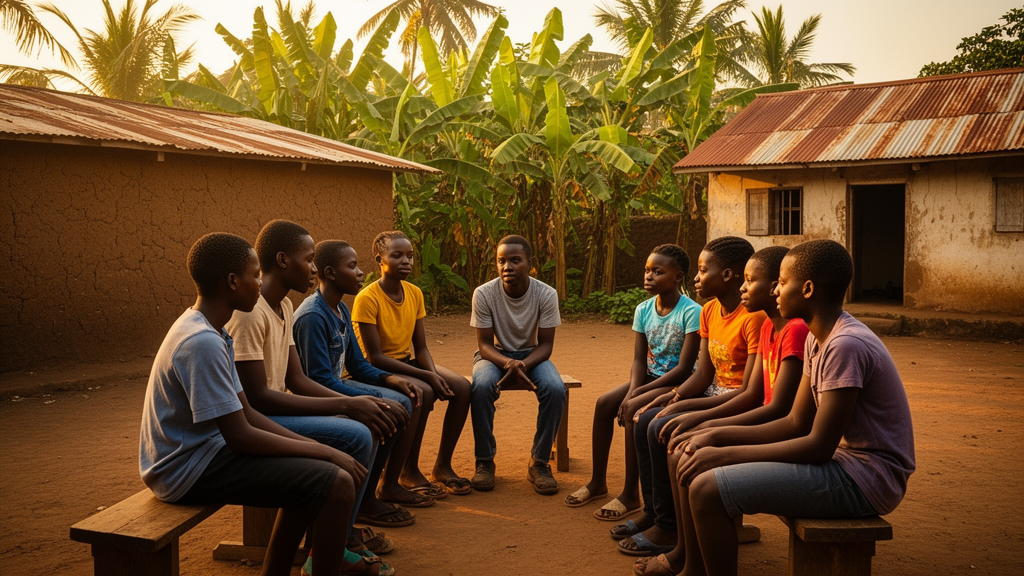
Layered and intersecting crises shape adolescent mental health in Sierra Leone to an extent that exceeds individual-level coping strategies, according to findings from a qualitative participatory study.
Young people across Sierra Leone have endured multiple major disruptions in recent decades, including civil conflict, the 2014 to 2016 Ebola virus disease outbreak, and the COVID-19 pandemic. The study noted that each of these crises compounded pre-existing vulnerabilities related to family stability, education, and psychological well-being. Although adolescent mental health has gained increasing recognition worldwide as an essential public health priority, qualitative evidence documenting how young Sierra Leoneans experience distress, coping, and recovery has historically remained limited.
To examine how adolescents experience mental health, schooling, well-being, coping, and recovery following crises, researchers carried out a participatory qualitative investigation across three districts in Sierra Leone between February and July 2024. The investigative team used purposive sampling to recruit 112 participants. This sample encompassed adolescents aged 13 to 19 years as well as caregivers, teachers, youth leaders, community health workers, counsellors, and child protection actors.
Data collection relied on a participatory framework incorporating multiple qualitative methods, including in-depth individual interviews, focus group discussions, emotion mapping, personal timelines, and guided storytelling. Following data collection, the researchers applied reflexive thematic analysis to systematically examine the participants’ testimonies and identify primary narrative patterns.
The analysis identified four major thematic areas reflecting the daily realities of participants. The first theme, designated as landscapes of distress, encompassed experiences of grief, persistent fear, poverty-related shame, and significant school disruption. The second theme highlighted gendered and intersecting vulnerabilities, documenting issues such as early marriage, exposure to sexual violence, and differential access to educational opportunities among young people.
The remaining two themes explored coping mechanisms and support structures. The third theme addressed coping, resilience, and meaning-making, showing that young people drew on faith, peer solidarity, creative expression, and forward-looking aspirations. The fourth theme focused on navigating support, identifying substantial barriers such as mistrust and social stigma, while underscoring the vital role played by informal networks. In their conclusions, the authors emphasized that school-based psychosocial support, community-level stigma reduction, and gender-responsive services are urgently needed to address these interconnected challenges.
Subject of Research: Adolescent mental health and well-being in Sierra Leone
Article Title: A qualitative participatory study on adolescent mental health and well-being in Sierra Leone
Article References: Osborne, A., Vandy, A., Bangura, C., Rogers, H., & Jalloh, A. (2026). A qualitative participatory study on adolescent mental health and well-being in Sierra Leone. Child and Adolescent Psychiatry and Mental Health. https://doi.org/10.1186/s13034-026-01156-8
Image Credits: AI Generated
DOI: 10.1186/s13034-026-01156-8
Keywords: adolescent mental health, Sierra Leone, qualitative research, participatory study, psychosocial support, crisis recovery, youth well-being, qualitative, participatory, adolescent, mental, health