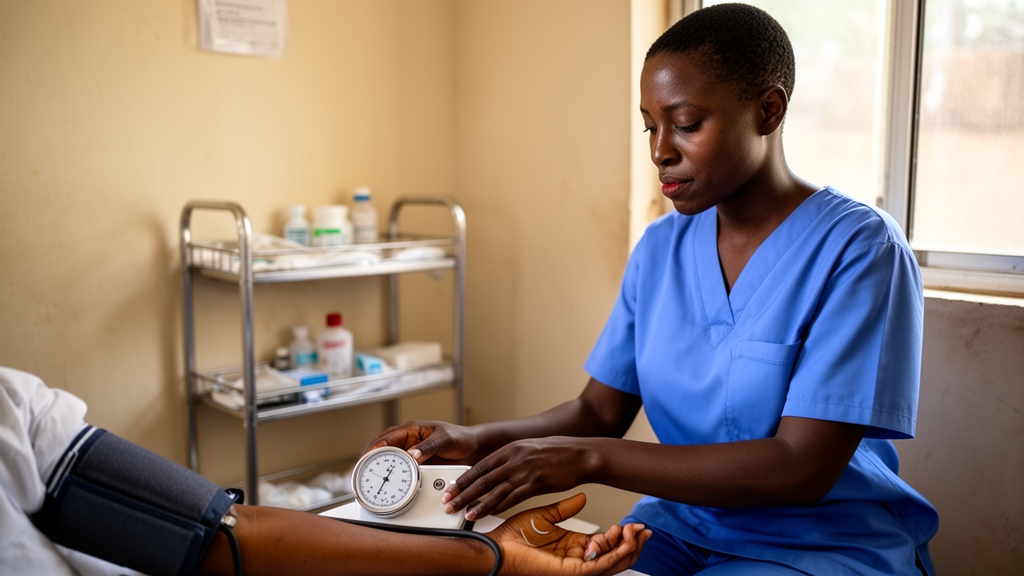
In selected healthcare facilities and humanitarian service settings across Somalia, nurses exhibited moderate self-rated competence and emergency preparedness, yet institutional facility readiness remained low, according to a multicentre study published in BMC Nursing. Using study-defined thresholds, the evaluated nurses demonstrated a mean self-rated competence score of 64.5 out of 100 (standard deviation 14.1) and a mean preparedness score of 61.7 out of 100 (standard deviation 14.2). In contrast, facility readiness across the sampled settings averaged 48.0 percent (standard deviation 15.6 percent), highlighting a substantial structural gap between frontline staff capability and institutional operational capacity.
The research, authored by Hassan Abdullahi Dahie, employed an explanatory sequential mixed-methods design across six locations in Somalia to evaluate workforce and healthcare facility capacities during humanitarian crises. The initial quantitative phase measured nurses’ competence, emergency preparedness, applied emergency knowledge, and facility readiness. This quantitative assessment was subsequently followed by a qualitative phase comprising individual interviews, focus-group discussions, and documentary review to explain and contextualize the numerical outcomes, with both strands synthesized through a joint display to identify converging and complementary evidence.
When evaluated on applied emergency knowledge using scenario-based vignettes, participating nurses achieved a mean score of 7.4 out of 12 (standard deviation 2.1). Across specific domains, clinical performance proved strongest in infection prevention, disease outbreak notification, and immediate clinical care delivery. However, statistical analysis revealed only a modest correlation between nurses’ self-rated competence and their objective vignette performance, evidenced by a Spearman’s rank correlation coefficient (rho) of 0.31.
The researchers noted that measured capabilities were weakest in incident coordination, mass-casualty triage, post-crisis recovery planning, and maintaining the continuity of essential health services during disruptions.
Multivariate analysis identified several key factors significantly associated with emergency capability. Recent participation in emergency training demonstrated the strongest positive association with both self-rated competence (adjusted beta = 7.8, 95% confidence interval 5.4 to 10.2; p < 0.001) and emergency preparedness (beta = 6.1, 95% confidence interval 3.6 to 8.6; p < 0.001). Direct humanitarian-response experience, participation in simulation drills, supportive leadership, and higher facility readiness also exhibited positive associations with both outcomes. Conversely, high clinical workload was negatively associated with competence and preparedness, while inadequate staffing levels were specifically associated with lower preparedness.
Qualitative interviews, focus groups, and document analyses further clarified the structural barriers constraining response capability, identifying pervasive gaps in pre-service nursing education, unequal access to professional training, ambiguous emergency roles, weak recovery planning, severe workforce pressures, and limited institutionalization of emergency preparedness. The study concluded that while nurses in the sampled Somali settings possess measurable capacity to respond to humanitarian emergencies, resilient response systems require formally embedding core emergency competencies within pre-service education, continuing professional development, simulation exercises, health leadership structures, workforce planning, and dedicated continuity-of-service frameworks.
The research addresses an important void in fragile health systems, where empirical evidence concerning nursing workforce competence, emergency preparedness, and healthcare facility readiness has remained limited. Although nurses play a critical role in emergency response and in maintaining the continuity of essential health services, systematic evaluations examining how individual, organisational, and system-level factors influence operational capability in these environments have been scarce.
Subject of Research: Nursing emergency competence, preparedness, and facility readiness in Somali humanitarian settings.
Article Title: Nursing workforce competence, emergency preparedness and facility readiness for humanitarian emergencies in Somalia: a multicentre explanatory sequential mixed-methods study
Article References: Dahie, H. A. (2026). Nursing workforce competence, emergency preparedness and facility readiness for humanitarian emergencies in Somalia: a multicentre explanatory sequential mixed-methods study. BMC Nursing. https://doi.org/10.1186/s12912-026-05677-7
Image Credits: AI Generated
DOI: 10.1186/s12912-026-05677-7
Keywords: Somalia healthcare facilities, nursing workforce competence, humanitarian emergency preparedness, facility readiness, explanatory sequential mixed-methods, infection prevention, outbreak notification, immediate clinical care, incident coordination, mass-casualty triage, recovery planning, continuity of essential health services, scenario-based emergency knowledge, emergency training, emergency drills, workforce staffing, pre-service nursing education